luxetrope.com

India’s Growing Appetite for Luxury Watches

India’s Growing Appetite for Luxury Watches

India’s affluent buyers are driving demand for high-end timepieces and shaping a fast-growing luxury market

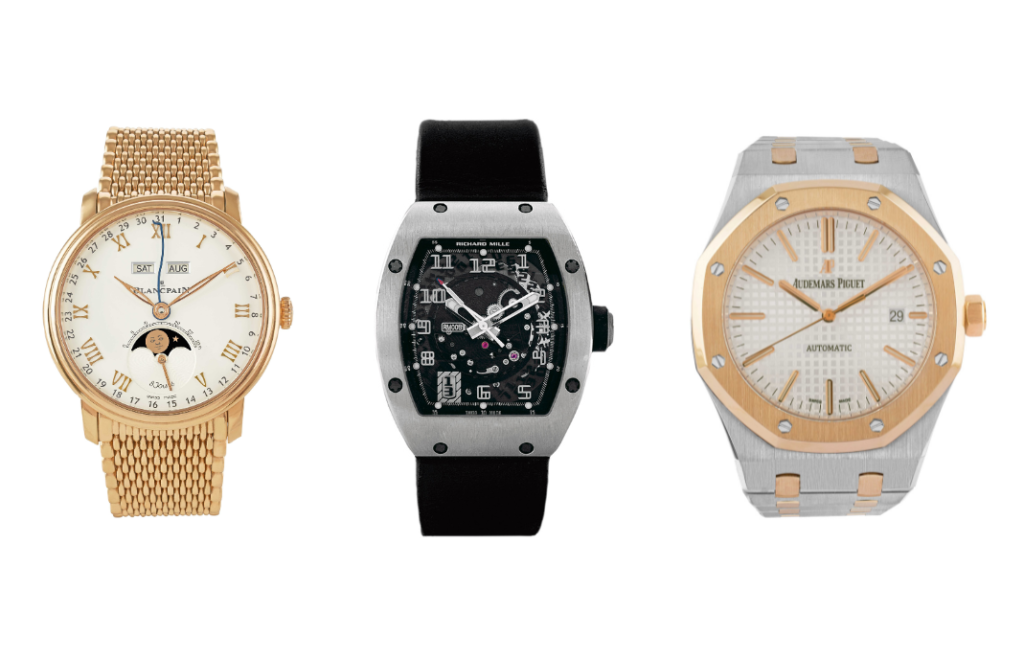
Luxury watches are becoming an increasingly visible part of India’s wealth and lifestyle landscape. For several ultra-high-net-worth individuals (UHNIs), these timepieces represent more than personal style. They reflect heritage, craftsmanship and a growing interest in collecting.

This growing appetite is reflected in the market. In 2025, India imported Swiss luxury watches worth ₹2,640 crore ($278 million). The global luxury watch market, valued at approximately $56.8 billion, is projected to approach $68 billion by 2031. Swiss maisons such as Rolex, Omega and Patek Philippe continue to attract collectors with their history, precision and craftsmanship. Japanese watchmakers are also strengthening their presence among affluent Indian buyers.

Grand Seiko, for instance, recently opened its second Indian showroom in Bengaluru. The brand has closely followed the country’s growing potential. India, once its 14th-largest market before the pandemic, has become its third-largest market globally outside Japan and the United States.

A Market on the Rise

India’s luxury market is currently valued at around $17 billion and is projected to reach $85–90 billion by 2030. Within this expanding landscape, the premium watch segment is growing at an estimated 11–12 per cent annually. The overall Indian watch market, valued at $4.6 billion, could reach $7.5 billion over the next five years.

The definition of luxury watches in India typically begins at approximately ₹2.5 lakh. According to SOIC Research, high-end watches now account for 70 per cent of watch sales, compared with 48 per cent five to six years ago. Demand for watches priced above ₹2 lakh is also gaining momentum across established luxury brands.

Tatsuya Asami, Director and Senior Vice President of Grand Seiko’s global division, has observed rising demand for high-priced watches in India, with waiting lists becoming increasingly common. He believes the market still has considerable room to grow.

The New Generation of Collectors

A shift in consumer mindset is helping drive this momentum. Younger, affluent buyers have greater purchasing power and are increasingly exploring established luxury watch brands.

India’s wealthy population offers a significant opportunity. Knight Frank projects that the country will have 25,217 ultra-high-net-worth individuals, with wealth of $30 million or more, and 313 billionaires by 2031. India currently has 19,877 UHNWI individuals and 207 billionaires. Its billionaire population has grown 58 per cent over five years, placing it third globally.

For luxury watchmakers, this expanding community of wealthy consumers represents a promising market. As interest in fine watchmaking grows, India is becoming an increasingly important destination for the world’s leading maisons.

Read the full story in the special ‘Horology Issue’ of LuxeTrope, on stands now.

Women’s Watches and the Rise of a New Collector Culture

Women’s Watches and the Rise of a New Collector Culture

Women are shaping a new chapter in watch collecting through personal style, design and craftsmanship

Colour and case size no longer decide whether a watch is made for men or women. Watchmakers are now creating pieces that focus on personal style, design and craftsmanship. Women are also moving beyond traditional ladies’ watches and building collections of their own.

In 1868, Countess Koscowicz, a Hungarian noblewoman, commissioned Patek Philippe to create a watch that could be worn on the wrist instead of carried. Historians consider it the first true wristwatch. By 1916, Patek Philippe had also made its first complicated ladies’ wristwatch, a five-minute repeater in a very small case.

Wristwatches were largely considered women’s accessories until World War I, when soldiers began wearing them because they were easier to use than pocket watches. Around 1912, Jacqueline Hermès also had a pocket watch adapted with a small leather strap so she could wear it while riding.

The 1920s brought a new look to watches, with Art Deco designs introducing cleaner shapes and less decoration. This was also the period that gave us the Cartier Tank. One of its most famous owners was Jacqueline Kennedy, who wore hers for nearly three decades. When it went up for auction, it sold for $379,500 against an estimate of $120,000.

Other important examples include the Audemars Piguet Royal Oak, launched in 1972, and Bvlgari’s Serpenti, introduced in 1948. The latter became especially well known after Elizabeth Taylor wore a diamond Serpenti while filming Cleopatra in 1962.

Women are no longer just buying a single watch for an occasion. They are building collections. Deloitte’s 2025 Swiss Watch Industry Study found that female buyers account for 35 per cent of total luxury watch sales. A 2024 study by Watch Femme also found that women ranked design and value for money among their most important buying factors.

AstaGuru has seen this change in its auctions too. Its women’s watch category recorded a turnover of ₹1.68 crore in 2025, compared to ₹1.61 crore in 2022.

AstaGuru’s auction results since 2015 show that women’s watches are bought by men and women alike. Women account for 30 per cent of buyers, while 17.4 per cent of purchases are in the unisex category.

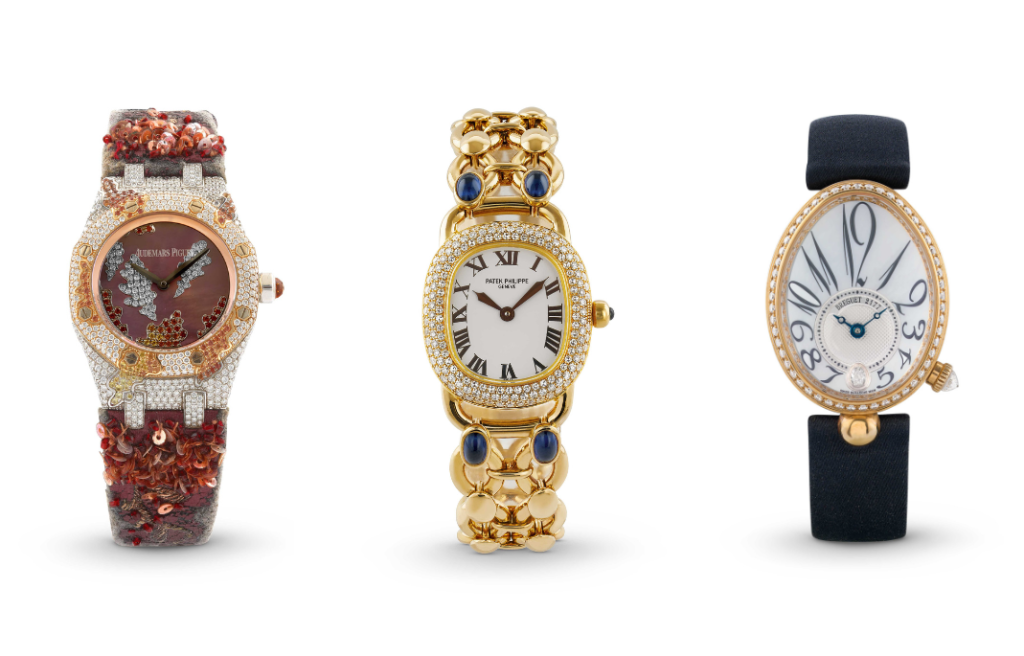
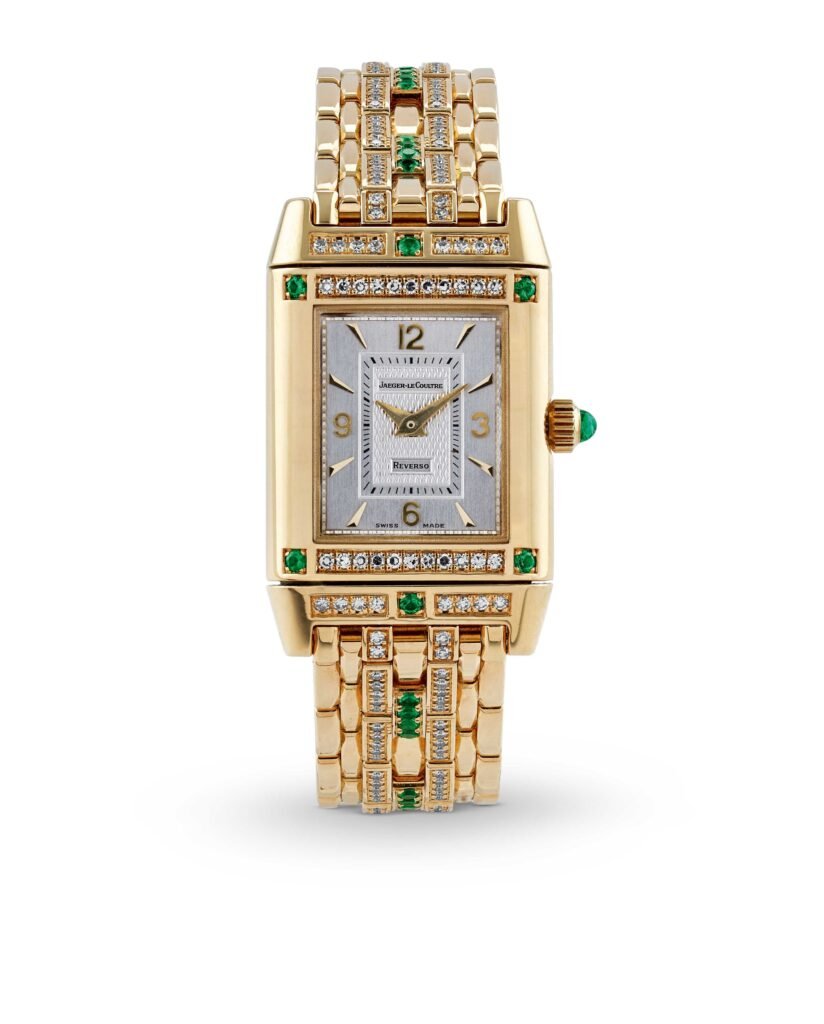
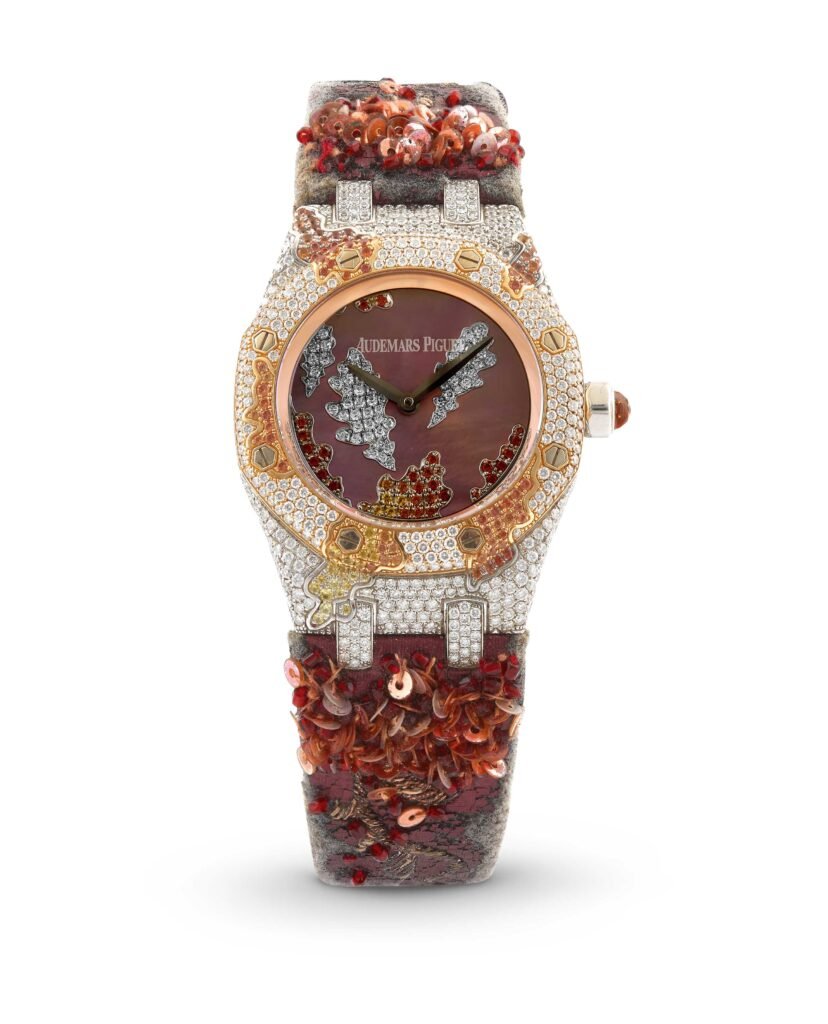
Some notable sales include an Audemars Piguet Royal Oak Oak Leaves, which sold for over ₹27 lakh in 2017, and a Jaeger-LeCoultre Reverso for ₹18.21 lakh in 2022. In 2023, a Bvlgari Serpenti sold for ₹17.8 lakh.

Today, watches are not simply bought as gifts or for special occasions. More women are choosing them for themselves, looking at their history, design and craftsmanship before deciding which pieces are worth adding to their collections.
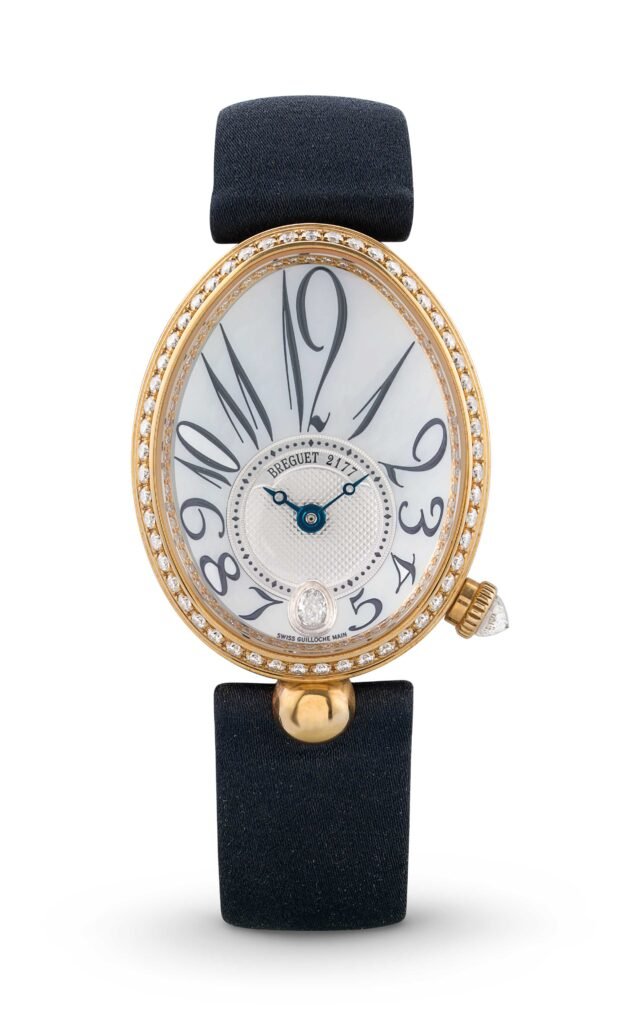
BREGUET REINE DE NAPLES Ref. 8918 | 18k yellow gold 29 x 37 mm | Sold in 2025 by AstaGuru for ₹14,13,522 ($14,879)
JAEGER-LECOULTRE DIAMOND & EMERALD REVERSO Ref. 265.1.86 | 18k yellow gold 33 x 20.5 mm | Sold in 2022 by AstaGuru for ₹18,21,600 ($19,174)
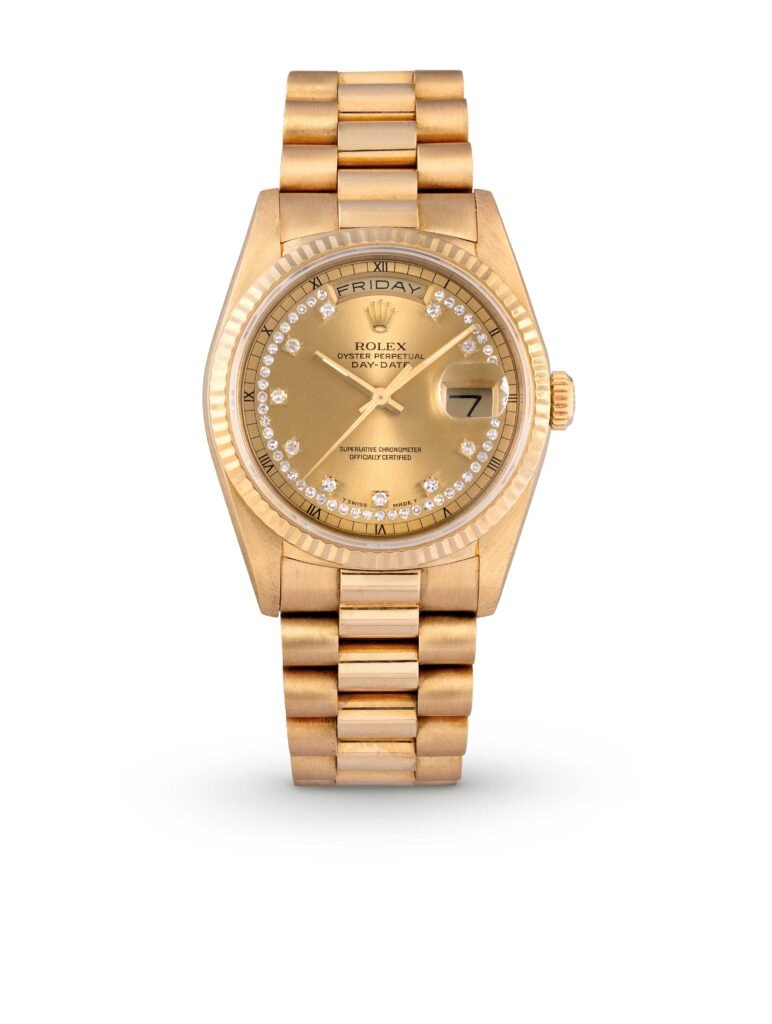
ROLEX DAY-DATE Ref. 18238 | 18k yellow gold 36 mm | Sold in 2026 by AstaGuru for ₹24,38,150 ($25,664)
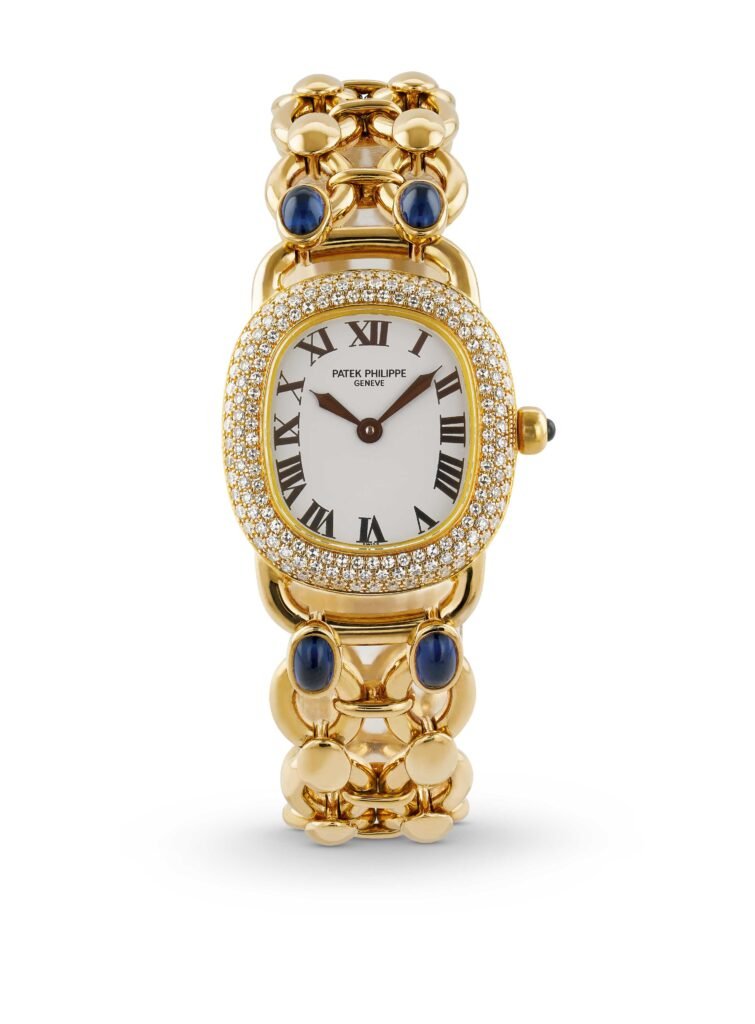
PATEK PHILIPPE GOLDEN ELLIPSE Ref. 4831/1 | 18k yellow gold 27 x 24 mm | Sold in 2021 by AstaGuru for ₹14,66,853 ($15,440)
AUDEMARS PIGUET ROYAL OAK OAK LEAVES Ref. 67609CR.ZY.D071SU.01 | 18k white gold | 33 mm x 42 mm | Sold in 2017 by AstaGuru for ₹27,83,000 ($29,294)

Read More

The auction brought together leading names in Modern Indian art, with several works achieving standout prices

Ornamentation in Indian art tells stories of power, identity and cultural memory

The inaugural edition of The Collectors' Cove brought together exceptional art, jewellery, haute horology and collectible design, setting a new benchmark for luxury collecting in India

Sojourn: Selected Works (1940–2015) Volume II traces the extraordinary artistic evolution of Modern Master S.H. Raza

For anyone entering the world of international art, the smartest first step is often the simplest one

Ten artists established new auction records, with bidding pushing several works well beyond their estimates and previous market highs

Luxury Desk Clocks to Collect Now

Luxury Desk Clocks to Collect Now

Six collectible desk clocks that showcase the craftsmanship and design that continue to attract collectors

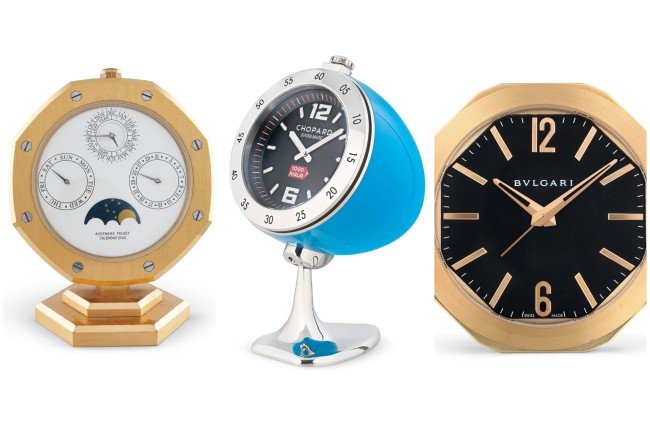
Heritage watchmakers have a rich history of crafting high precision clocks, which are highly prized at auction—proven by the Rothschild Fabergé Egg Clock, which fetched a record-breaking $18.5 million (₹175.75 crore) in 2007. Known by collectors for their value retention and appreciation, these standout lots from AstaGuru and Giftex.in demonstrate why desk clocks will always remain in style.

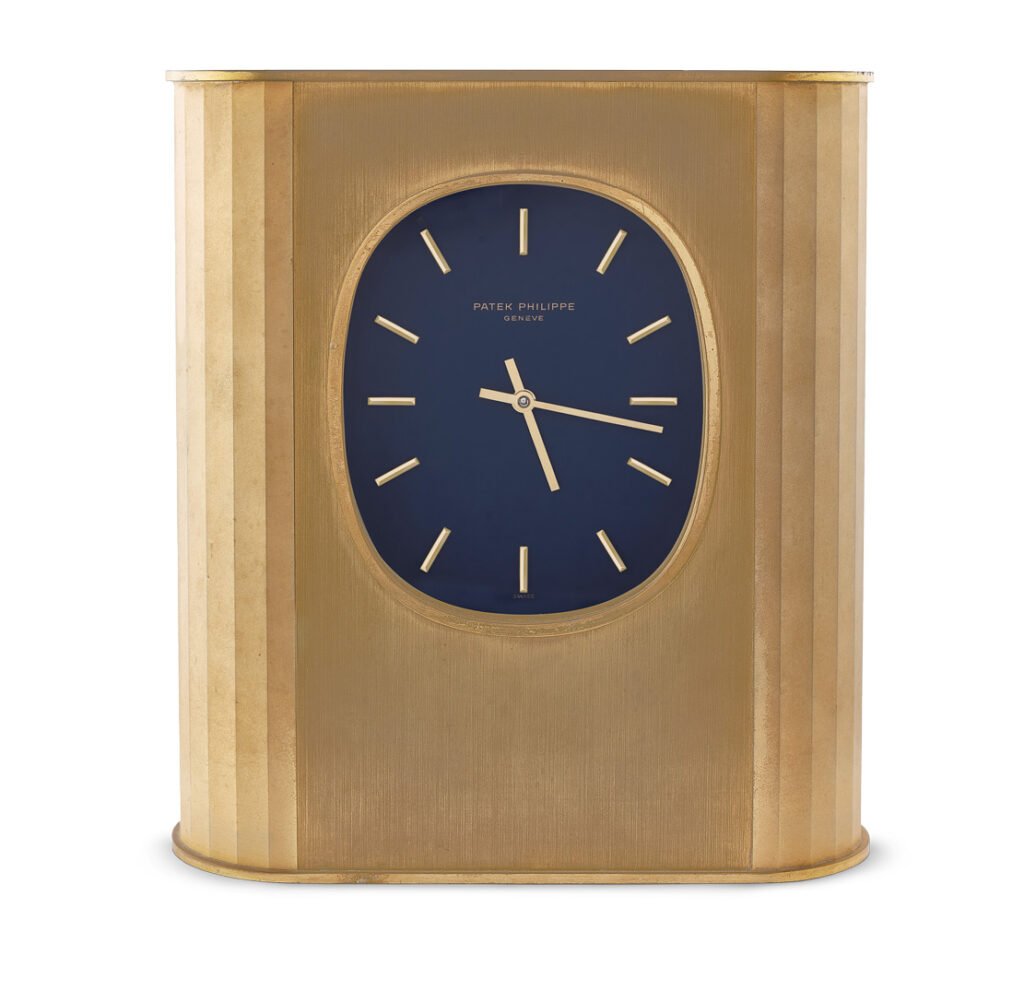
Patek Philippe Solar Desk Clock Ref. 1505M | 19.9 x 16.75 x 6.7 cm

A gilded case reveals a dark-blue dial with crafted hands and applied index batons, highlighting fine craftsmanship. Sold in 2022 by AstaGuru for ₹6,49,655 ($6,838)

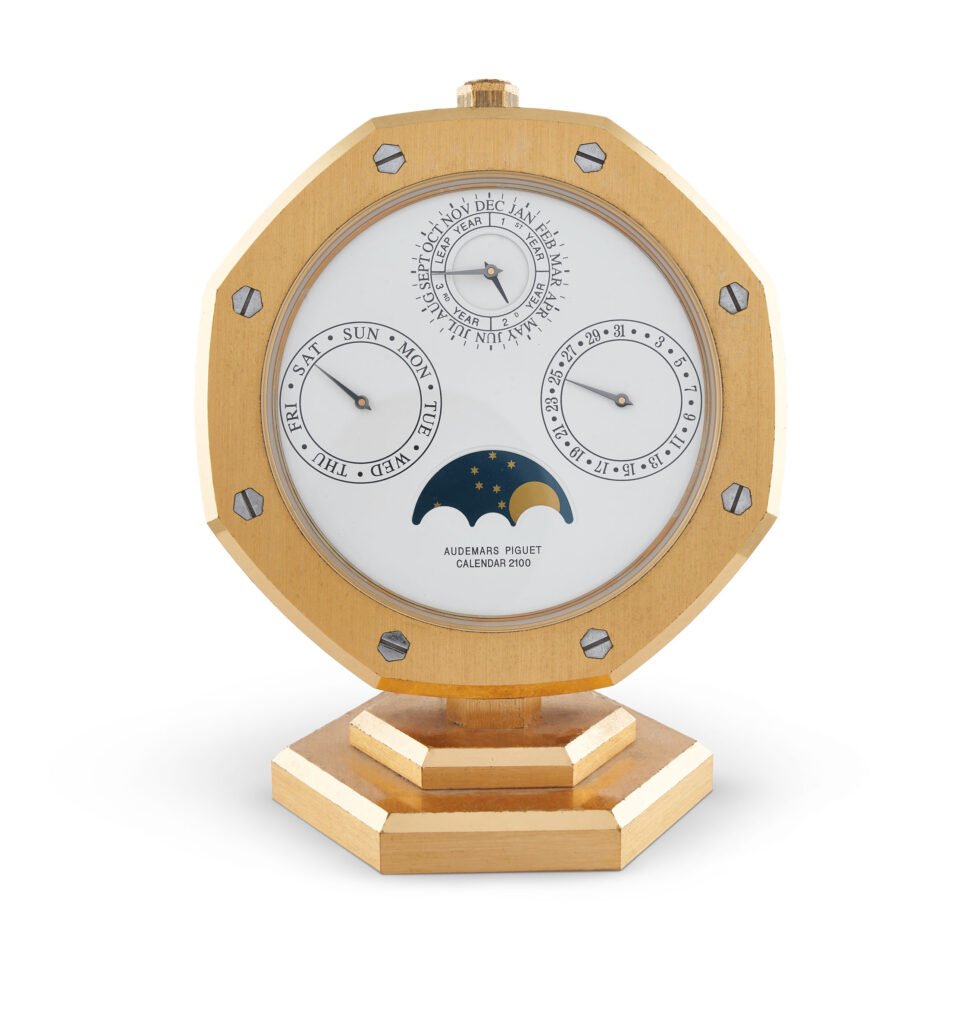
Audemars Piguet Royal Oak Perpetual Calendar Desk Clock

With moon phases and a leap-year indication, it was originally created by Gérald Genta in the 1970s. Sold in 2022 by AstaGuru for ₹5,30,371 ($5,582)
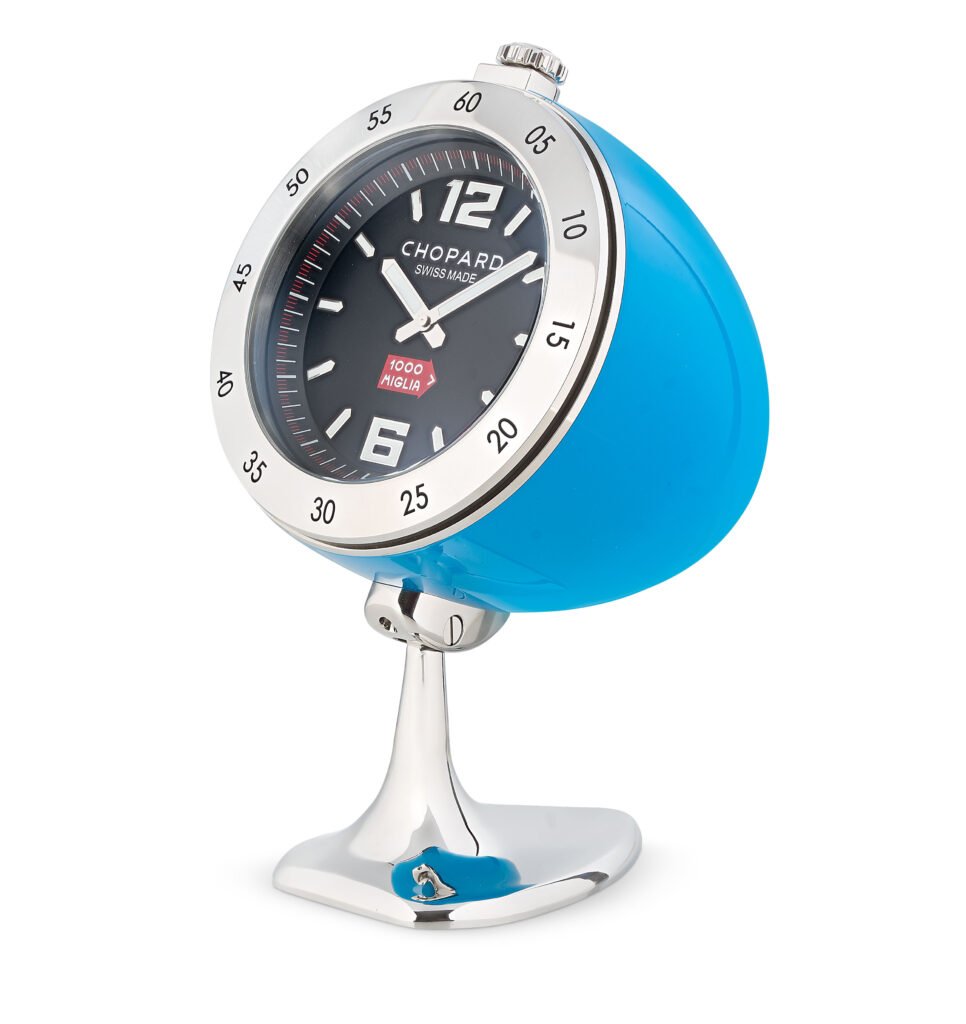
Chopard Vintage Racing Clock

Wrapped in steel and rich blue enamel, it features a black dial and engraved bezel under a sapphire crystal cover. Sold in 2025 by Giftex.in for ₹1,08,830 ($1,146)
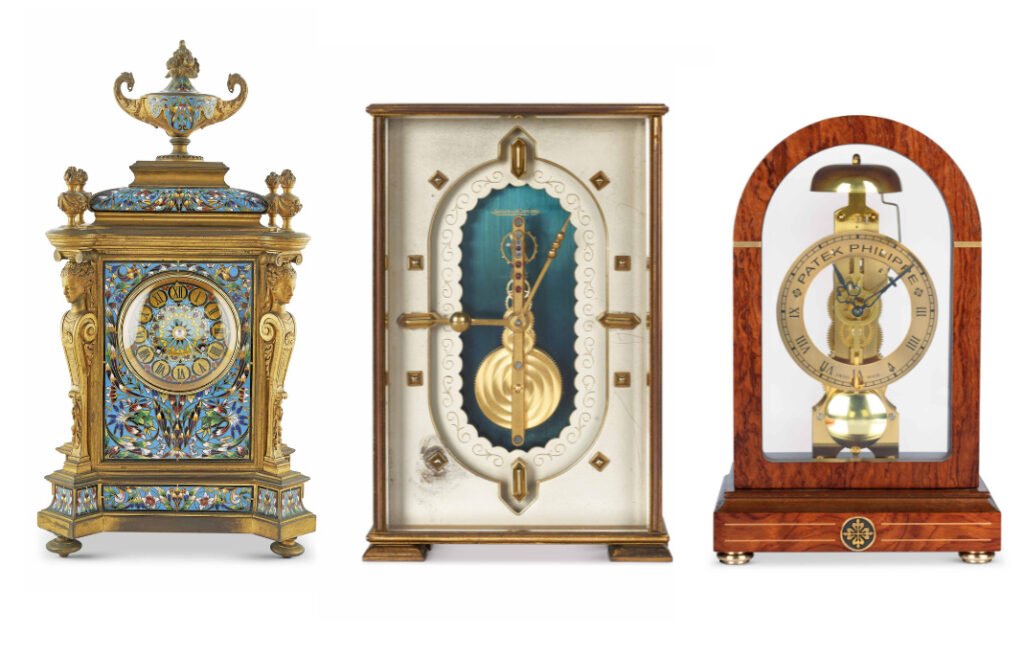
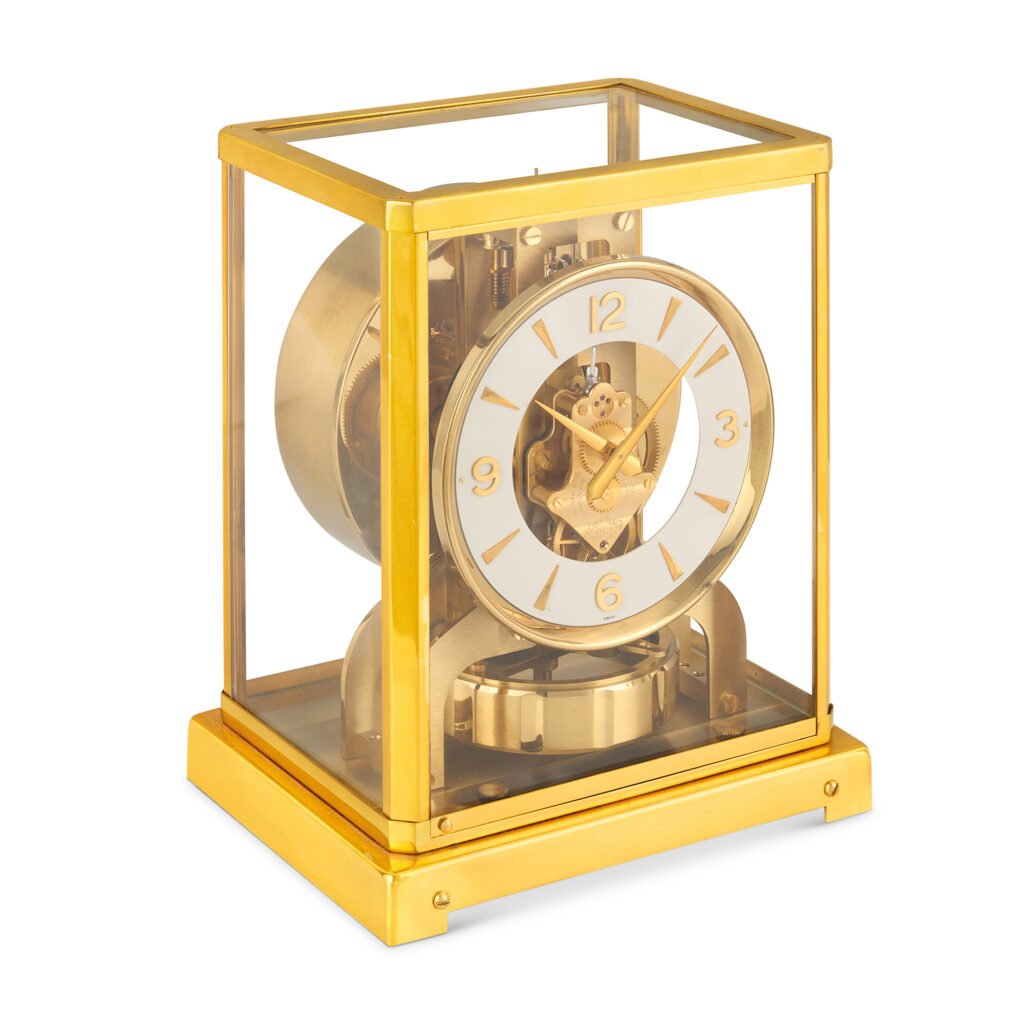
Jaeger-LeCoultre Atmos VIII

Featuring a gas-powered perpetual atmospheric movement, this clock has applied gilt Arabic numerals, a gold plated case and skeleton caseback. Sold in 2026 by Giftex.in for ₹3,28,040 ($3,453)

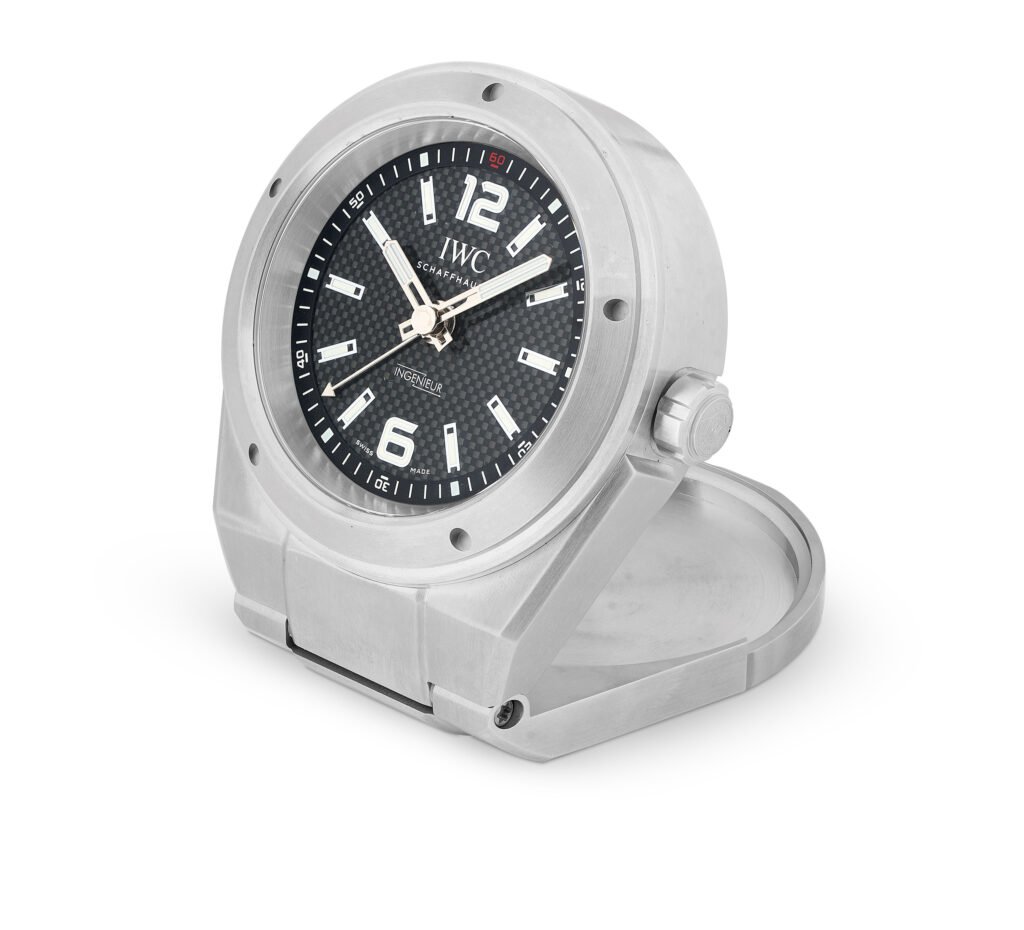
IWC Ingenieur (Ed:114/200)

This stainless steel clock features crafted hands and a quartz movement. Sold in 2025 by Giftex.in for ₹1,83,361 ($1,930)

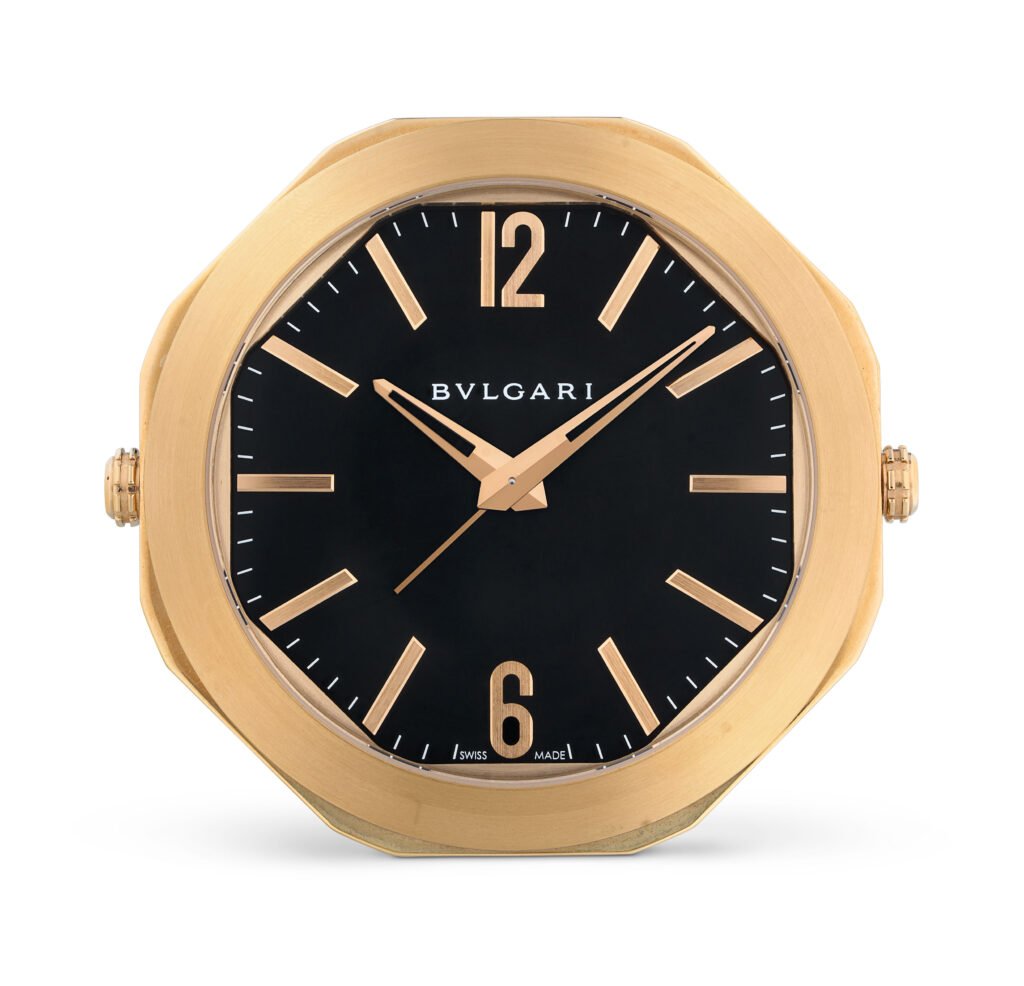
Bvlgari Octo Finissimo

Made in brass, it has a black dial and brass and steel accents, ticking under a protective mineral glass cover. Sold in 2025 by Giftex.in for ₹1,62,424 ($1,710)

Read More

The auction brought together leading names in Modern Indian art, with several works achieving standout prices

Ornamentation in Indian art tells stories of power, identity and cultural memory

The inaugural edition of The Collectors' Cove brought together exceptional art, jewellery, haute horology and collectible design, setting a new benchmark for luxury collecting in India

Sojourn: Selected Works (1940–2015) Volume II traces the extraordinary artistic evolution of Modern Master S.H. Raza

For anyone entering the world of international art, the smartest first step is often the simplest one

Ten artists established new auction records, with bidding pushing several works well beyond their estimates and previous market highs

Where are India’s Wealthy Investing?

Where are India’s Wealthy Investing?

India's UHNIs are looking beyond traditional investments, bringing private equity, real estate and luxury collectibles into portfolios

Diversification is no longer limited to equities and bonds. India’s ultra-high-net-worth individuals (UHNIs) are increasingly exploring alternative investments, from private equity and real estate to fine art, jewellery and luxury collectibles. As wealth creation accelerates, portfolios are expanding to include assets that offer both financial opportunities and personal appeal.

Over the past decade, allocations to alternative assets among Indian UHNIs and family offices have risen from 11 per cent to an estimated 25–30 per cent in 2026. Alternative Investment Funds (AIFs), private equity, private credit, structured debt and real estate remain important drivers. Luxury property investments across Dubai, London, Singapore, Greece and Portugal have also attracted interest.

A Younger Generation of Wealth Creators

India’s changing wealth landscape is being shaped by a younger generation of entrepreneurs. Start-up growth, increased liquidity and IPOs have helped create new fortunes. According to the 360 ONE Wealth Creators List 2026, produced with Crisil Intelligence, the median age of UHNIs has fallen to 57, from 60–63 a decade ago.

The study mapped 3,040 individuals with a minimum wealth of ₹425 crore ($44.7 million). Around 58–60 per cent were below 60, while approximately nine per cent were under 40. This generation is exploring diversification earlier, looking beyond traditional financial instruments.

The Rise of Passion Assets

Luxury collectibles are also finding a place in wealth portfolios. Watches, jewellery, antiques, fine art, vintage cars and other prized objects were traditionally viewed as expressions of personal taste or status. Today, they are increasingly considered alongside other alternative assets.

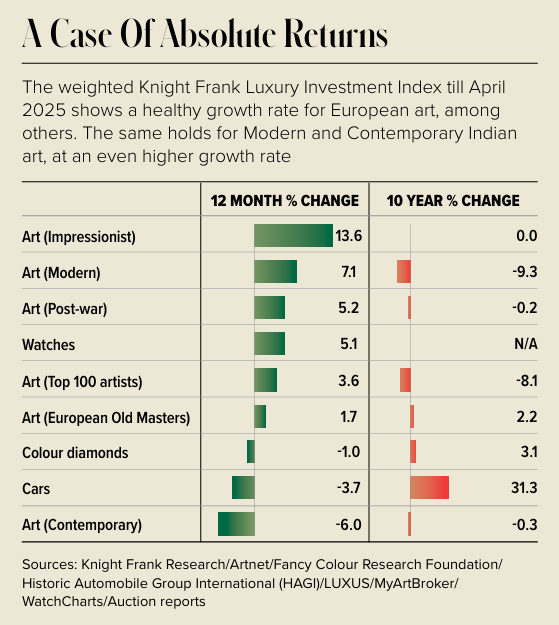
According to Knight Frank’s Wealth Report 2026, Indian UHNIs allocate approximately 17 per cent of their investable wealth to luxury assets. This reflects growing interest in tangible objects with artistic, cultural and historical significance.

As investment strategies evolve, the distinction between financial diversification and personal passion is becoming less pronounced. For India’s wealthy, collecting is increasingly part of a broader approach to managing and expressing wealth.

Read the full story in the special ‘Horology Issue’ of LuxeTrope, on stands now.

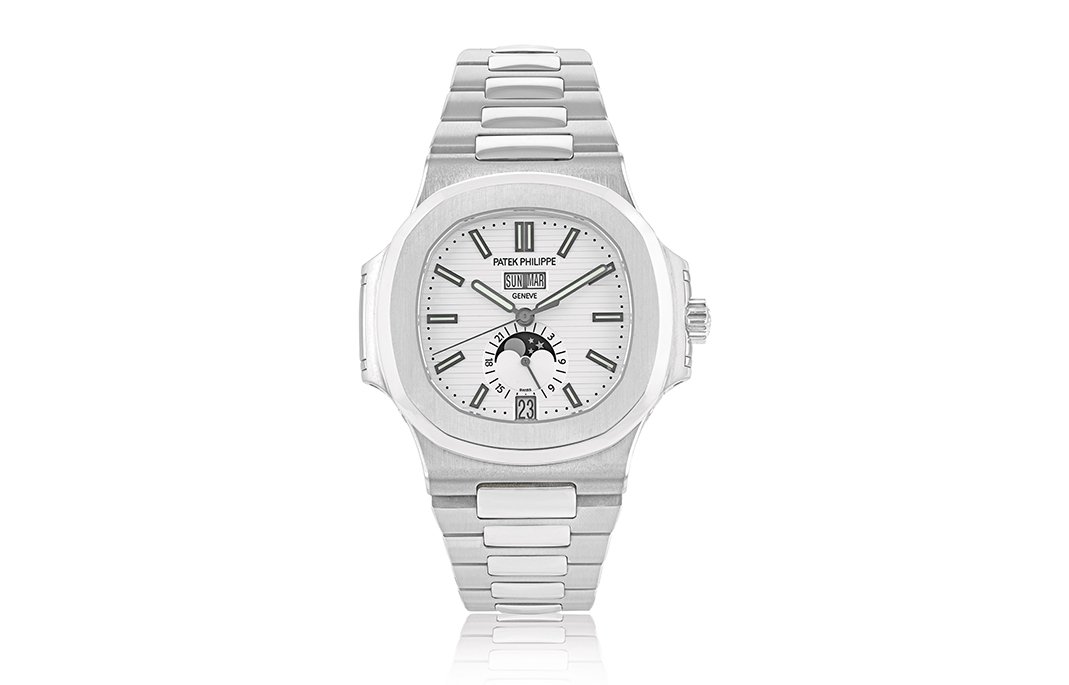
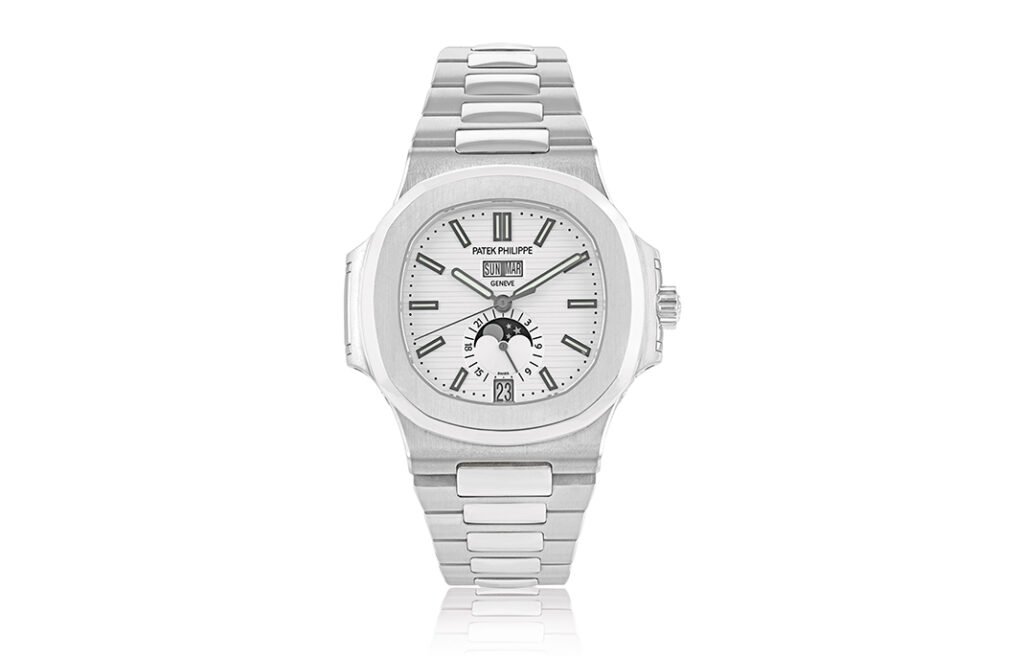
Patek Philippe Nautilus: A True Sports Icon

Patek Philippe Nautilus: A True Sports Icon

The Patek Philippe Nautilus remains an auction favourite, celebrated for its distinctive design, integrated bracelet and enduring appeal among collectors

The Origins

Introduced in 1976 under Reference 3700/1 (the “Jumbo”), the Patek Philippe Nautilus quickly established itself as one of the most influential luxury watches. 

The Case 

Stainless steel with a 40 mm diameter, its architectural shape is buoyed by a blend of satin-brushed and polished finishes. 

The Caseback 

Moving away from the solid monobloc design of earlier Nautilus models, this variant incorporates a sapphire-crystal display back that reveals the meticulously decorated calibre. 

The Bracelet 

The integrated stainless steel bracelet follows the contours of the case, secured by a concealed double-deployant clasp—a seamless integration that preserves the watch’s sports luxury aesthetic. 

The Dial

The Inspiration Created by legendary watchmaker Gérald Genta, the design for the Nautilus was directly inspired by the shape of a ship’s porthole. A horizontally embossed pattern, framed by applied white gold luminous baton markers with multiple calendar displays, strikes an ideal balance between subtle elegance and technical detail.

The Style 

This timepiece combines all the elements that collectors value: iconic design, an integrated bracelet, and practical complications, making it compelling and historically significant. 

The Movement

The featured Nautilus 5726/1A 010 is powered by a self-winding Calibre 324, the patented Gyromax® Free Sprung Balance, and a power reserve of up to 45 hours.

At Auction 

The Patek Philippe Nautilus 5726/1A-010 was sold by AstaGuru in 2024 for ₹99,58,905 ($104,830). 

The Driving Force

THE DRIVING FORCE

Aurélie Streit, Vice President of the FHH, believes preserving watchmaking culture means making it accessible to a new generation of enthusiasts

Image Courtesy: Fondation Haute Horlogerie

Established in 2005 by Audemars Piguet, Girard-Perregaux, and the Richemont Group, the Fondation Haute Horlogerie celebrates fine watchmaking as an art form. Aurélie Streit discusses the artistry and engineering behind the craft, and the FHH’s mission to inspire a deeper appreciation for horology.

What first drew you to the world of watches, and what made you realise that was where you wanted to progress your career?

One of my earliest memories is my first mechanical Swatch, in 1994. I was fascinated by the visible movement and the rotating starry sky on the dial. There was something magical about seeing an object come alive through mechanics. That fascination developed into an appreciation of everything a watch brings together: engineering, design, craftsmanship, and human ingenuity. As my career progressed, I discovered how many different skills and personalities contribute to a single timepiece. That combination of technical precision and creativity made watchmaking a world I wanted to explore further.

You have an engineering background but built much of your career around the cultural and human side of watchmaking. How has the engineer in you influenced the way you communicate horology?

My engineering background was my entry point into watchmaking. It took me into the workshops and, above all, introduced me to the people behind the creations: developers, watchmakers, and the many other craftspeople involved in making timepieces. Those encounters made me realise how much knowledge existed in the workshops that was not always conveyed in boutiques. I wanted to join the Foundation to help bridge that gap. Understanding the mechanics also deepened my respect for the people behind them. Once you appreciate the constraints involved, you see their ingenuity, patience and skill differently. For me, the technical and human dimensions are closely connected.

Image Courtesy: Fondation Haute Horlogerie

You’ve worked with Sowind, Audemars Piguet and Piaget. What learnings did you bring to the FHH?

Working across these maisons gave me a view of watchmaking beyond the finished product. I saw how much depends on coordination between different disciplines, and how the relationship with a watch continues long after its purchase. I brought that practical perspective to the FHH. Education needs to connect with the situations people encounter, whether they are explaining a watch in a boutique or trying to understand their own timepiece. It also taught me to respect the individuality of each maison while recognising the knowledge and values they share. 

After more than a decade at the Foundation, is there something about watchmaking you understand differently than when you joined? I have become much more aware of how differently people can enter this world.

Someone may be drawn to mechanics, another to design, jewellery, history or a personal memory. Each of those starting points can lead to a deep appreciation of watchmaking. That has changed how I think about sharing knowledge. We cannot assume that everyone shares our references or vocabulary. We must listen, understand what interests them and build from there. Preserving watchmaking culture also means allowing new people to develop their own relationship with it.

Read the full story in the special ‘Horology Issue’ of LuxeTrope, on stands now.

Vintage Mantel Clocks for the Modern Home

Vintage Mantel Clocks for the Modern Home

Mantel clocks have stepped out of horological obscurity and are taking their place alongside fine art, antique furniture, and sculpture

Once created to mark the hours, mantel and table clocks have evolved into decorative objects that reflect craftsmanship, design and collecting tastes. From gilt-bronze cases to contemporary geometric forms, their appeal lies as much in their appearance as in their mechanisms.

European clockmakers historically collaborated with cabinetmakers and bronziers to create elaborate clocks in bronze and porcelain. Art Nouveau introduced flowing, botanical forms, while Art Deco favoured geometry and striking material contrasts.

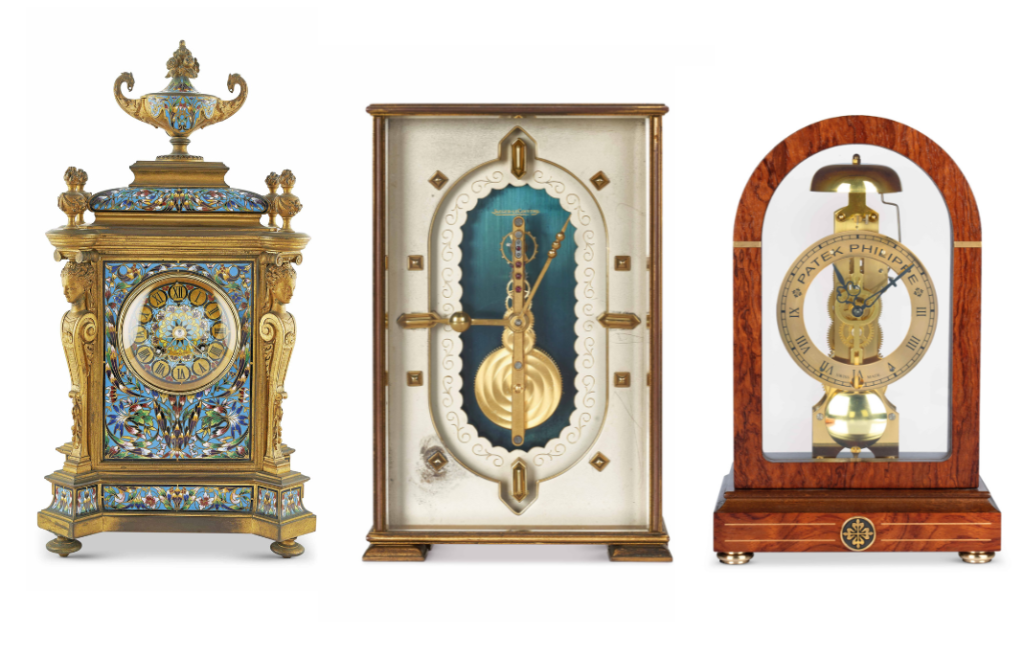
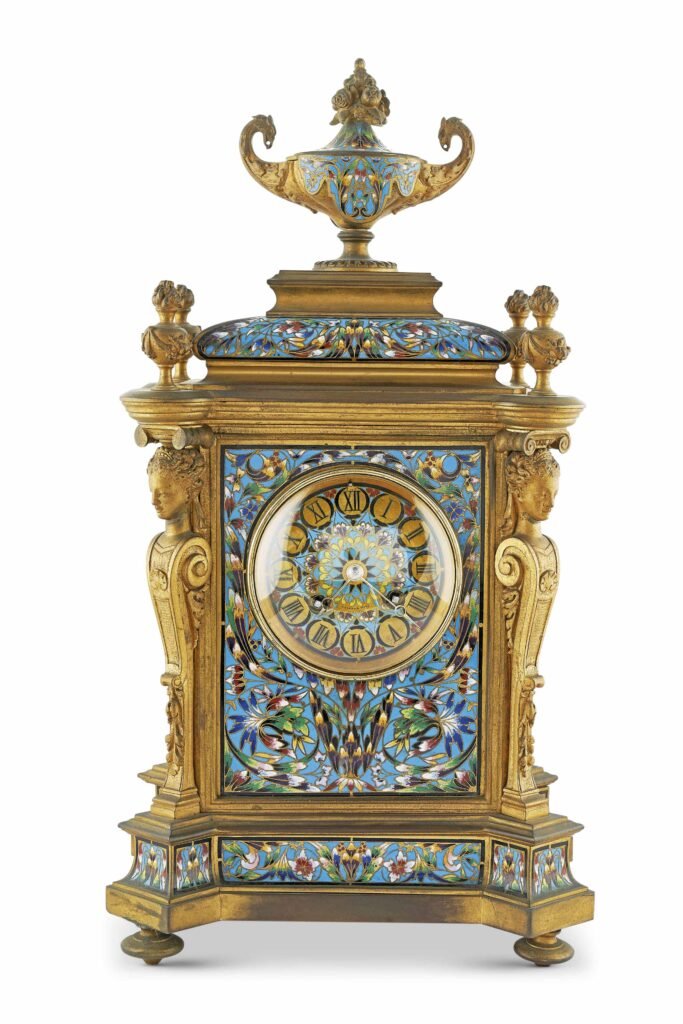
Bronze Table Clock by Tiffany & Co. | Sold in 2021 by AstaGuru for ₹5,50,070 ($5,790)
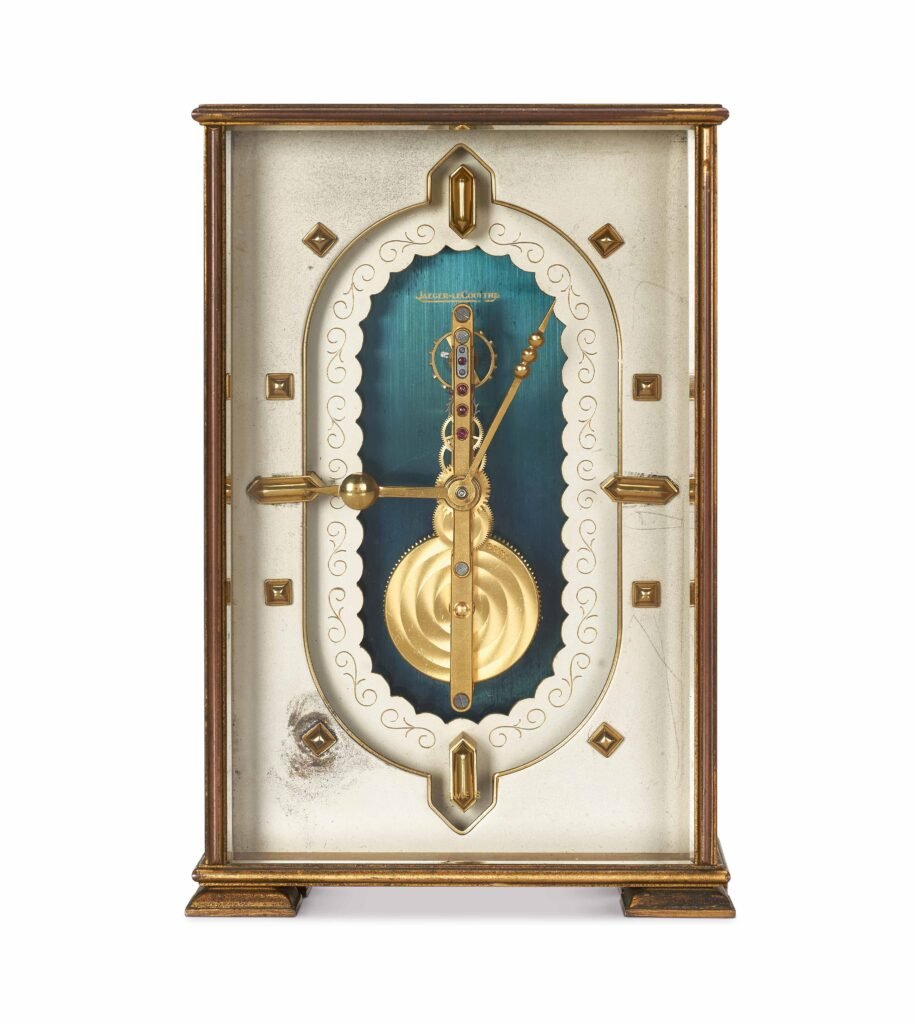
Gilt Brass Table Clock by Jaeger-LeCoultre | Sold in 2018 by AstaGuru for ₹1,19,310 ($1,255)
The Maisons Behind the Market

Luxury houses have brought their own traditions to clockmaking. Baccarat translated its expertise in crystal into decorative table clocks, while silversmith Mappin & Webb drew on sterling silver and ceremonial detailing. Tiffany & Co. explored bronze, enamel and ornate floral motifs.

Jaeger-LeCoultre combined decorative cases with mechanical sophistication. Its mid-century table clocks often featured manual-winding movements and jewelled calibres. Chopard, meanwhile, adapted designs from collections such as Happy Sport and Ice Cube into contemporary clock forms.

Recent auction results highlight continued interest in these pieces. At Giftex.in in 2026, a Baccarat crystal-and-brass clock and a Mappin & Webb sterling silver clock each sold for ₹4.72 lakh. A Chopard Classic Racing table clock fetched ₹1.40 lakh, while an Ice Cube model sold for ₹1.33 lakh. A Tiffany & Co. clock achieved ₹5.50 lakh at an AstaGuru auction in 2021.

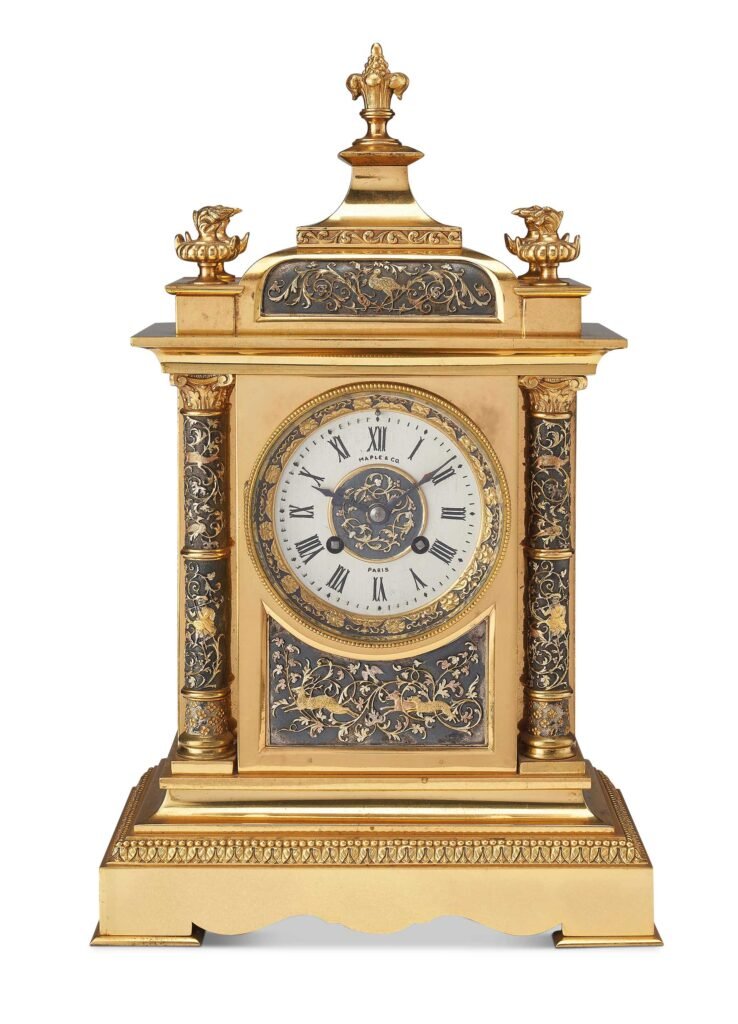
Bronze Table Clock by Maple & Co. Paris | Sold in 2024 by Giftex.in for ₹2,38,366 ($2,509)
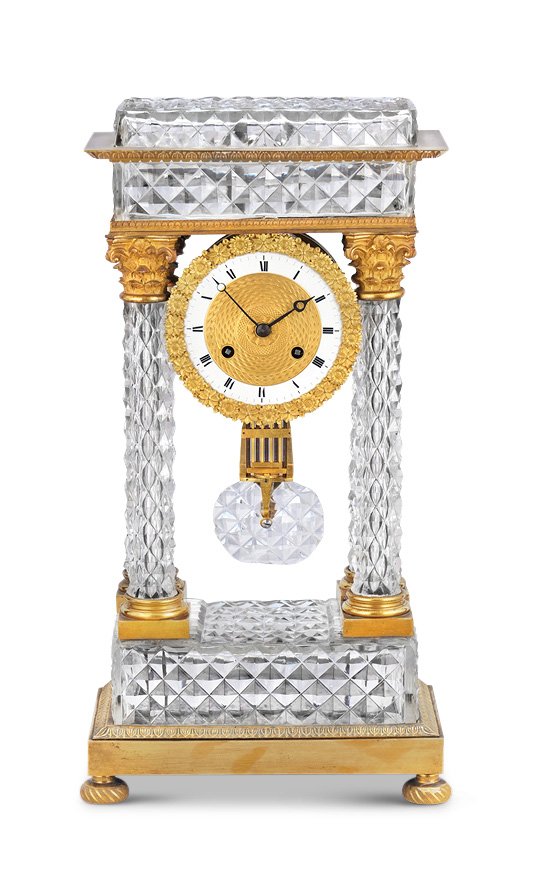
Crystal & Brass Table Clock by Baccarat | Sold in 2026 by Giftex.in for ₹4,72,000 ($4,968)
What Determines a Clock’s Value?

Collectors consider several factors when assessing a clock. Design, craftsmanship, movement quality, rarity, provenance and condition all influence its appeal. Complications such as striking mechanisms, perpetual calendars and repeating functions can add further interest. Original components and a functioning movement also matter.

Limited editions, unusual materials and documented histories can make individual pieces particularly desirable. However, an elaborate mechanism alone does not guarantee a strong auction result; the design and condition can be equally important.

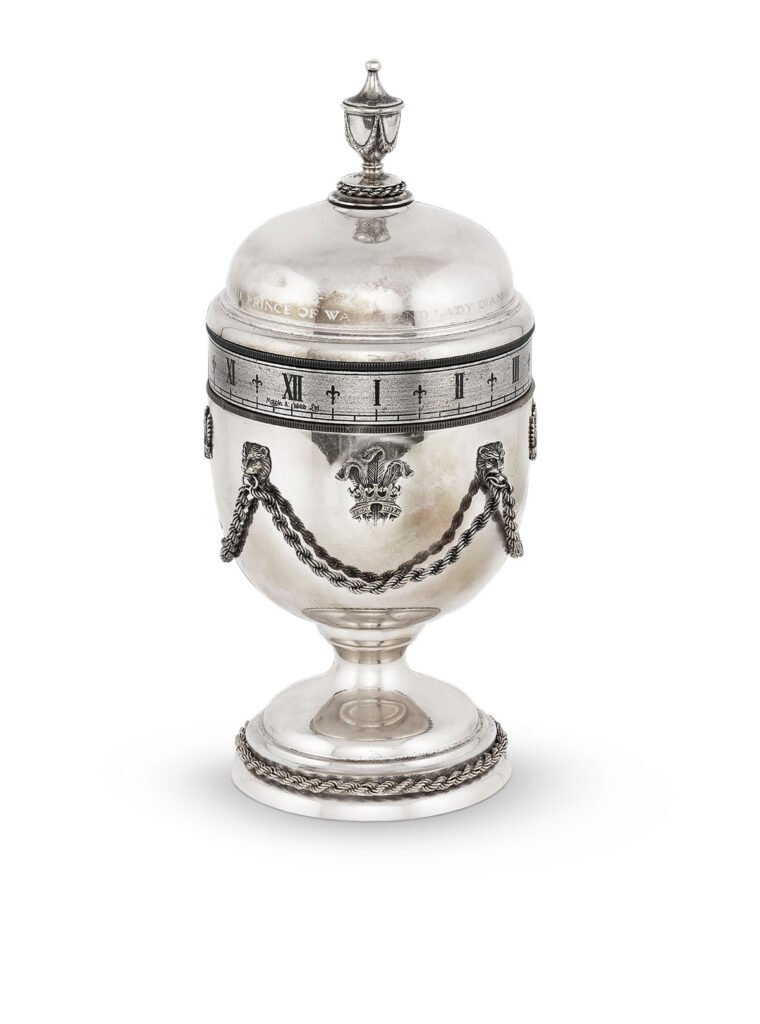
Royal Wedding Silver Table Clock by Mappin & Webb, London | Sold in 2026 by Giftex.in for ₹4,72,000 ($4,968)
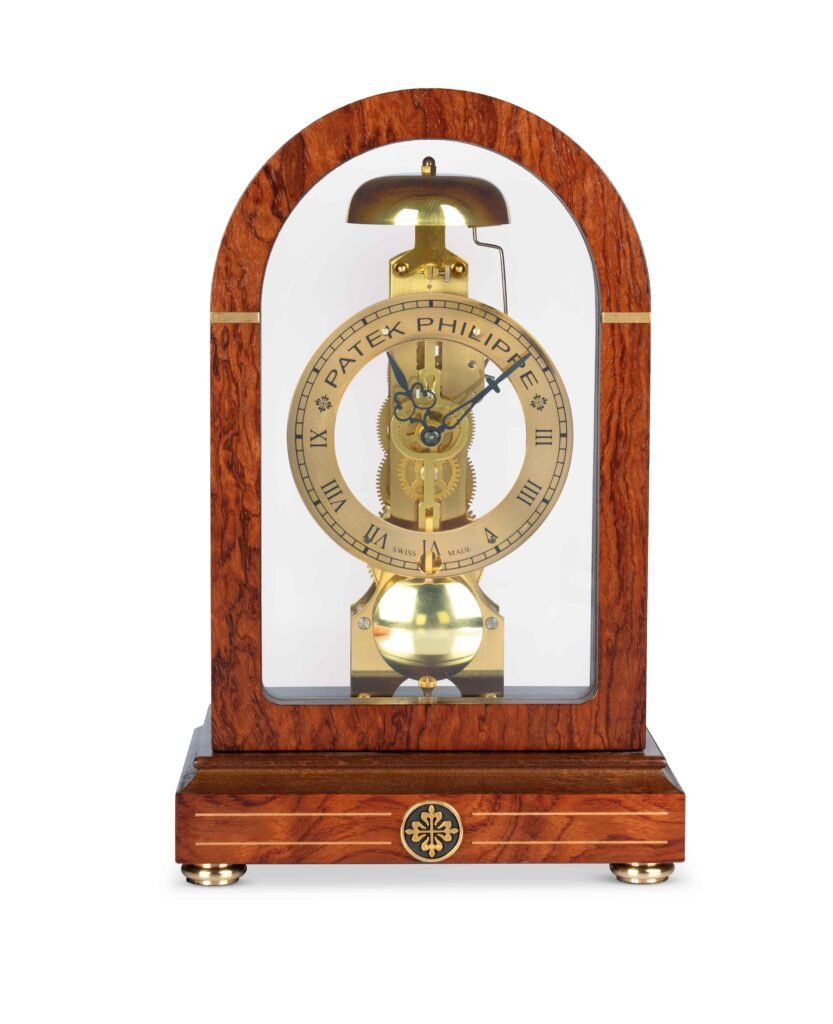
Wood & Brass Table Clock by Patek Philippe | Sold in 2026 by AstaGuru for ₹9,98,250 ($10,507)
Collectors Look Beyond Time

Today, collectible clocks occupy a space between horology and decorative art. They serve as timekeepers, sculptural accents and conversation pieces, reflecting a growing appreciation for objects with history and character.

Unlike a wristwatch, a mantel clock belongs to a home. It remains in one setting as generations pass, gathering memories along the way. Eventually, its significance can extend beyond its original purpose: it becomes part of the story of the room itself.

Read More

The auction brought together leading names in Modern Indian art, with several works achieving standout prices

Ornamentation in Indian art tells stories of power, identity and cultural memory

The inaugural edition of The Collectors' Cove brought together exceptional art, jewellery, haute horology and collectible design, setting a new benchmark for luxury collecting in India

Sojourn: Selected Works (1940–2015) Volume II traces the extraordinary artistic evolution of Modern Master S.H. Raza

For anyone entering the world of international art, the smartest first step is often the simplest one

Ten artists established new auction records, with bidding pushing several works well beyond their estimates and previous market highs

The Art of Time

The Art of Time

These eight timepieces bring the creative worlds of artists and fine watchmaking together

A watch can be more than just an instrument that tells time. Through collaborations with artists, watchmakers are finding new ways to bring painting, sculpture and contemporary art to one’s wrist. These eight timepieces show how an artist’s expression and traditional watchmaking come together.

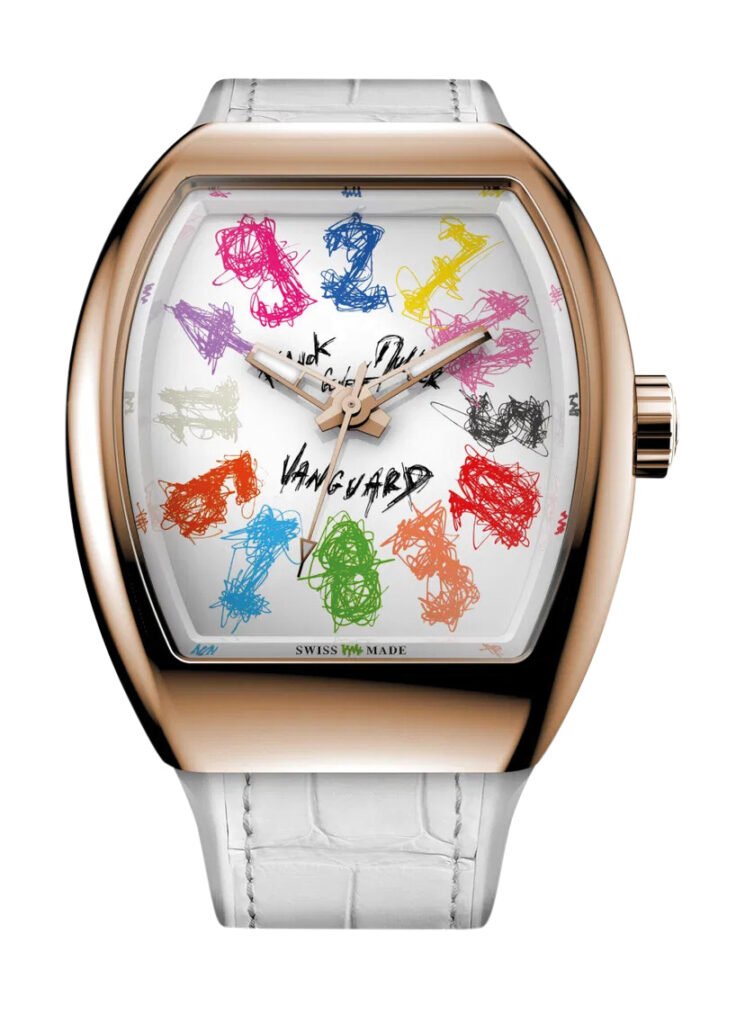
Franck Muller x Hom Nguyen

The limited-edition Vanguard Crazy Hours pairs Swiss watchmaking with the expressive style of French artist Hom Nguyen. Its signature jumping-hour dial becomes a canvas for free-flowing art, while the automatic Calibre MVD FM2800-CHRS powers the watch.

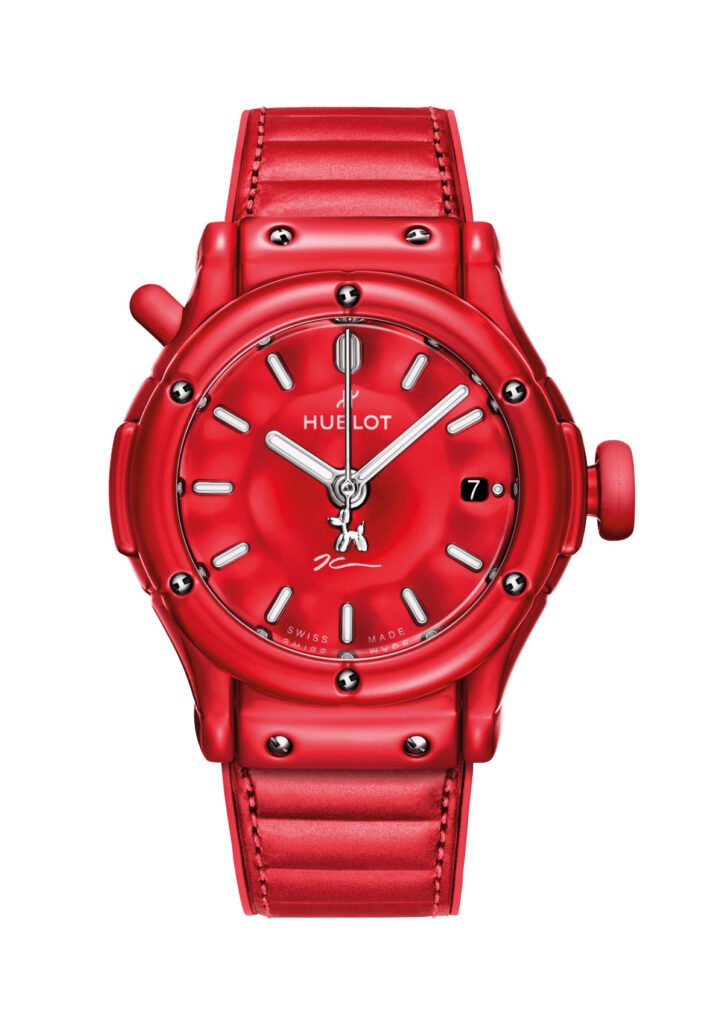
Hublot x Jeff Koons

Inspired by Jeff Koons’ famous Balloon Dog sculpture, this 42 mm timepiece houses the self-winding Calibre MHUB1710, with each colour edition limited to 200 pieces.

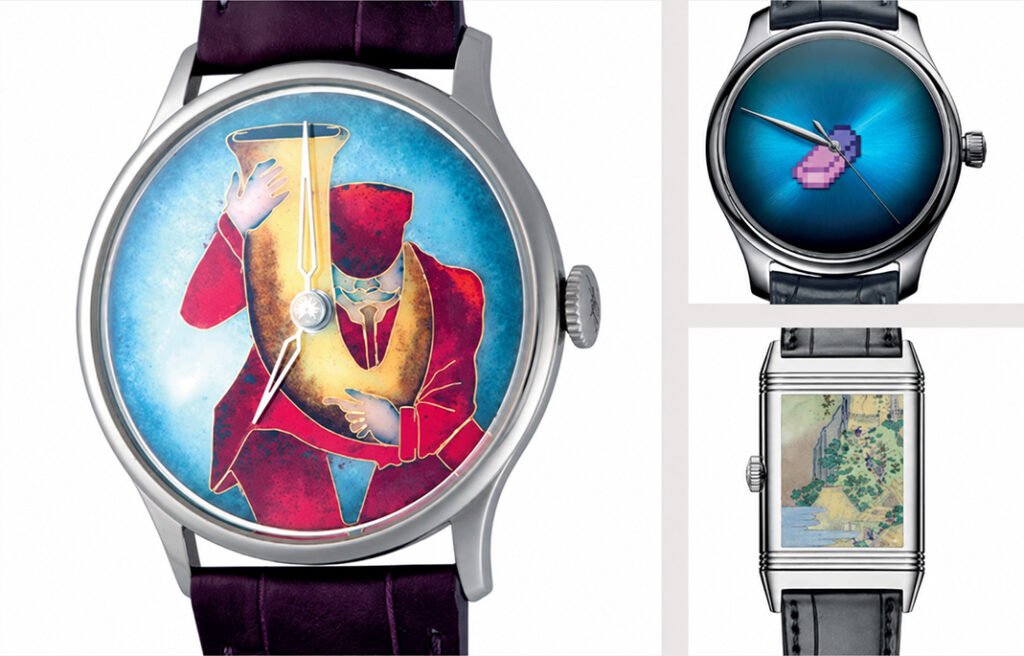
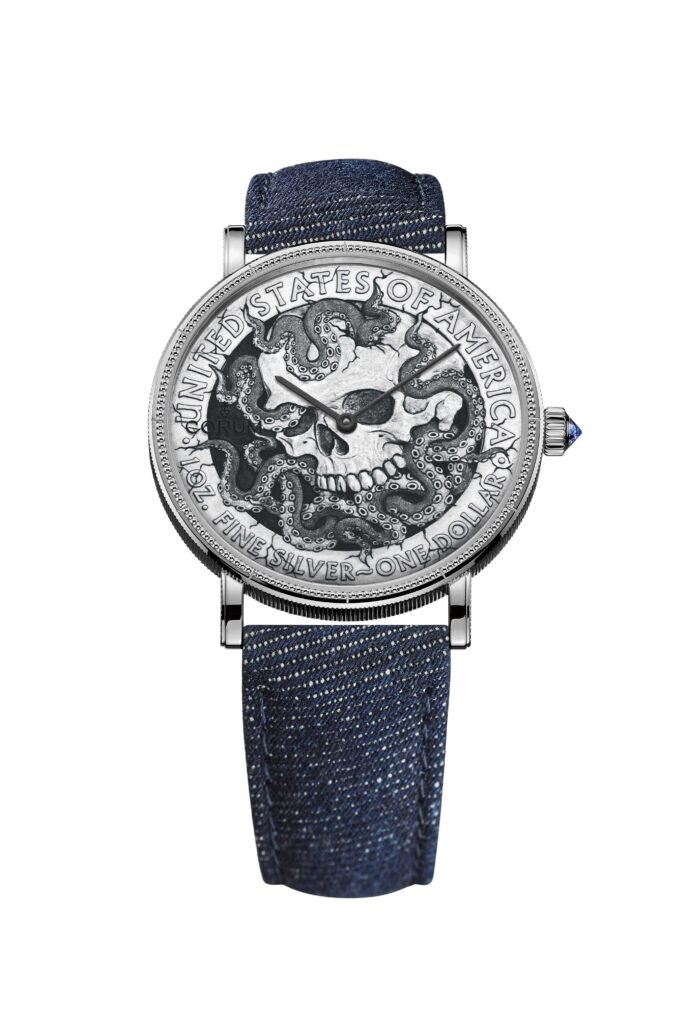
Corum Heritage x Aleksey Saburov

Russian engraver and microsculptor Aleksey Saburov works with 925 sterling silver American dollar coins for the Hobo Coin watch. The Sailor’s Skull edition features a hand-engraved dial, an automatic CO 082 movement and a blue denim strap.

H. Moser & Cie. x seconde/seconde/

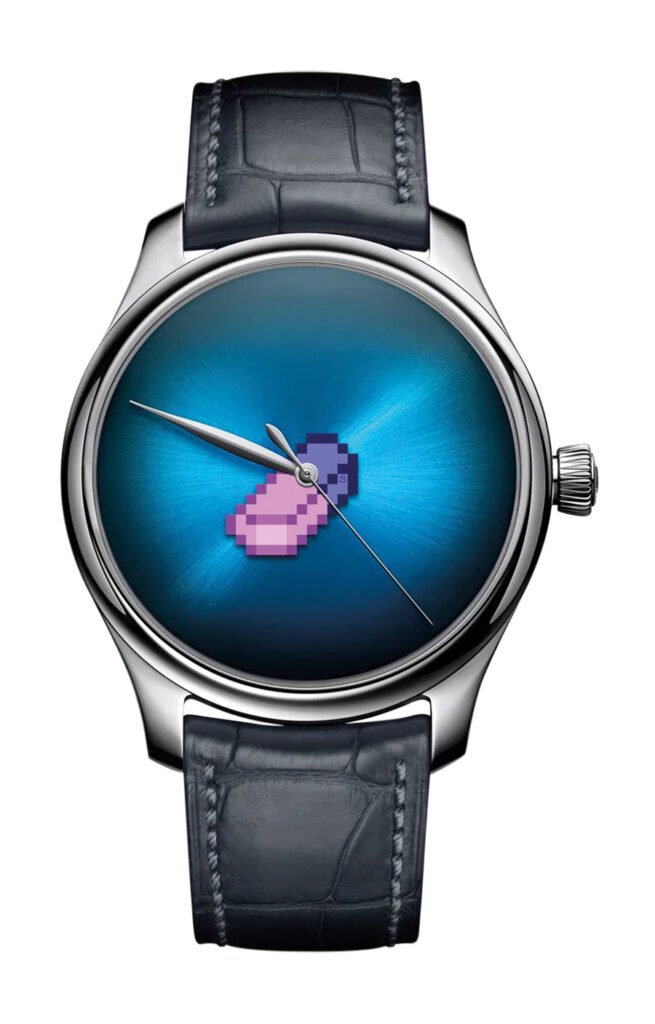
Created with Parisian artist Romaric André, the Endeavour Centre Seconds Concept replaces the traditional hour hand with a pixelated eraser. The stainless steel watch houses Calibre HMC 200 and is limited to 20 pieces. 

Jaeger-LeCoultre x Katsushika Hokusai

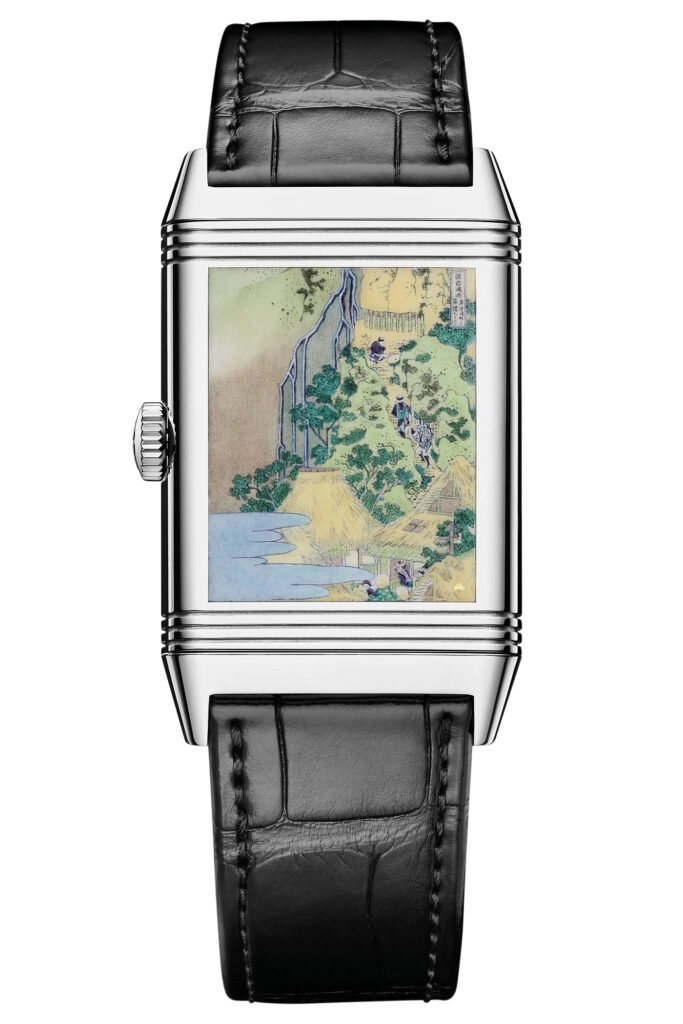
Limited to just 10 pieces, the Reverso Tribute Enamel Hokusai Kiyotaki Kannon Waterfall is a nod to the celebrated Japanese artist’s work. Each watch features a miniature enamel painting on its caseback and is powered by Calibre 822.

Bvlgari x Wang Yan Cheng

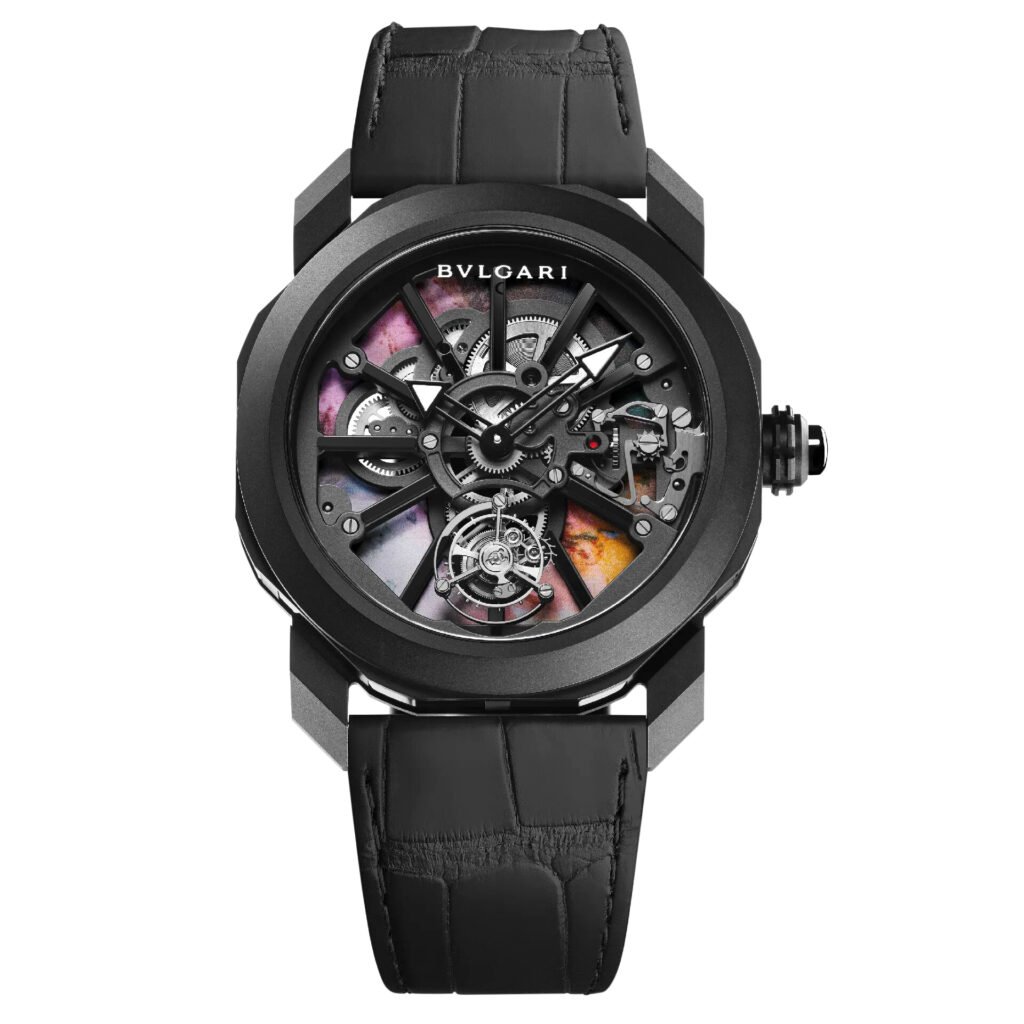
The Octo Roma Naturalia features reproductions of eight paintings by Chinese contemporary artist Wang Yan Cheng on black onyx plates. Each plate is carefully shaped around the openworked BVL 206 flying tourbillon movement.

Parmigiani Fleurier x Marcello Lo Giudice

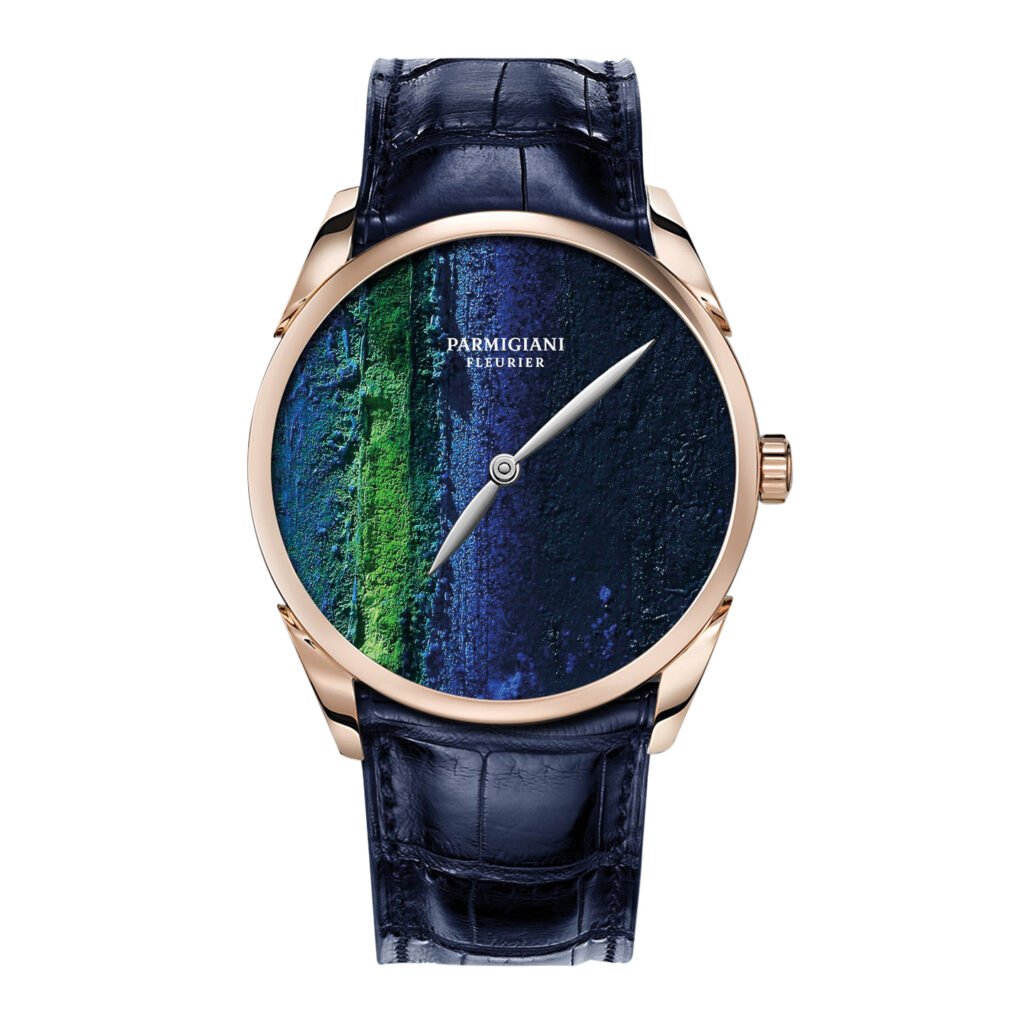
Italian contemporary artist Marcello Lo Giudice brings vivid colour to this limited-edition Tonda 1950, restricted to 12 pieces. Its dial features a laser-engraved, dimensional texture, while the self-winding Calibre PF702 uses a micro-rotor.

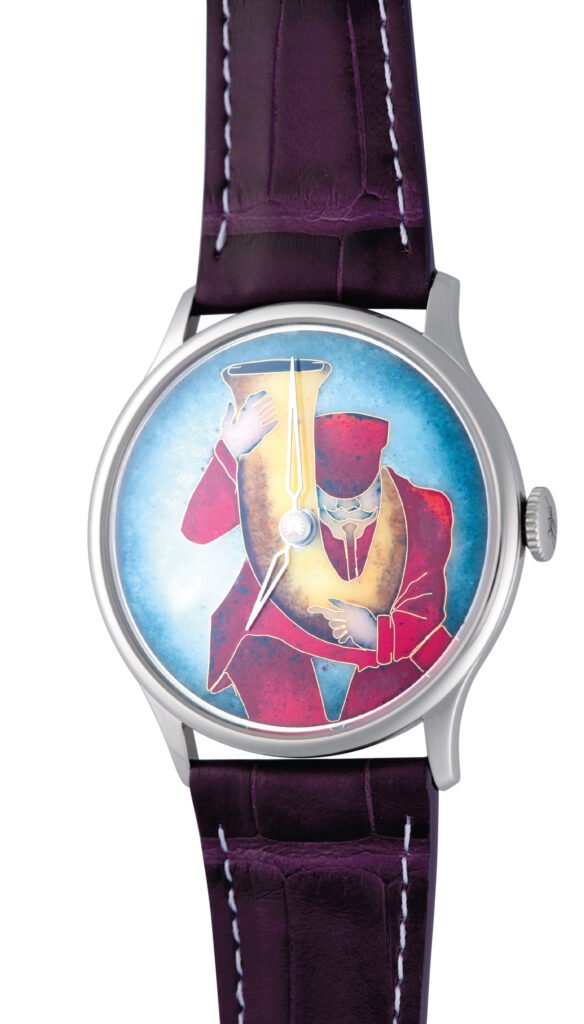
Deguiret x Krishen Khanna

Deguiret collaborated with celebrated Indian artist Krishen Khanna on 10 exclusive timepieces inspired by his Bandwalla artworks. The designs are recreated on miniature cloisonné enamel dials, with each watch powered by a hand-wound Peseux mechanical movement.

Read More

The auction brought together leading names in Modern Indian art, with several works achieving standout prices

Ornamentation in Indian art tells stories of power, identity and cultural memory

The inaugural edition of The Collectors' Cove brought together exceptional art, jewellery, haute horology and collectible design, setting a new benchmark for luxury collecting in India

Sojourn: Selected Works (1940–2015) Volume II traces the extraordinary artistic evolution of Modern Master S.H. Raza

For anyone entering the world of international art, the smartest first step is often the simplest one

Ten artists established new auction records, with bidding pushing several works well beyond their estimates and previous market highs

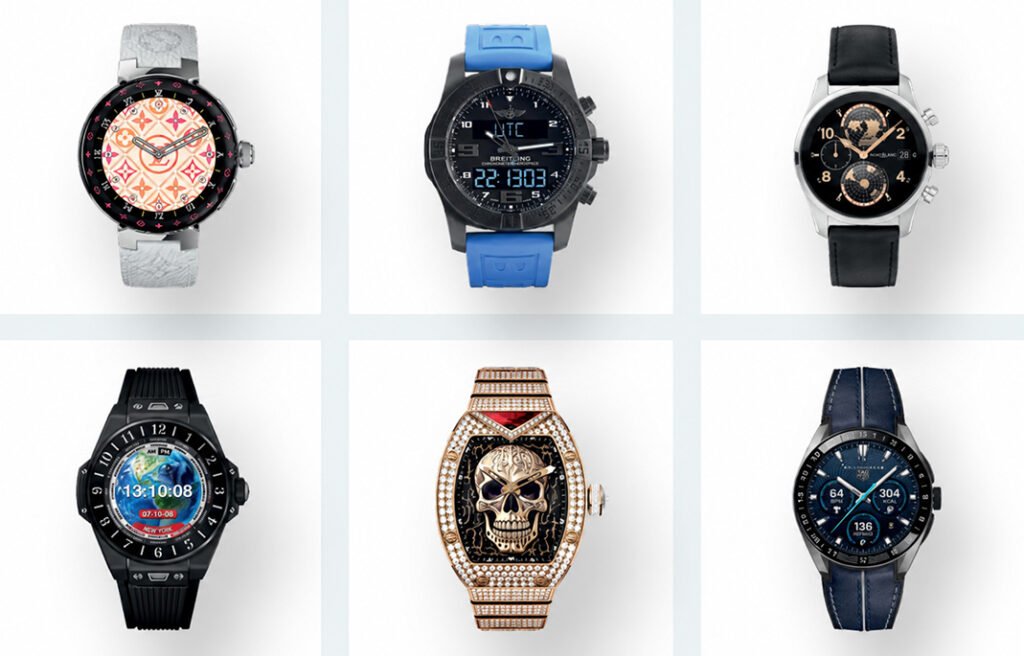
Six Luxury Smartwatches for the Tech-Savvy Collector

Six Luxury Smartwatches for the Tech-Savvy Collector

From Louis Vuitton’s illuminated watch faces to TAG Heuer’s golf analytics, these smartwatches combine technology with distinctive design

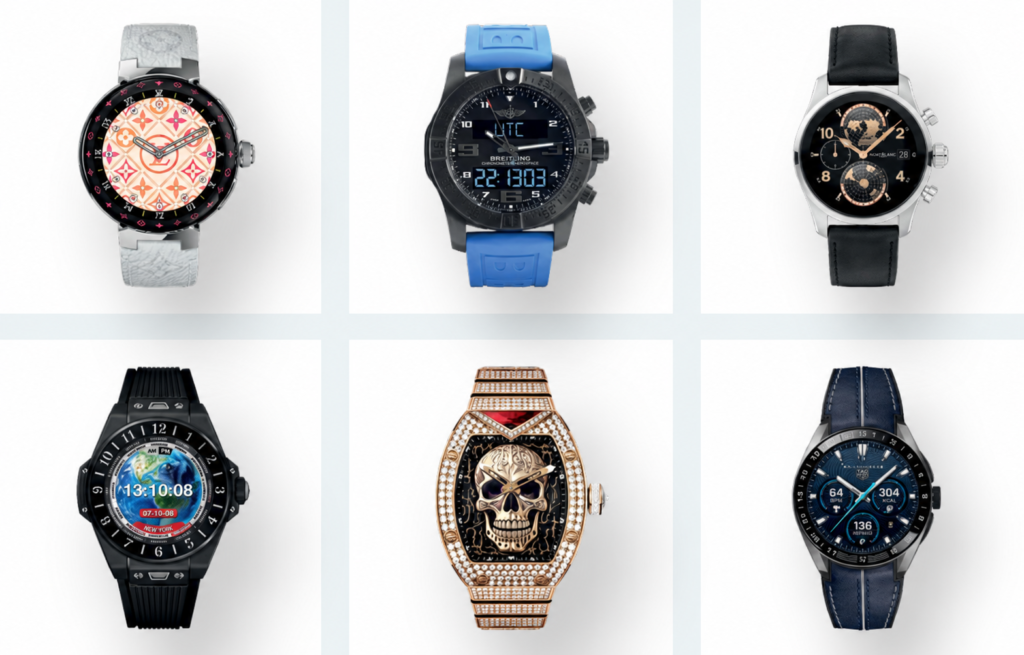
Imagine a watch that doesn’t just help you get through the day but ticks a few points on the lifestyle scale. A jet lag advisor that knows your travel schedule better than you do. Or preloaded animated workouts that look like they came straight out of a sci-fi movie. Or diverse customisation options that let you plan the next phase.

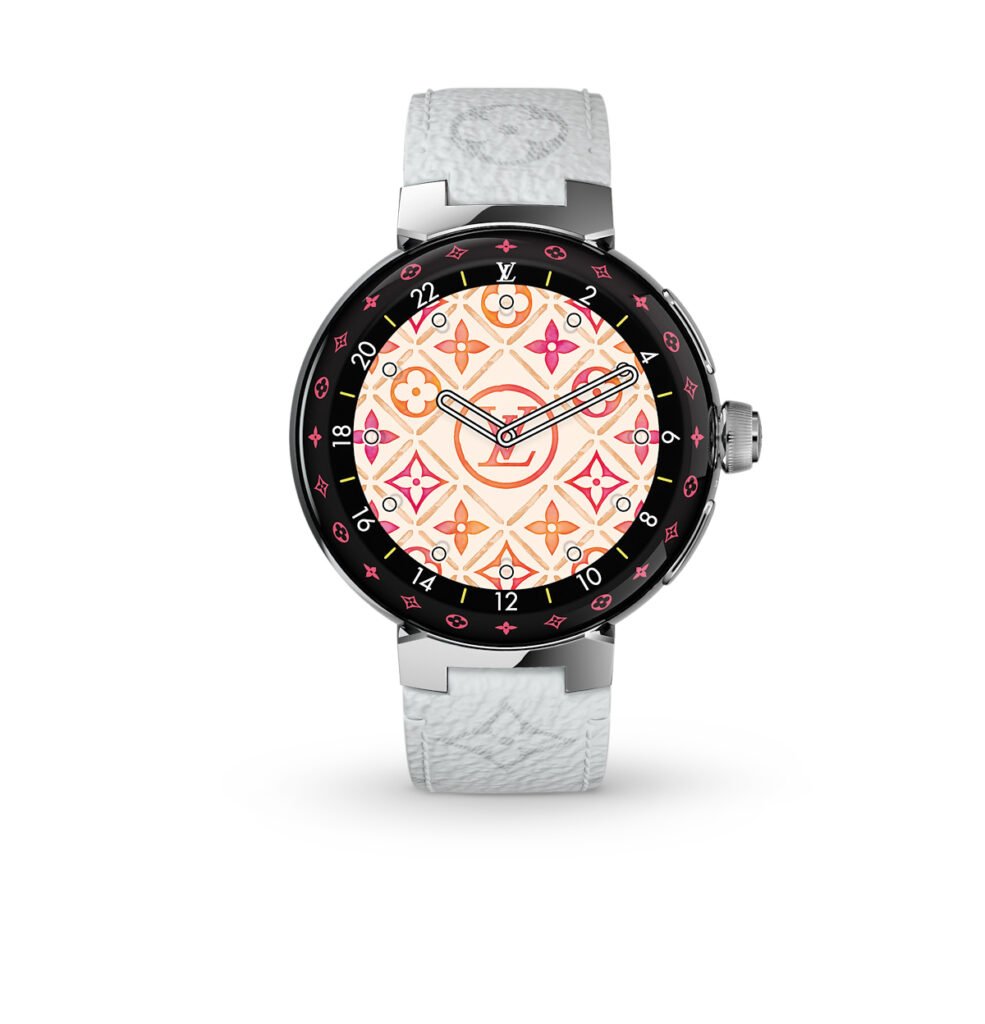
Louis Vuitton Tambour Horizon Light Up Reference No. QAD00B

With 24 LED lights that create a glow- in-the-dark animation, the piece’s watch faces reflect the maison’s design codes.

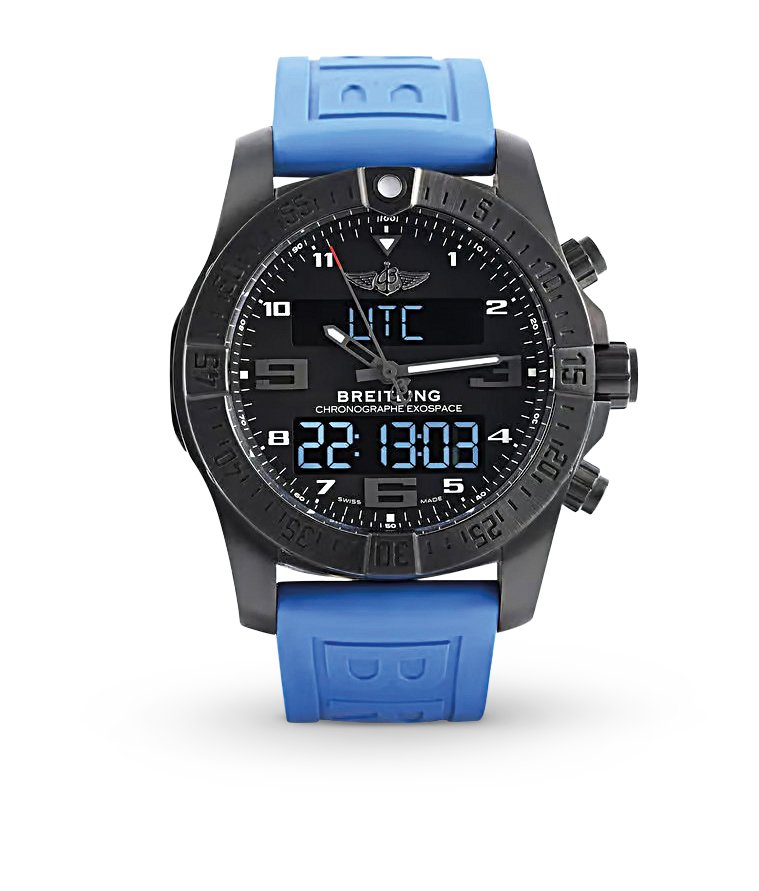
Breitling Professional Exospace B55 Reference No. EB5510H21B1S1

Tailor-made for pilots and yachtsmen, this timepiece has a countdown/countup system, as well as the ability to record flight and regatta times.

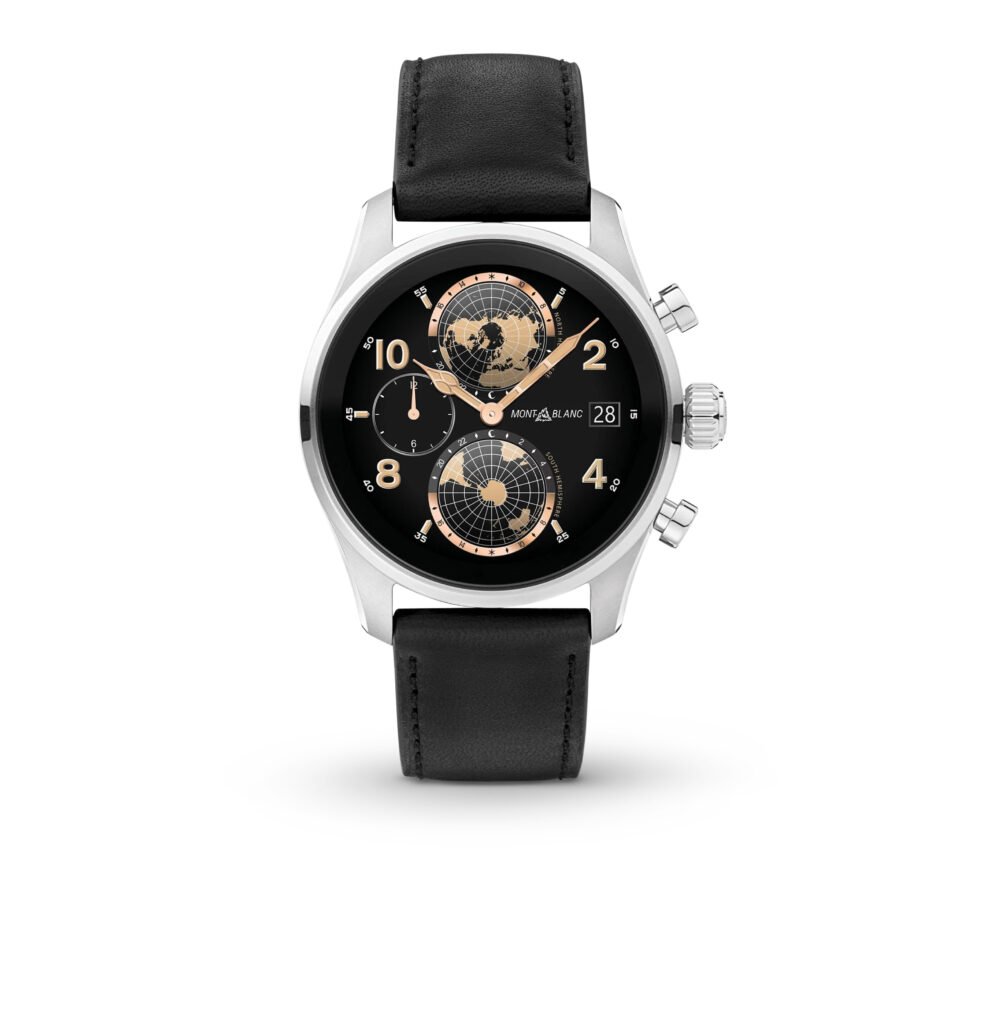
Montblanc Summit 3 Reference No. MB129268

Featuring a lightweight titanium case and a 1.28-inch AMOLED display, the watch’s intuitive functions let the wearer control the specs of the watch.

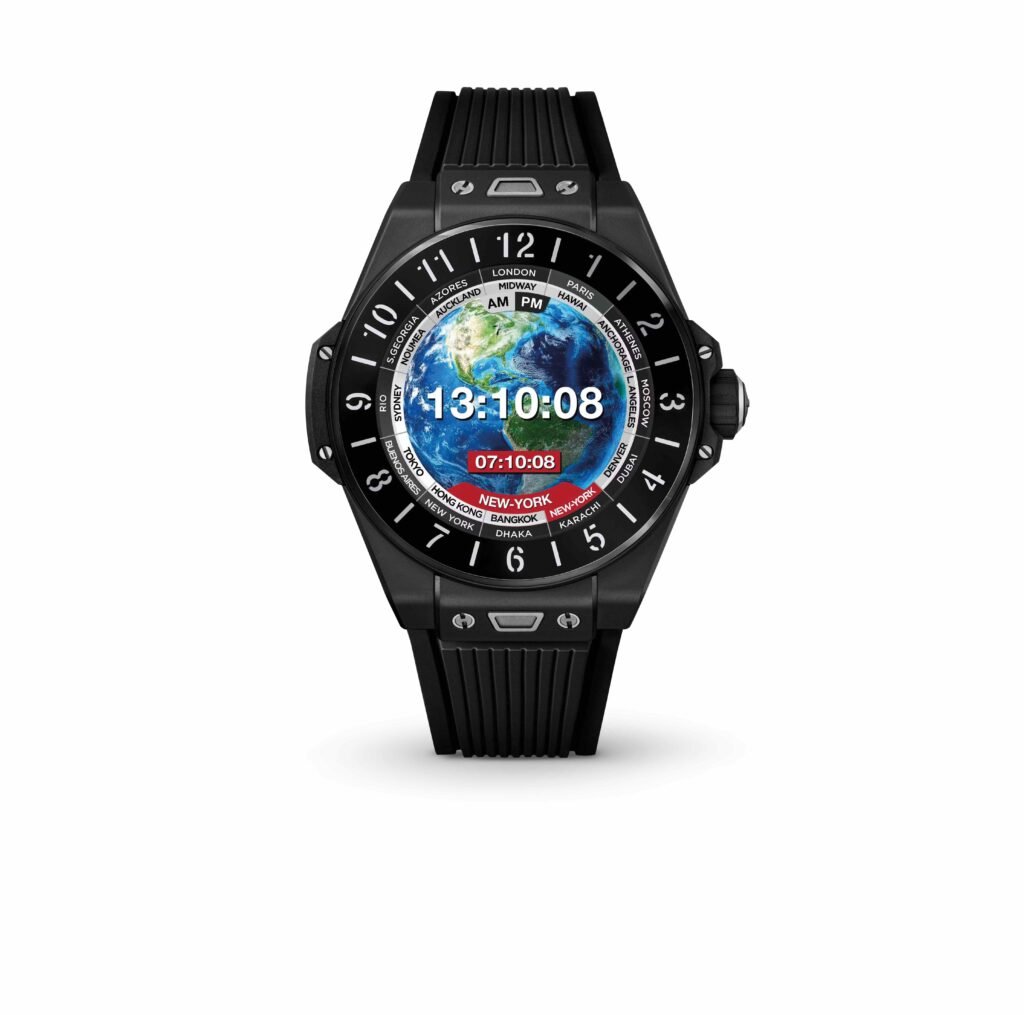
Hublot Big Bang e Reference No. 440.NX.1100.RX

A satin-finished titanium case and an AMOLED touchscreen give way to custom dials, featuring a snazzy series designed by French artist Marc Ferrero.

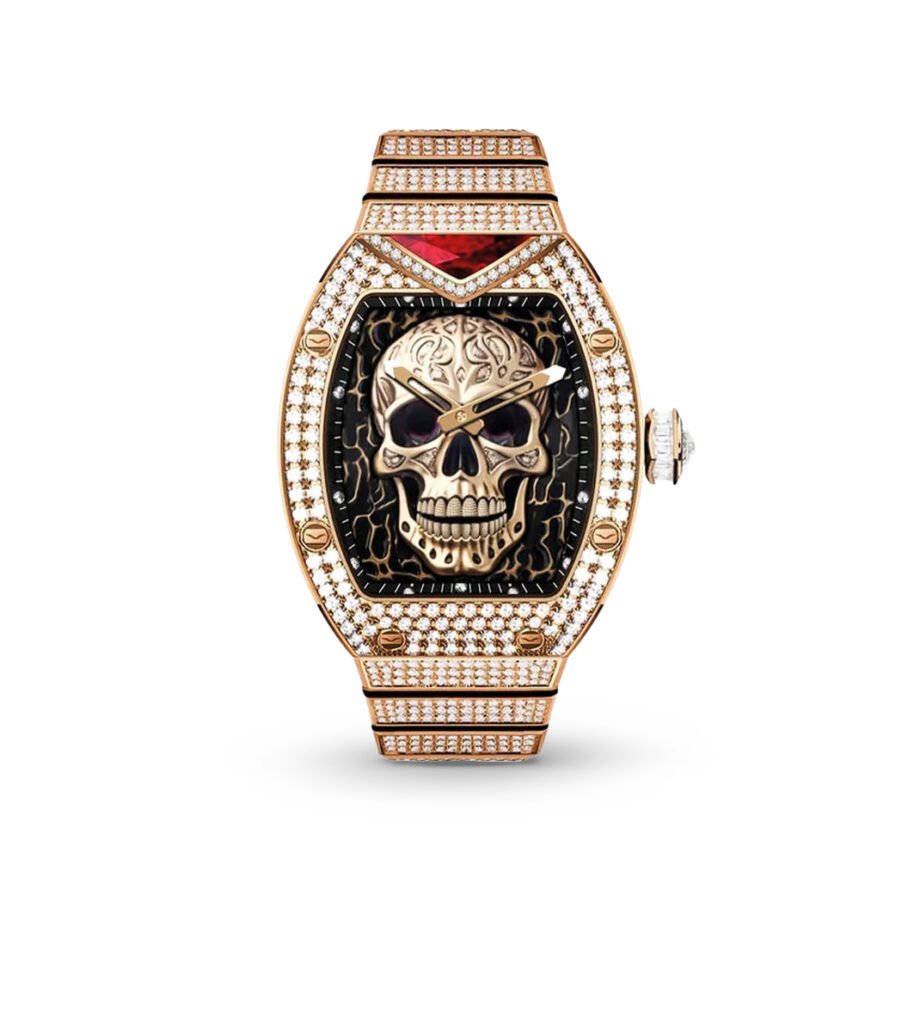
Vertu Fusion Hamlet Design Diamond Watch

This features 500+ diamonds, 4.75 carats of Burmese rubies, a high-resolution colour screen, 24/7 health tracking, and a secure crypto wallet.

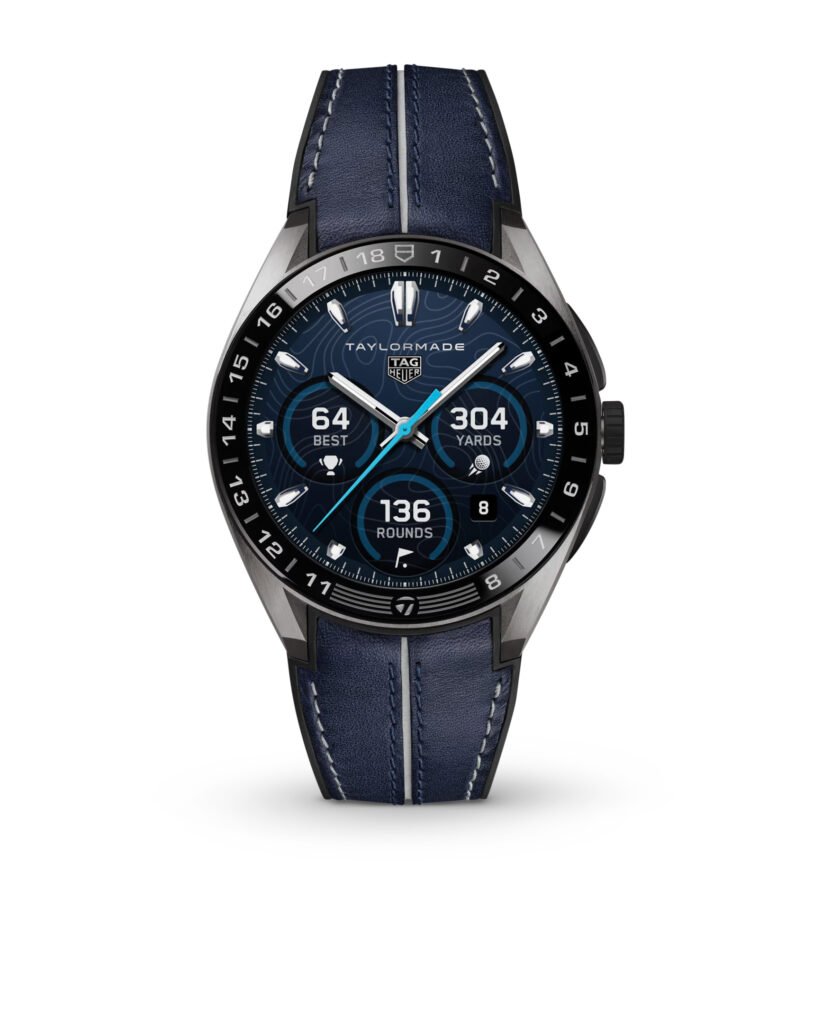
TAG Heuer Connected Calibre E5 x TaylorMade Edition

Built for golf analytics, it features an 18-hole engraved ceramic bezel, automatic shot tracking, and an exclusive Automatic Strokes Gained metric.

Read More

The auction brought together leading names in Modern Indian art, with several works achieving standout prices

Ornamentation in Indian art tells stories of power, identity and cultural memory

The inaugural edition of The Collectors' Cove brought together exceptional art, jewellery, haute horology and collectible design, setting a new benchmark for luxury collecting in India

Sojourn: Selected Works (1940–2015) Volume II traces the extraordinary artistic evolution of Modern Master S.H. Raza

For anyone entering the world of international art, the smartest first step is often the simplest one

Ten artists established new auction records, with bidding pushing several works well beyond their estimates and previous market highs

Crowning Glory: The Rolex Enigma

Crowning Glory: The Rolex Enigma

From tropical dials to rare references, discover the details that make vintage Rolex watches coveted by collectors

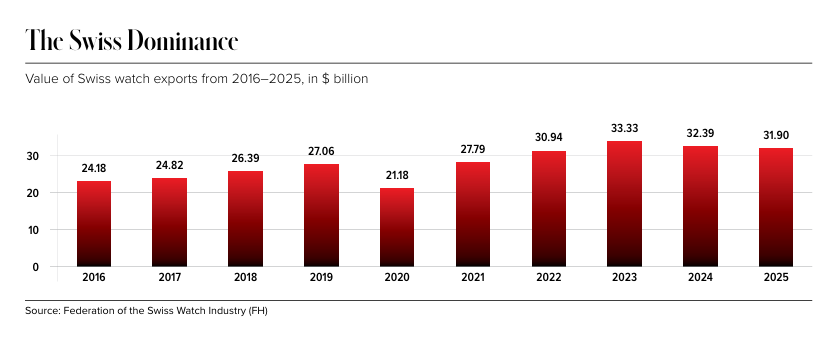
Rolex continues to dominate the luxury watch market, but its appeal goes beyond production numbers and brand recognition. In 2025, the Swiss watchmaker increased sales by four per cent to more than CHF 11 billion ($14 billion), according to the annual Swiss Watch report by Morgan Stanley and LuxeConsult. This growth came despite a two per cent reduction in production or retailer allocations for the second consecutive year. Rolex still accounted for approximately 33 per cent of Swiss watch sales, selling close to one million watches worldwide.

Yet, for collectors, the real fascination often lies in what makes one Rolex different from another. Vintage watches, in particular, can command significant premiums because of their age, condition, rarity and distinctive features. Although Rolex has produced an estimated 40 million watches since its founding in 1905, around four million were made between 1905 and 1970. This uneven production history helps explain why certain vintage references remain highly sought after.

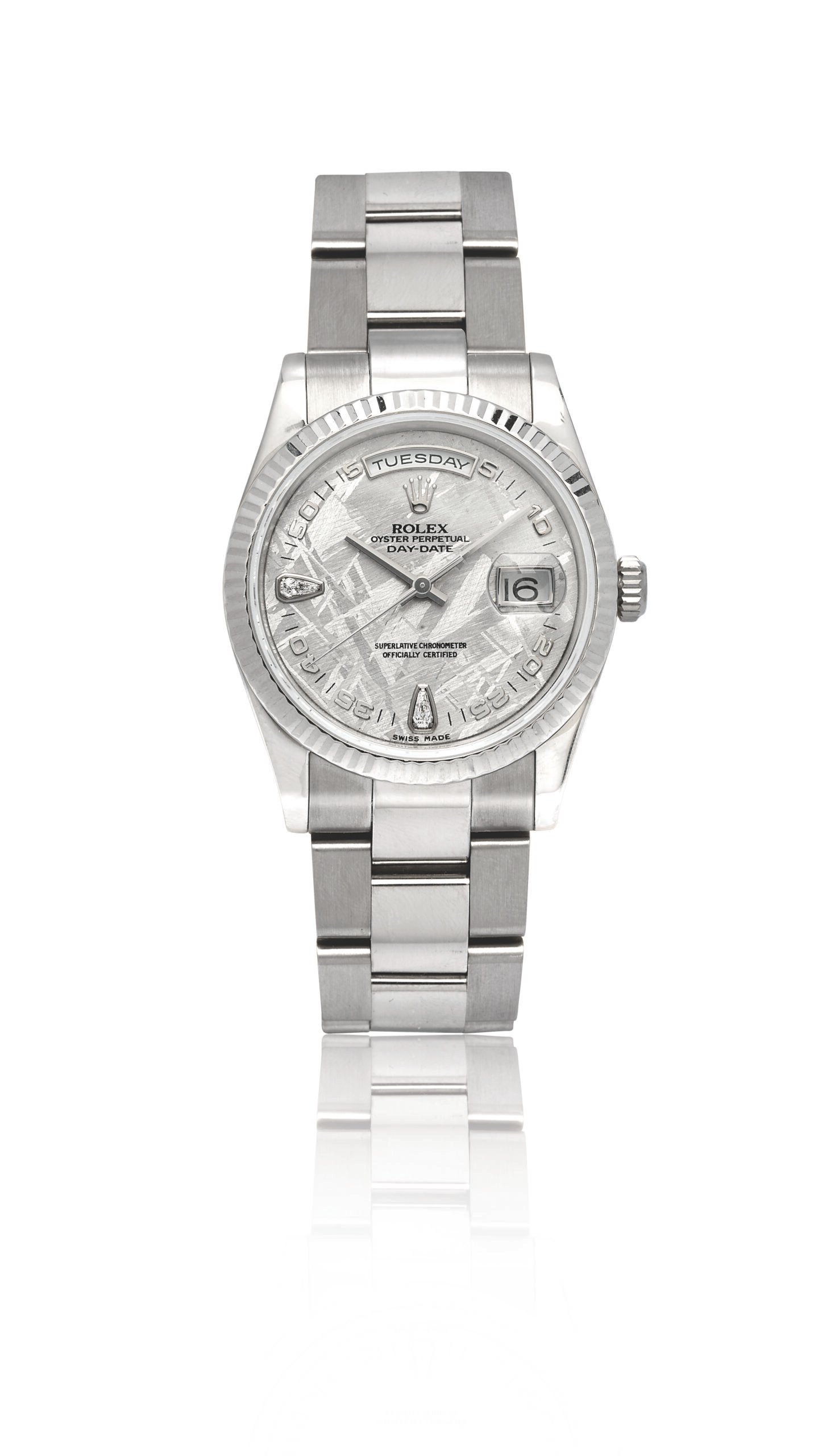
ROLEX DAY-DATE Ref. 118239 | 18k white gold 36 mm | Sold in 2024 by AstaGuru for ₹23,30,559 ($24,532)
The Details That Define Value

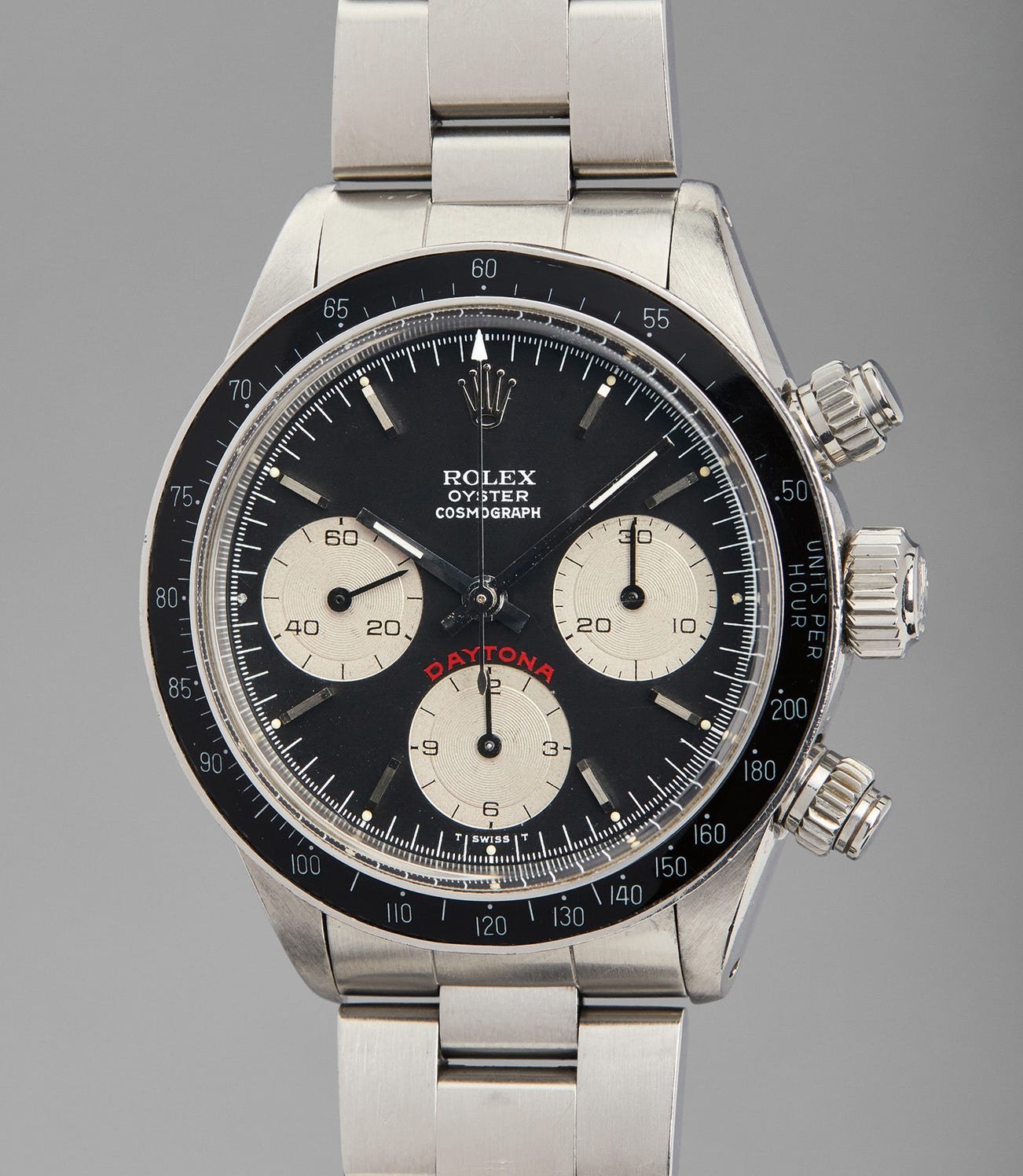
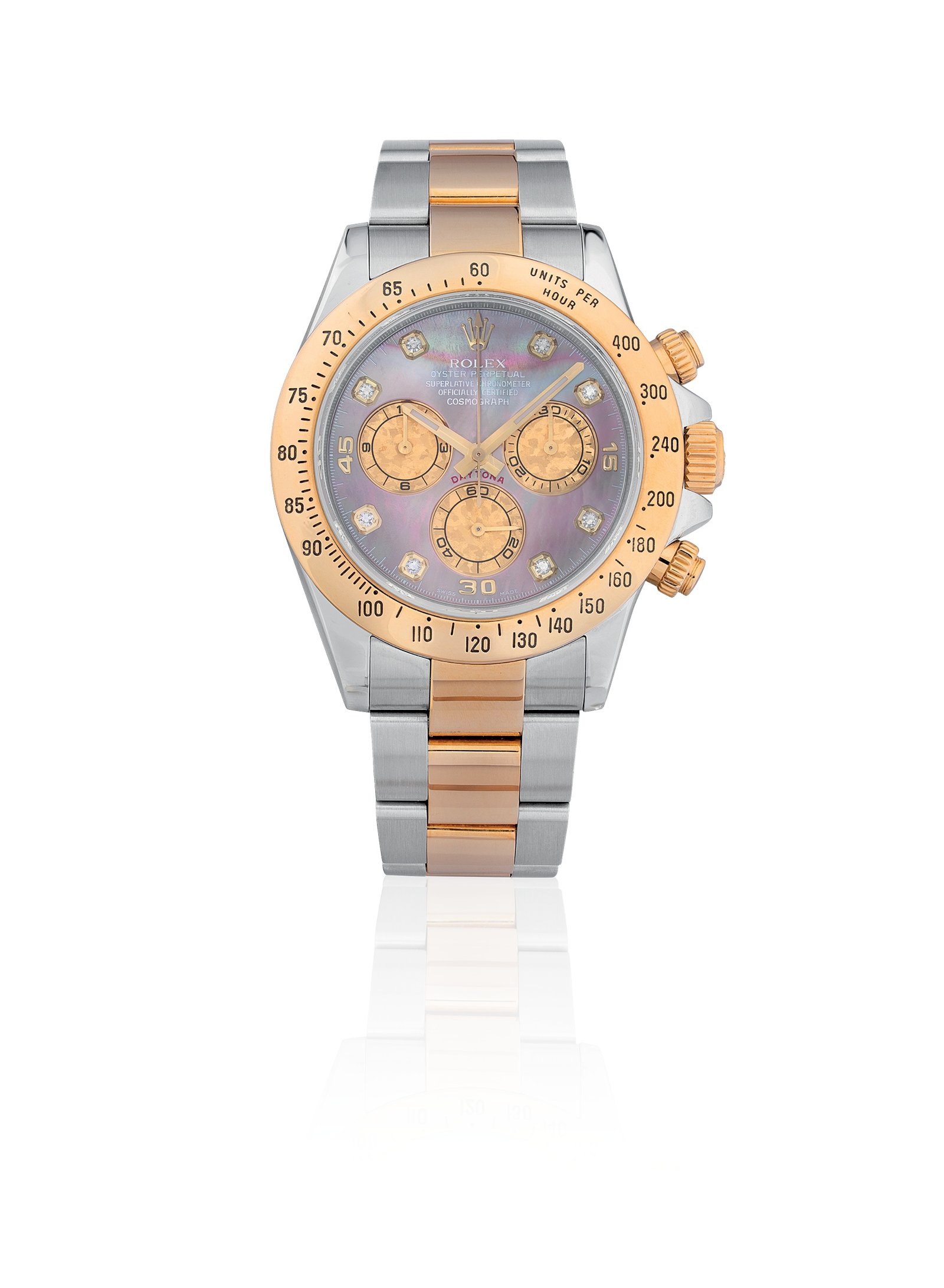
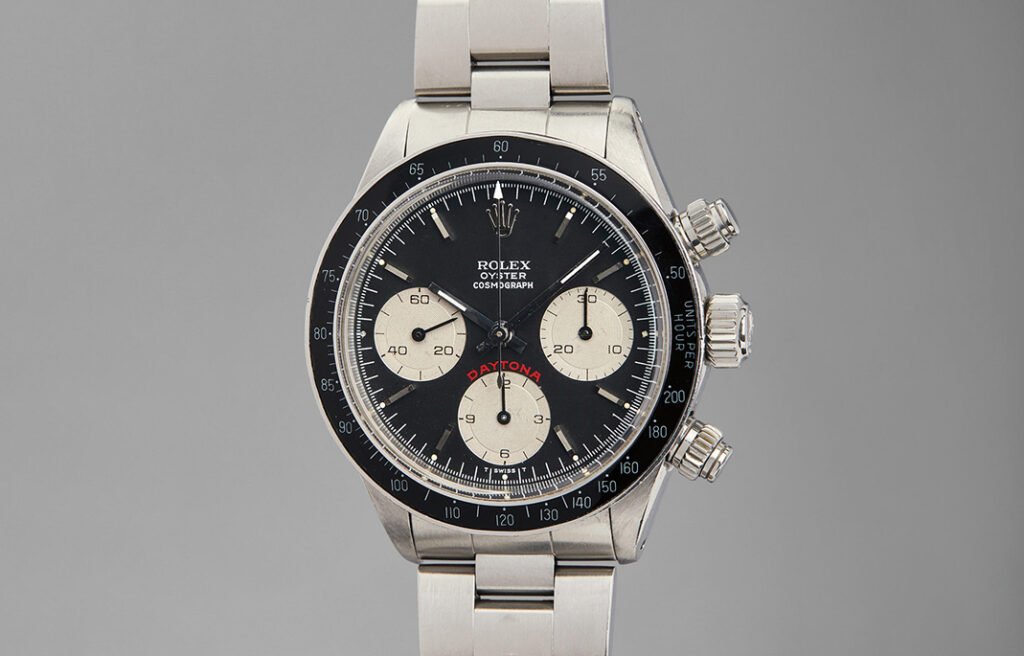
At auctions, small variations can make a considerable difference. Paul Newman’s Daytona remains one of the most celebrated examples of Rolex collectability, but unusual dials and rare references also attract serious interest. In May 2026, AstaGuru sold a Rolex Cosmograph Daytona Ref. 116523 for ₹29.40 lakh ($30,950). Its Tahitian mother-of-pearl dial helped distinguish it from more common examples.

Dial variations are particularly important in vintage collecting. Tropical dials, for instance, develop when ageing, ultraviolet exposure and environmental conditions cause originally black surfaces to turn brown or fade. These changes occur unpredictably, making each dial distinctive. Collectors value this natural transformation, and in some cases, tropical dials can double or triple a watch’s value.

A 1969 Rolex Submariner Ref. 1680 illustrates this appeal. Its red “Submariner” lettering already makes it desirable, as the feature appeared for only a limited period. On this example, the dial has aged into a rich chocolate brown, creating an unusual contrast with the red text. A vintage Rolex Day-Date Ref. 6611 shows a similar transformation, demonstrating how different models can develop comparable characteristics over time.

ROLEX COSMOGRAPH DAYTONA Ref. 116523 | 40 mm | Sold in 2026 by AstaGuru for ₹29,40,300 ($30,950)
Rarity Beyond the Numbers

AstaGuru’s auction history offers further examples of collector demand. In 2021, the auction house sold a Rolex Submariner Red Ref. 1680 for ₹18.21 lakh ($19,174). The reference was among the first Submariners to feature a date display beneath a magnifying Plexiglas crystal.

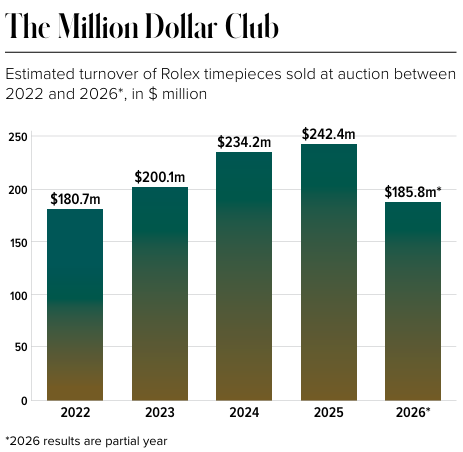
With Rolex auction turnover estimated at $242.4 million in 2025, the market continues to reward watches with distinctive histories and features. Ultimately, collecting vintage Rolex is about looking beyond the crown. Provenance, dial variations and the subtle effects of ageing can transform an already recognisable watch into a truly individual piece.

Read the full story in the special ‘Horology Issue’ of LuxeTrope, on stands now.