
THE DRIVING FORCE
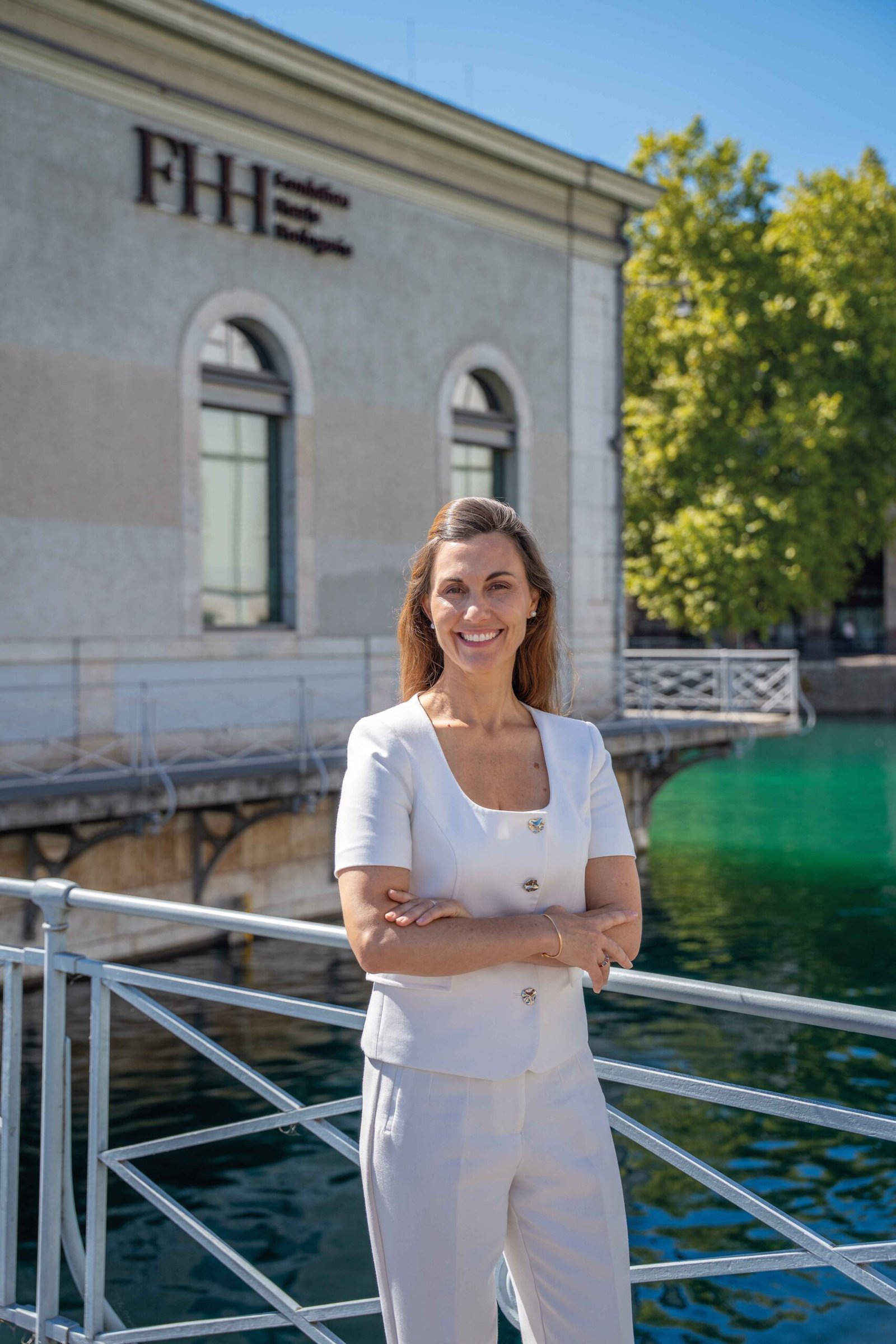
Aurélie Streit, Vice President of the FHH, believes preserving watchmaking culture means making it accessible to a new generation of enthusiasts

Established in 2005 by Audemars Piguet, Girard-Perregaux, and the Richemont Group, the Fondation Haute Horlogerie celebrates fine watchmaking as an art form. Aurélie Streit discusses the artistry and engineering behind the craft, and the FHH’s mission to inspire a deeper appreciation for horology.
What first drew you to the world of watches, and what made you realise that was where you wanted to progress your career?
One of my earliest memories is my first mechanical Swatch, in 1994. I was fascinated by the visible movement and the rotating starry sky on the dial. There was something magical about seeing an object come alive through mechanics. That fascination developed into an appreciation of everything a watch brings together: engineering, design, craftsmanship, and human ingenuity. As my career progressed, I discovered how many different skills and personalities contribute to a single timepiece. That combination of technical precision and creativity made watchmaking a world I wanted to explore further.
You have an engineering background but built much of your career around the cultural and human side of watchmaking. How has the engineer in you influenced the way you communicate horology?
My engineering background was my entry point into watchmaking. It took me into the workshops and, above all, introduced me to the people behind the creations: developers, watchmakers, and the many other craftspeople involved in making timepieces. Those encounters made me realise how much knowledge existed in the workshops that was not always conveyed in boutiques. I wanted to join the Foundation to help bridge that gap. Understanding the mechanics also deepened my respect for the people behind them. Once you appreciate the constraints involved, you see their ingenuity, patience and skill differently. For me, the technical and human dimensions are closely connected.
You’ve worked with Sowind, Audemars Piguet and Piaget. What learnings did you bring to the FHH?
Working across these maisons gave me a view of watchmaking beyond the finished product. I saw how much depends on coordination between different disciplines, and how the relationship with a watch continues long after its purchase. I brought that practical perspective to the FHH. Education needs to connect with the situations people encounter, whether they are explaining a watch in a boutique or trying to understand their own timepiece. It also taught me to respect the individuality of each maison while recognising the knowledge and values they share.
After more than a decade at the Foundation, is there something about watchmaking you understand differently than when you joined? I have become much more aware of how differently people can enter this world.
Someone may be drawn to mechanics, another to design, jewellery, history or a personal memory. Each of those starting points can lead to a deep appreciation of watchmaking. That has changed how I think about sharing knowledge. We cannot assume that everyone shares our references or vocabulary. We must listen, understand what interests them and build from there. Preserving watchmaking culture also means allowing new people to develop their own relationship with it.
Read the full story in the special ‘Horology Issue’ of LuxeTrope, on stands now.