Rolex continues to dominate the luxury watch market, but its appeal goes beyond production numbers and brand recognition. In 2025, the Swiss watchmaker increased sales by four per cent to more than CHF 11 billion ($14 billion), according to the annual Swiss Watch report by Morgan Stanley and LuxeConsult. This growth came despite a two per cent reduction in production or retailer allocations for the second consecutive year. Rolex still accounted for approximately 33 per cent of Swiss watch sales, selling close to one million watches worldwide.
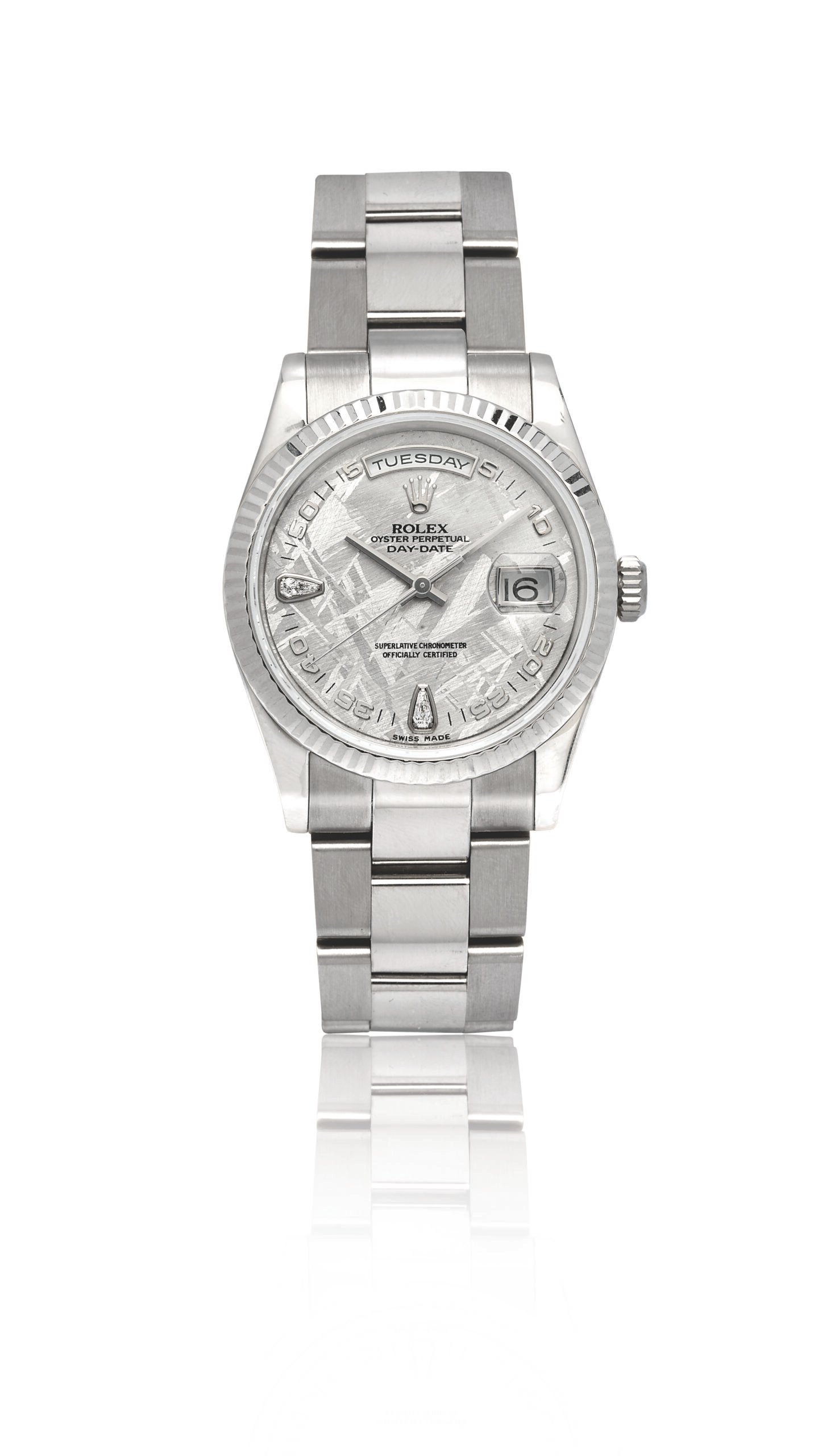
Yet, for collectors, the real fascination often lies in what makes one Rolex different from another. Vintage watches, in particular, can command significant premiums because of their age, condition, rarity and distinctive features. Although Rolex has produced an estimated 40 million watches since its founding in 1905, around four million were made between 1905 and 1970. This uneven production history helps explain why certain vintage references remain highly sought after.
The Details That Define Value
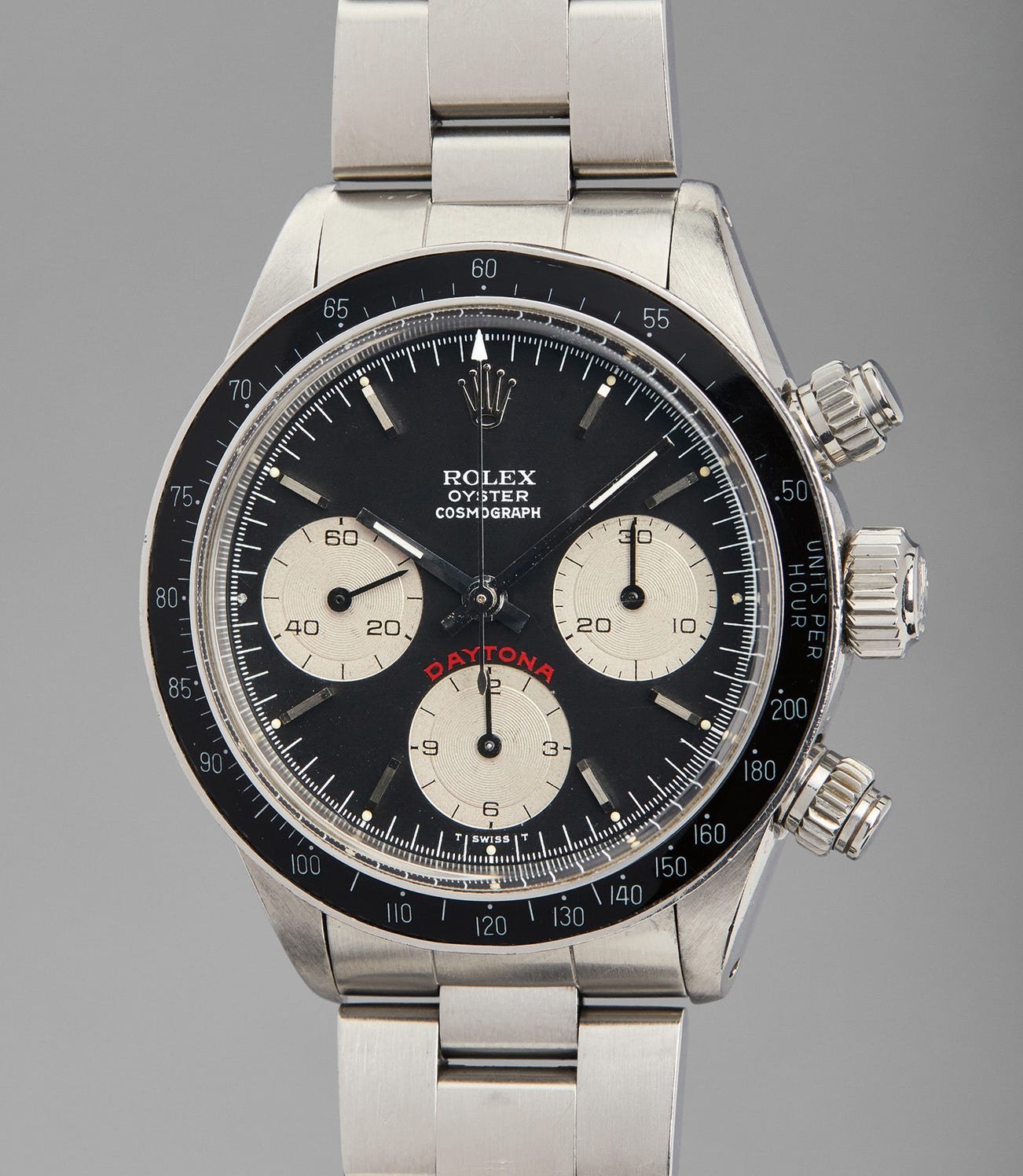
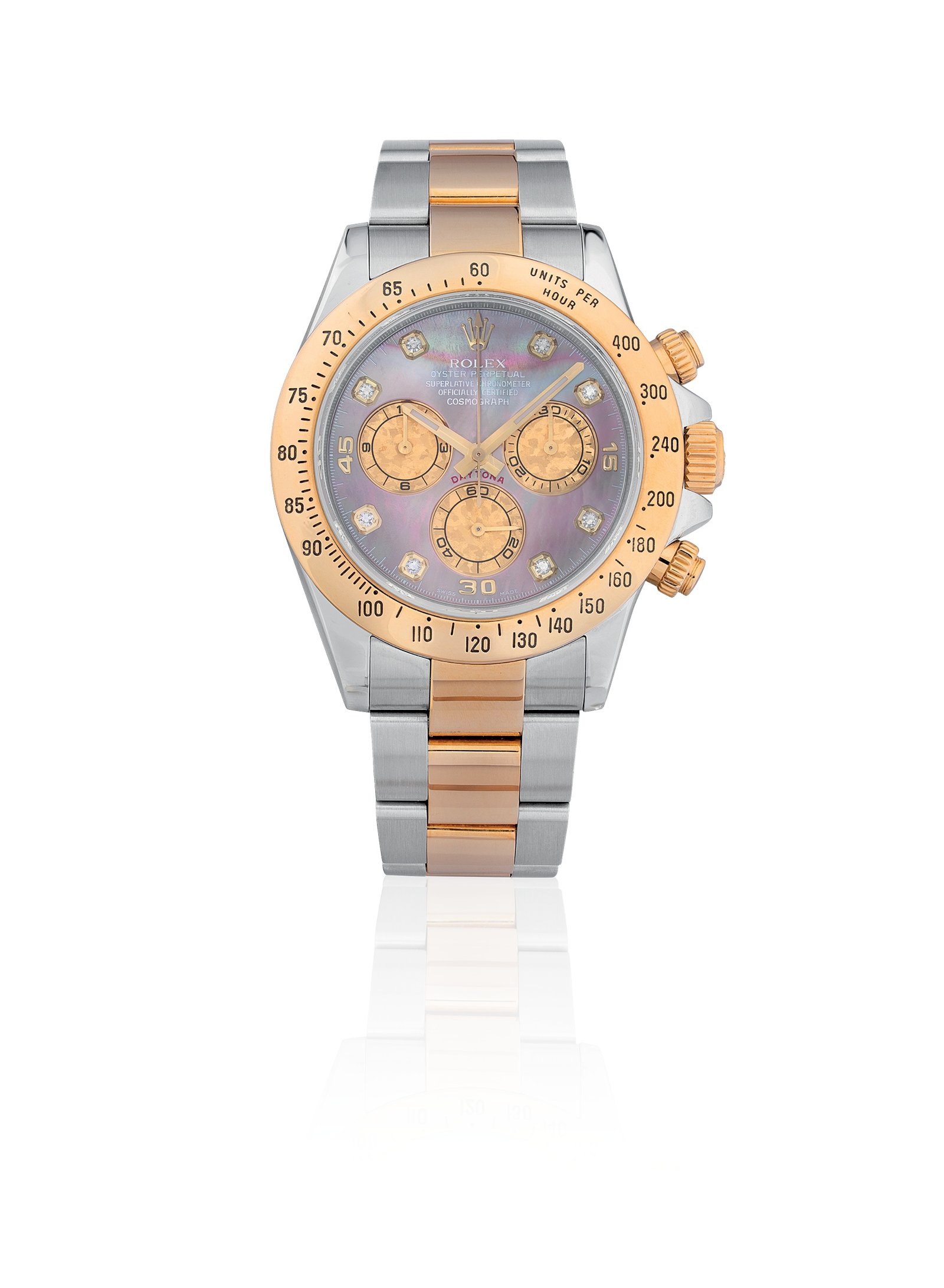
At auctions, small variations can make a considerable difference. Paul Newman’s Daytona remains one of the most celebrated examples of Rolex collectability, but unusual dials and rare references also attract serious interest. In May 2026, AstaGuru sold a Rolex Cosmograph Daytona Ref. 116523 for ₹29.40 lakh ($30,950). Its Tahitian mother-of-pearl dial helped distinguish it from more common examples.
Dial variations are particularly important in vintage collecting. Tropical dials, for instance, develop when ageing, ultraviolet exposure and environmental conditions cause originally black surfaces to turn brown or fade. These changes occur unpredictably, making each dial distinctive. Collectors value this natural transformation, and in some cases, tropical dials can double or triple a watch’s value.
A 1969 Rolex Submariner Ref. 1680 illustrates this appeal. Its red “Submariner” lettering already makes it desirable, as the feature appeared for only a limited period. On this example, the dial has aged into a rich chocolate brown, creating an unusual contrast with the red text. A vintage Rolex Day-Date Ref. 6611 shows a similar transformation, demonstrating how different models can develop comparable characteristics over time.
Rarity Beyond the Numbers
AstaGuru’s auction history offers further examples of collector demand. In 2021, the auction house sold a Rolex Submariner Red Ref. 1680 for ₹18.21 lakh ($19,174). The reference was among the first Submariners to feature a date display beneath a magnifying Plexiglas crystal.
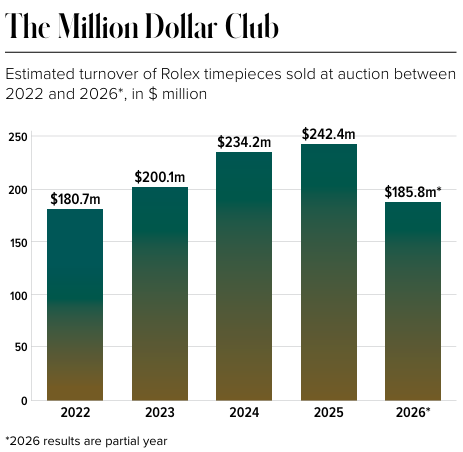
With Rolex auction turnover estimated at $242.4 million in 2025, the market continues to reward watches with distinctive histories and features. Ultimately, collecting vintage Rolex is about looking beyond the crown. Provenance, dial variations and the subtle effects of ageing can transform an already recognisable watch into a truly individual piece.
Read the full story in the special ‘Horology Issue’ of LuxeTrope, on stands now.