luxetrope.com

Viren Bhagat: A Life Beyond the Ordinary

Viren Bhagat: A Life Beyond the Ordinary

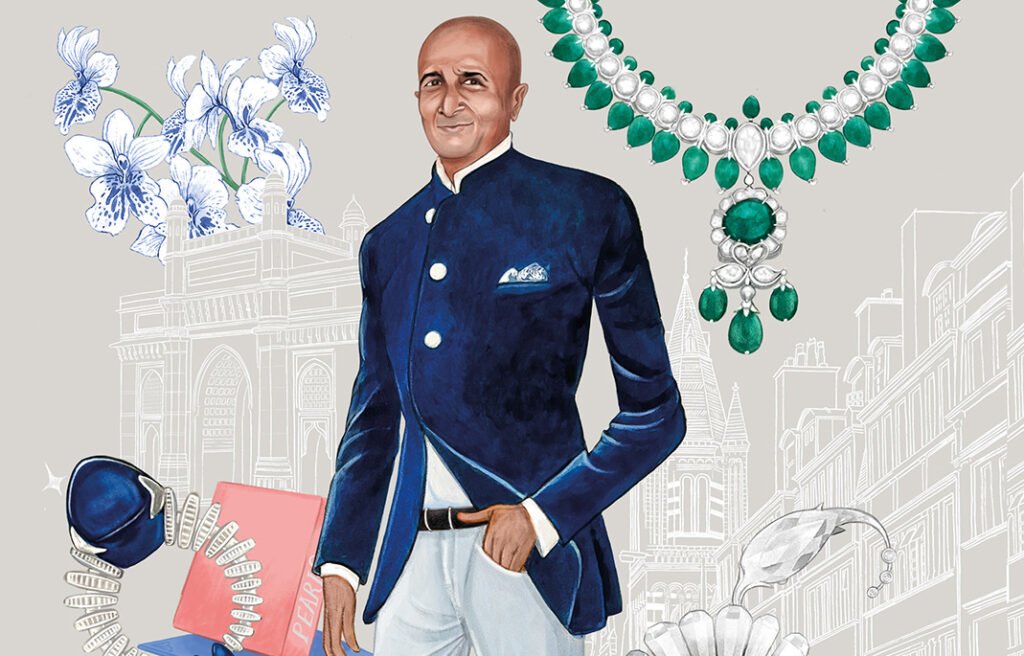
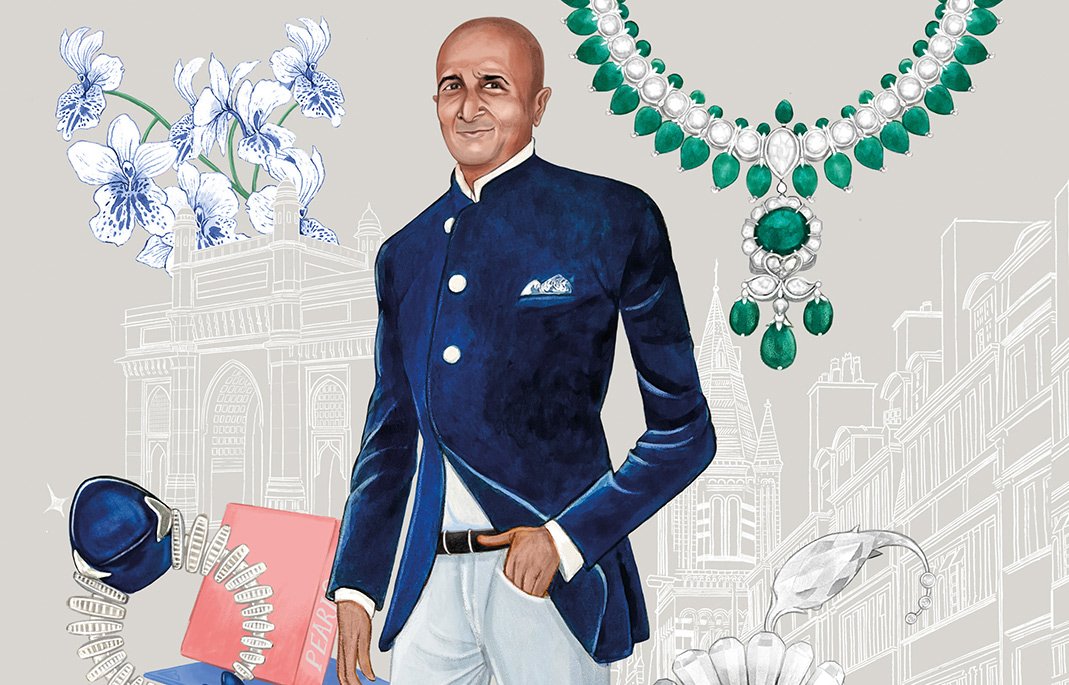
For iconic jeweller Viren Bhagat, the art and process of crafting one-of-a-kind precious pieces is an extension of his personality

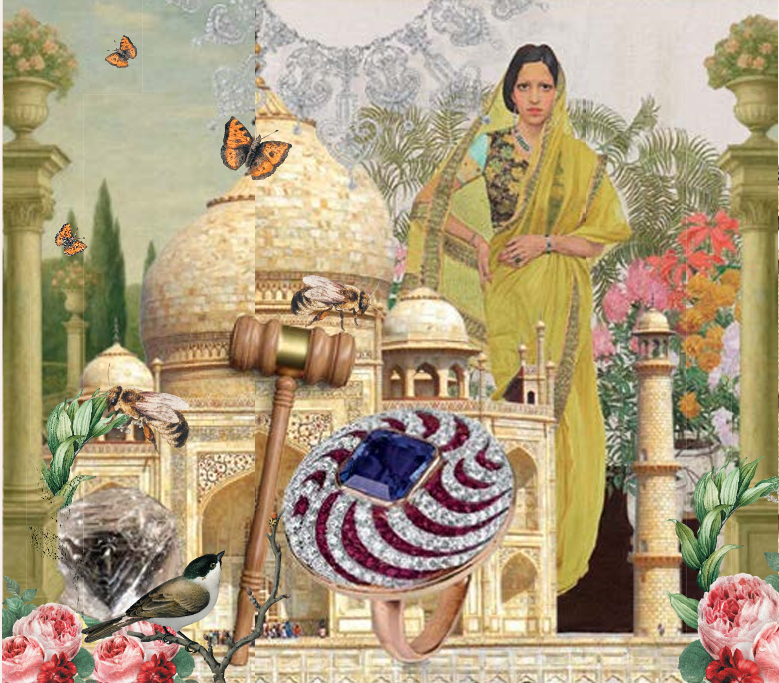
Words: Steve King; Illustration: Priya Kuriyan

I was introduced to Viren Bhagat in 2009 or 2010 by a mutual friend during one of my occasional visits to Bombay, now Mumbai. I’m a journalist, and I was there to write about something or other—not about Viren, in any case. So, this was a purely social introduction, a happy accident. We hit it off immediately. The conversation flowed easily. Naturally, we talked a lot about jewellery, but we talked about all kinds of other things as well—mainly Mumbai, which I love but know only superficially, and which he loves and knows deeply. Other meetings followed, in London and back in Mumbai. Eventually, in 2012, I wrote a longish story about him for the magazine I was working for at the time. Viren was already famous by then, a legend in the jewellery world, and his reputation has only continued to grow in the years since.

People often ask me what he’s like as a person and what I think of him as a jeweller.

As a jeweller, Viren’s one of the very best and, like all the very best, exists in a category of one. He’s often compared to JAR (Joel Arthur Rosenthal) or Jacques Cartier, and such comparisons are perfectly understandable—though I’d say they’re better understood not as comparisons, exactly, but rather as compliments, as a measure of brilliance and originality, not likeness. These jewellers have transcended the profession of precious craftsmanship to some extent, and have paved the way for collectors to reimagine what ‘jewellery’ actually means.

You could study photographs of Viren’s lean, expressive face and extrapolate from his eyes and features a combination of seriousness, soulfulness, and amusement.

This would be entirely accurate. And the amusement is, I think, crucial. He’s got a great sense of humour and, though he’s a kind, solicitous, and generous man, he occasionally enjoys a gentle practical joke. For example, on one of my trips to Mumbai, I joined Viren and his wife at a cocktail party at the Gymkhana…

Read the full story in the special ‘Joaillerie Market’ issue of LuxeTrope, on stands now.

Read More

A generational shift in wealth is reshaping the art market, opening the door to a more layered landscape

The impact of wealth creation is becoming increasingly visible in the art market

In an art world often drawn to spectacle, Vattakuzhy stands apart for the quiet intensity of his vision

The landscape continues to spotlight a mix of historic Masters and Contemporary icons.

1,881 lots sold at ₹1.18 cr average price mark a robust 2025 for Indian art's elite.

He also emphasises that a good work must evoke a strong, lasting feeling

High Jewellery’s Ultimate Secret: The Melo Melo Pearl

High Jewellery’s Ultimate Secret: The Melo Melo Pearl 

The fiery allure of Melo Melo pearls have enamoured collectors for decades, and they still remain the rarest gemmological phenomenon today

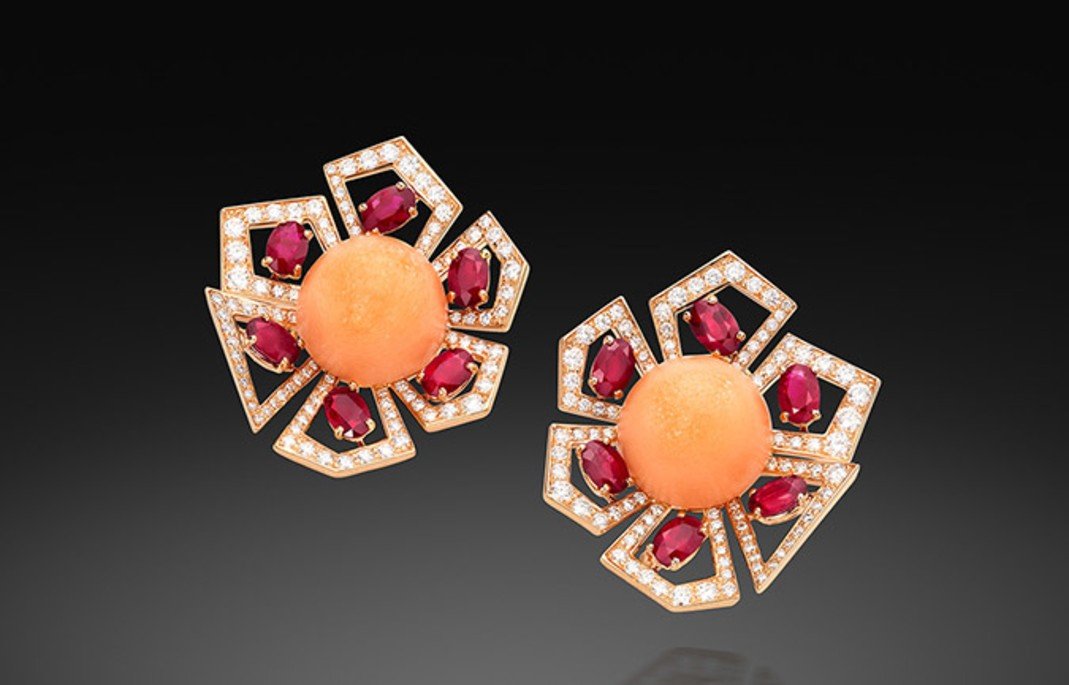
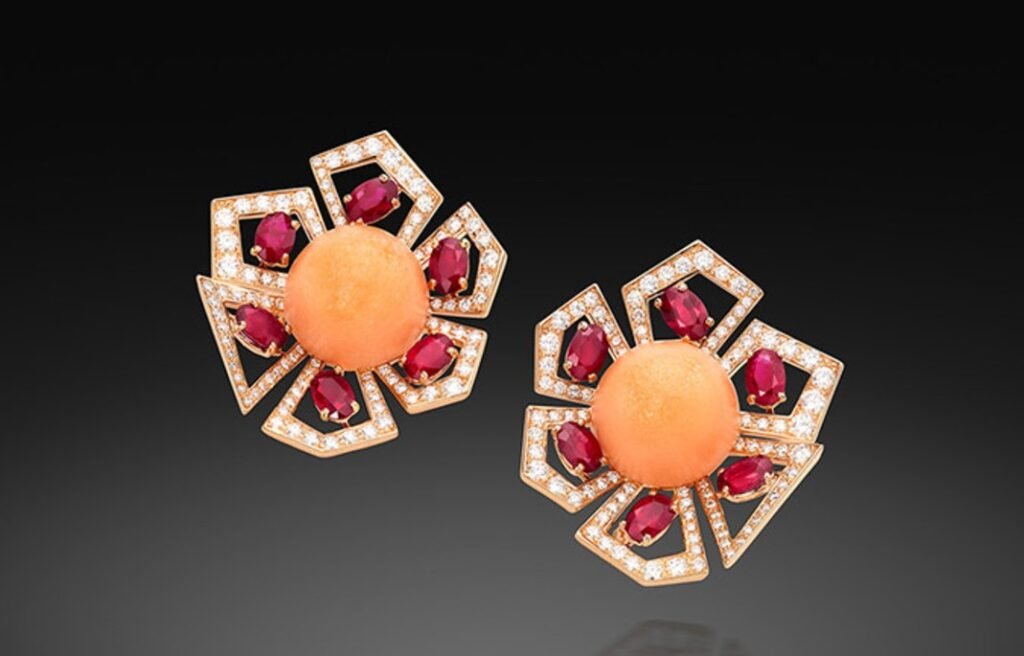
Melo Passion Natural Pearl, Ruby and Diamond Earrings; Image courtesy: Assael

Few natural treasures command the kind of reverence Melo Melo pearls inspire. Found deep within the waters of Southeast Asia—from the South China Sea to the Andaman Coast—these rare gems are produced not from oysters but from Melo Melo: a large predatory sea snail known as the Indian volute or bailer shell. 

Historically, these radiant pearls were incorporated into royal Asian folklore as “dragon pearls,” owing to their vibrant orange colour and flame-like patterns. Centuries later, they continue to be one of the most coveted treasures in high jewellery—appealing to the world’s most discerning collectors.

Unlike classic oysters or South Sea cultured pearls, Melo Melo pearls are completely non-nacreous and occur exclusively through natural phenomena. Standard pearls derive their sheen from layers of nacre; Melo Melo pearls are composed of calcite and aragonite, yielding a smooth, porcelain-like lustre. 

Their true magic lies in their flame-like chatoyancy—a phenomenon where fibrous structures beneath the surface reflect light, creating a shimmering effect similar to flickering flames. While colours range from soft tan to deep brown, it is the rich mandarin orange hue with visible flame patterns that defines the pinnacle of desirability. 

Why are these gems so rare? Simply put, Melo Melo pearls cannot be cultured. Every single specimen is 100 per cent natural, discovered purely by chance by regional fishermen. Additionally, only one in several thousand Melo snails will ever produce a pearl, and it takes decades for one to grow to a wearable size. Furthermore, only a small fraction of those harvested exhibit the fiery orange saturation and pattern that collectors demand.

Because Melo Melo pearls command prices scaling into hundreds of thousands of dollars, verifying provenance and lab certification is of utmost importance. Top gemmological laboratories such as GIA or SSEF issue precise reports verifying origin, composition, and absence of artificial enhancement or polishing. 

Without a reputable lab report confirming authenticity, a prospective Melo pearl should never be acquired. Instead, choose a reputable auction house or verified private estates. 

Given their zero-commercial supply, you will not find Melo Melo pearls in standard luxury retail boutiques or maisons. Blue-chip auction houses are the way to go as they periodically feature loose Melo Melo pearls or bespoke high jewellery settings in their auctions. Esteemed ateliers that specialise in rare natural pearls work directly with private collectors to source authentic loose specimens. 

For those patient enough to seek them out, acquiring a Melo Melo pearl is far more than an investment in fine jewellery—it is a rare chance to own a piece of nature’s unrepeatable magic.

Read More

A generational shift in wealth is reshaping the art market, opening the door to a more layered landscape

The impact of wealth creation is becoming increasingly visible in the art market

In an art world often drawn to spectacle, Vattakuzhy stands apart for the quiet intensity of his vision

The landscape continues to spotlight a mix of historic Masters and Contemporary icons.
1,881 lots sold at ₹1.18 cr average price mark a robust 2025 for Indian art's elite.

He also emphasises that a good work must evoke a strong, lasting feeling

Why Natural Diamonds Remain Timeless

Why Natural Diamonds Remain Timeless

Formed billions of years ago and shaped by nature's extraordinary forces, natural diamonds continue to captivate collectors

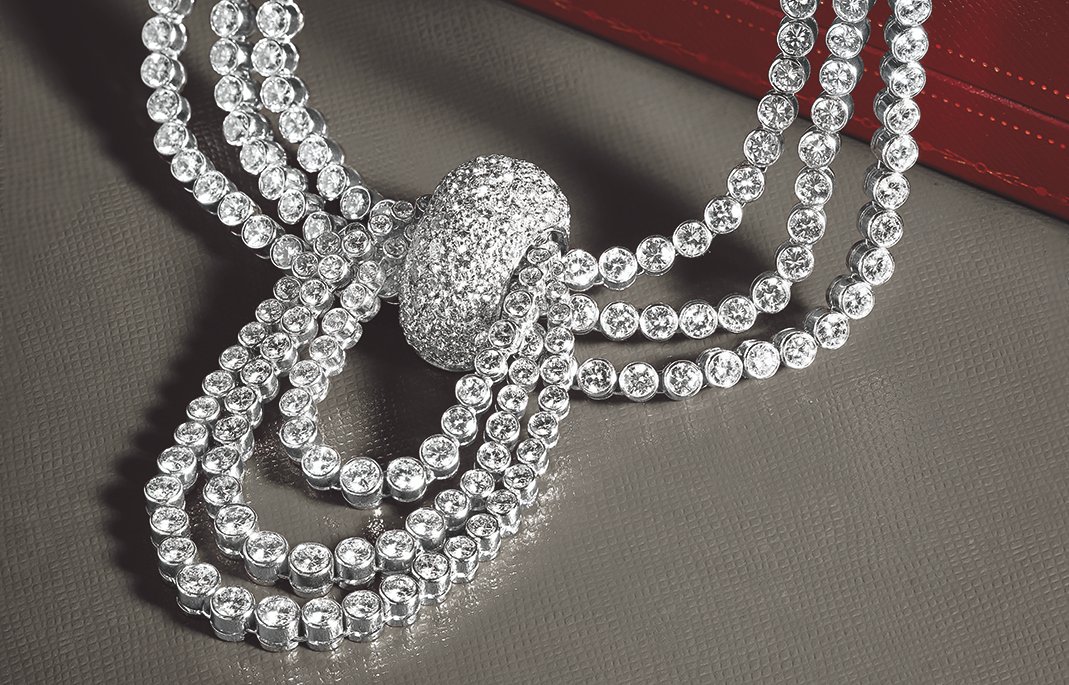
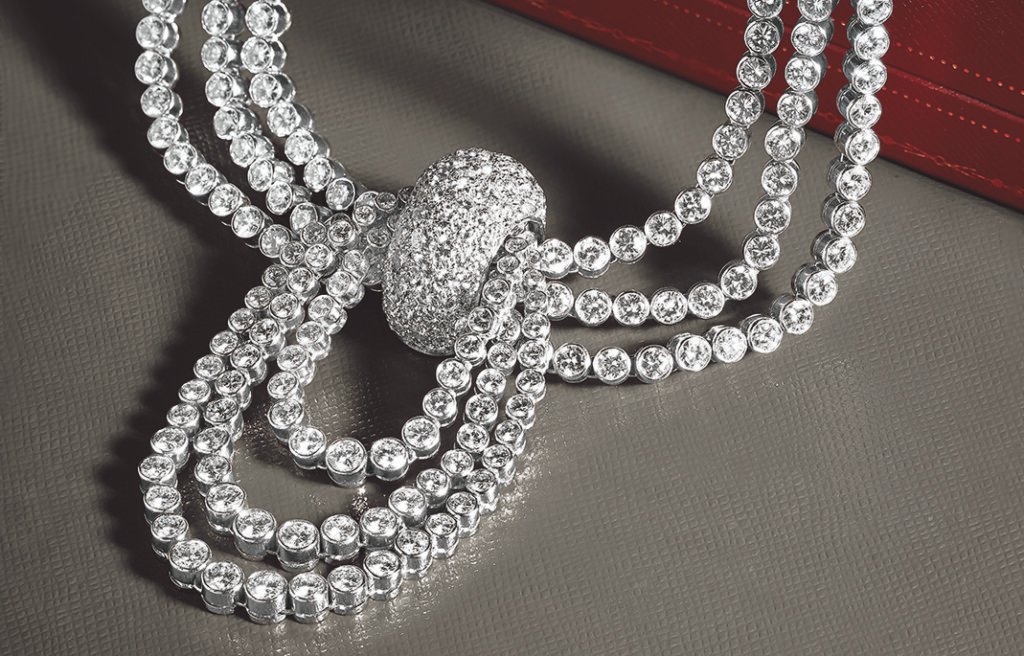
CARTIER DIAMOND NECKLACE | Gross weight: 113.730 g | Diamonds: 57.00 cts/426 pcs | Sold in 2022 by AstaGuru for ₹90,92,061 ($95,705)

Natural diamonds are among Earth’s oldest treasures, with some dating back as far as 3.5 billion years. Forged from crystallised carbon under immense heat and pressure deep beneath the Earth’s surface before being carried upward by volcanic activity, every natural diamond is the product of a remarkable geological journey.

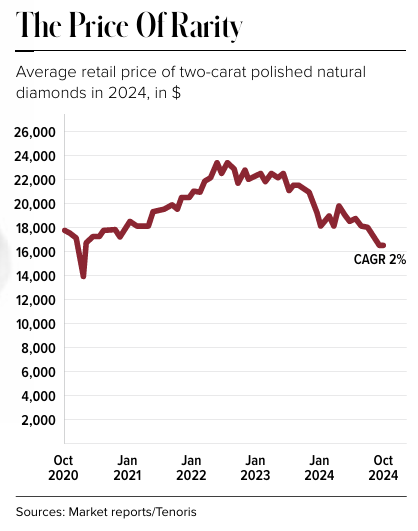
Their rarity continues to make them one of the world’s most coveted gemstones. Russia holds the largest known diamond reserves, followed by Botswana, while countries including the Democratic Republic of the Congo, Angola, Canada and South Africa remain key contributors to global production.


A diamond’s value extends far beyond its size. Experts continue to regard the 4Cs—cut, clarity, colour and carat weight—as the universal benchmarks of quality, with the cut playing the most significant role in determining a stone’s brilliance. Legendary gems such as the Star of Golconda and the Mouawad Kimberley Star have become icons thanks to their exceptional craftsmanship and remarkable provenance.

That provenance is increasingly influencing buying decisions, particularly in the auction market. A standout example is AstaGuru’s sale of an Art Deco ring featuring a 10.01-carat Old European-cut diamond, which achieved ₹92.21 lakh. More than a beautiful jewel, the piece reflected the growing importance collectors place on certification, historical ownership and exceptional craftsmanship.

As buyers become increasingly discerning, provenance, superior cut and substantial carat weight continue to distinguish the most desirable natural diamonds, reinforcing their enduring appeal as heirlooms that combine rarity, history and lasting value.

Read the full story in the special ‘Joaillerie Market’ issue of LuxeTrope, on stands now.

Read More

A generational shift in wealth is reshaping the art market, opening the door to a more layered landscape

The impact of wealth creation is becoming increasingly visible in the art market

In an art world often drawn to spectacle, Vattakuzhy stands apart for the quiet intensity of his vision

The landscape continues to spotlight a mix of historic Masters and Contemporary icons.

1,881 lots sold at ₹1.18 cr average price mark a robust 2025 for Indian art's elite.

He also emphasises that a good work must evoke a strong, lasting feeling

From Heirloom to High Fashion: Why Brooches are Back in Style

From Heirloom to High Fashion: Why Brooches are Back in Style

Once created as practical fasteners, brooches have evolved into collectible works of art, blending heritage, craftsmanship and timeless elegance

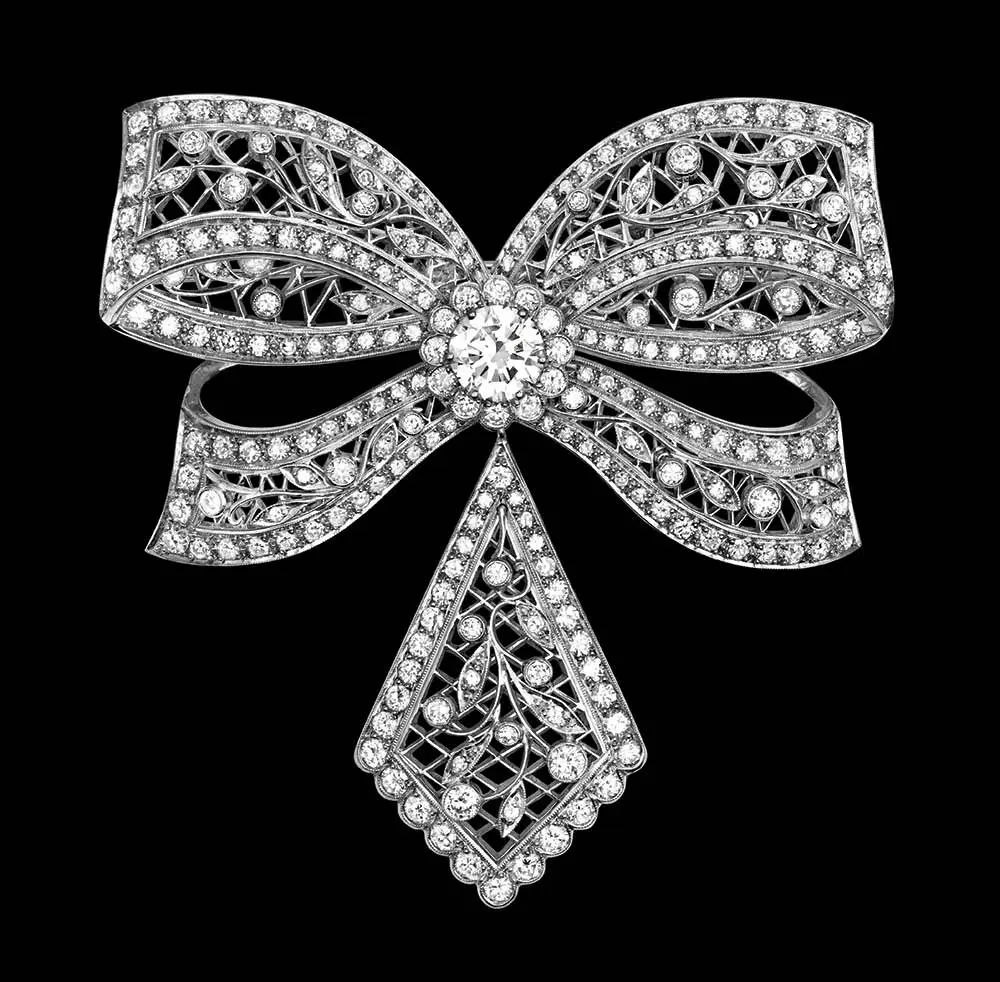
An Exquisite Diamond Bow Brooch | Sold in 2026 by AstaGuru for ₹14,60,470

From Bronze Age fasteners to coveted auction treasures, brooches are reclaiming their place as wearable works of art that blend history, craftsmanship and timeless elegance.

Long before they became symbols of luxury, brooches served a practical purpose. Dating back to the Bronze Age, they were used to fasten cloaks and garments. Over centuries, however, they evolved into exquisite expressions of artistry, reflecting the design movements, craftsmanship and cultural influences of their time. Today, these versatile jewels are enjoying a remarkable revival, worn not only on lapels but also on dresses, hats, turbans and even as striking hair accessories.

The renewed interest has extended to the auction market, where collectors are seeking exceptional brooches that combine rarity with historical significance. Auction houses such as AstaGuru and Giftex.in have witnessed growing demand for vintage and contemporary brooches, making these intricate creations increasingly desirable as both statement accessories and heirloom investments.

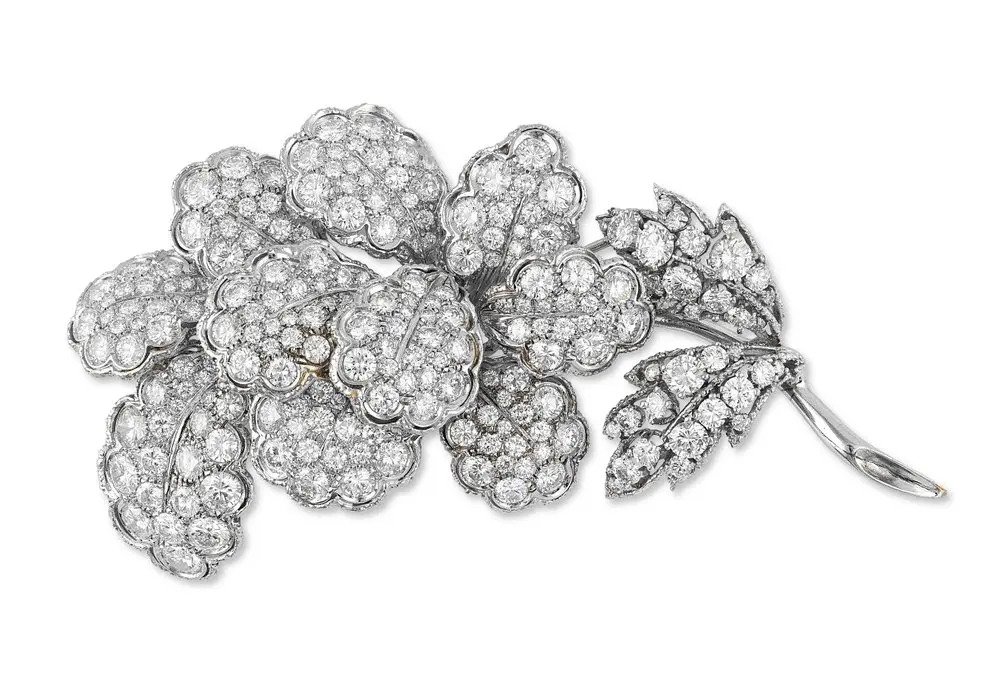
An Exceptional Diamond Bouquet Brooch | Sold in 2025 by AstaGuru for ₹38,72,000
A Diamond & Sapphire Brooch | Sold in 2025 by Giftex.in for ₹12,26,053
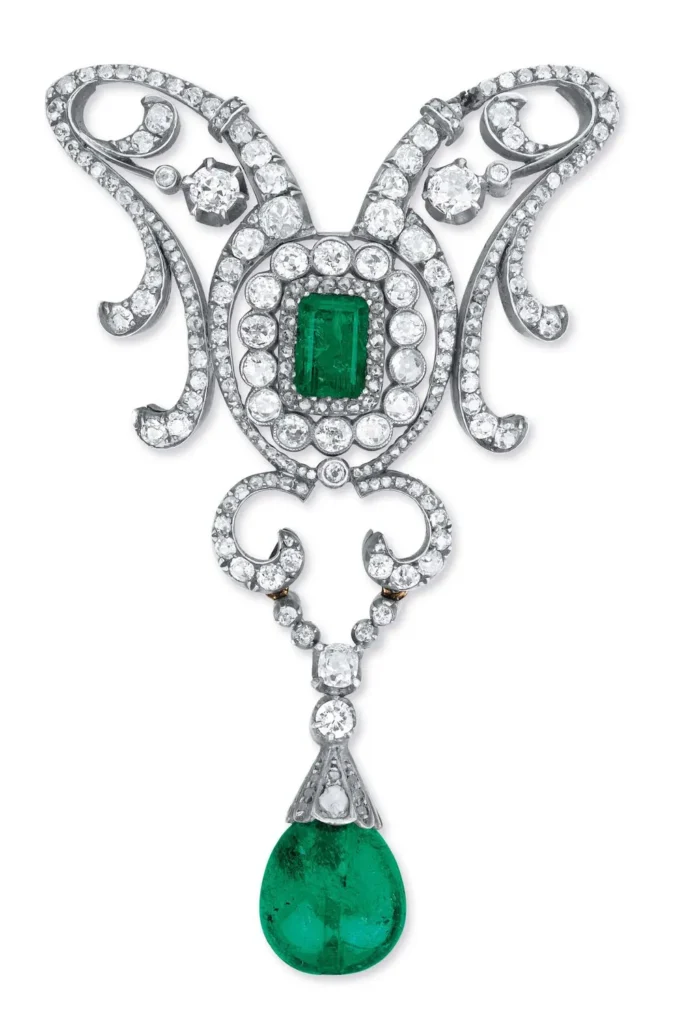
A Vintage Emerald & Diamond Brooch | Sold in 2024 by AstaGuru for ₹18,69,120

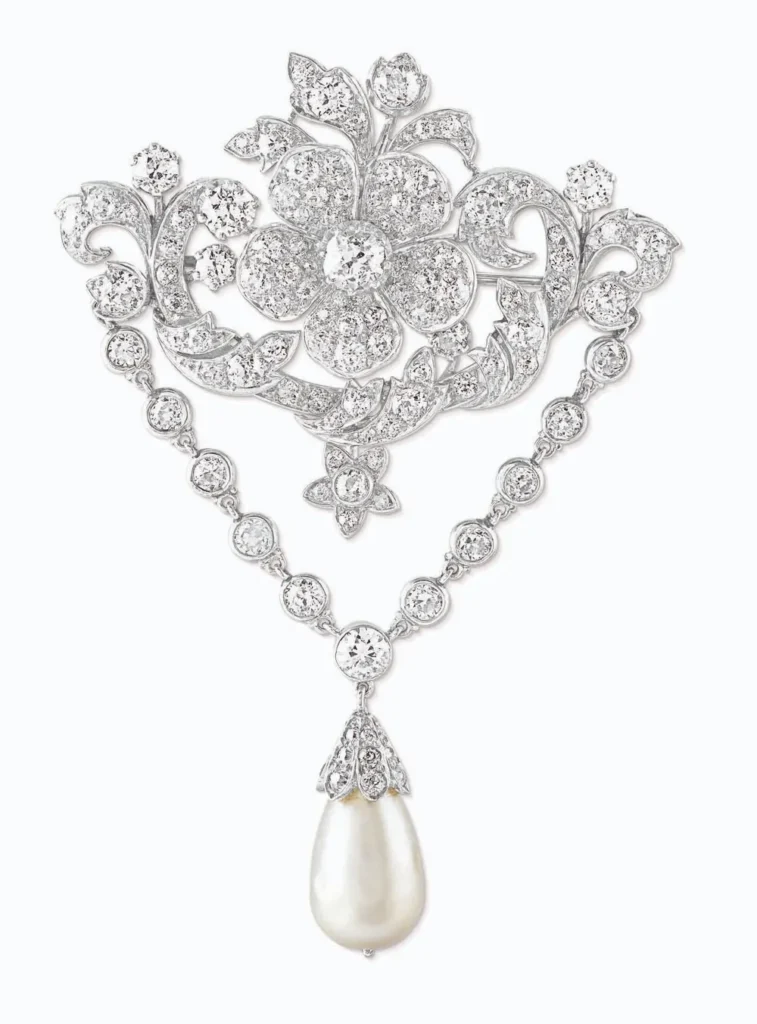
Among the standout examples is an Exceptional Bouquet Brooch, crafted with 242 VVS natural diamonds, which achieved ₹38.72 lakh at AstaGuru in 2025. Equally impressive is a Vintage Natural Pearl Brooch from the 1940s, featuring old European-cut diamonds and a natural pearl drop, which realised ₹32.70 lakh.

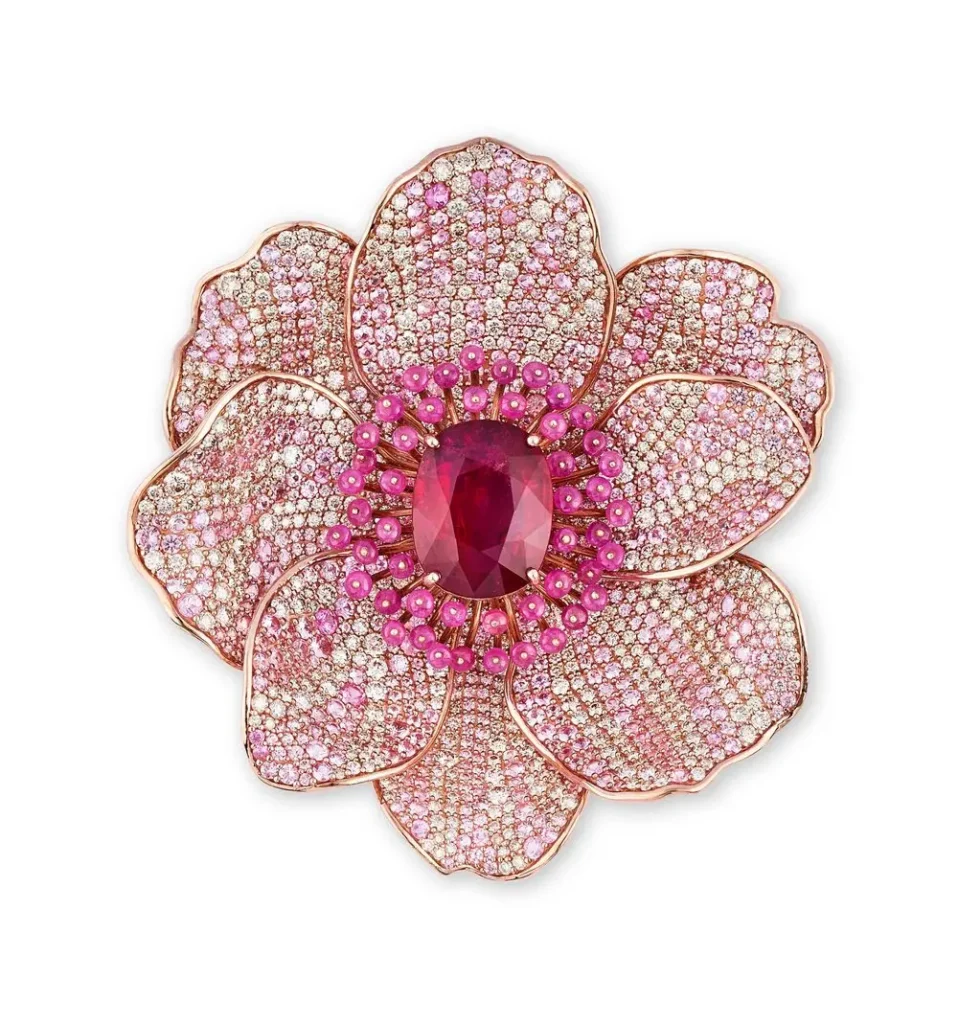
Nature-inspired designs continue to captivate collectors as well. A 1930s Emerald Drop Butterfly Brooch, set with Colombian emeralds and more than 200 old-cut diamonds, sold for ₹18.69 lakh, while a floral rose-gold brooch adorned with pink sapphires and rubellite tourmaline showcased the enduring appeal of colourful gemstone jewellery.

A Rubellite Tourmaline, Pink Sapphire & Diamond Flower Brooch | Sold by AstaGuru in 2025 for ₹11,85,800
A Vintage Diamond & Natural Pearl Brooch | Sold in 2024 by AstaGuru for ₹32,70,960
A Diamond & Sapphire Brooch | Sold by Giftex.in in 2025 for ₹12,66,012

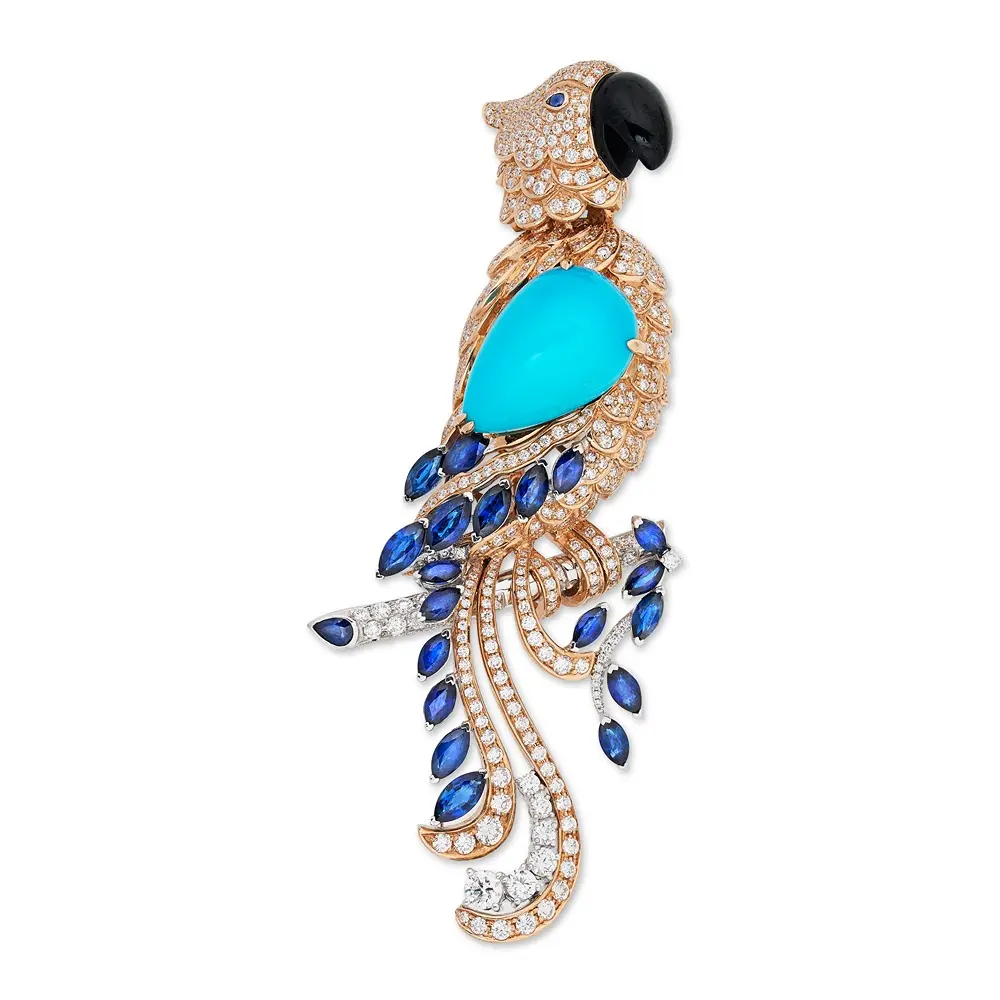
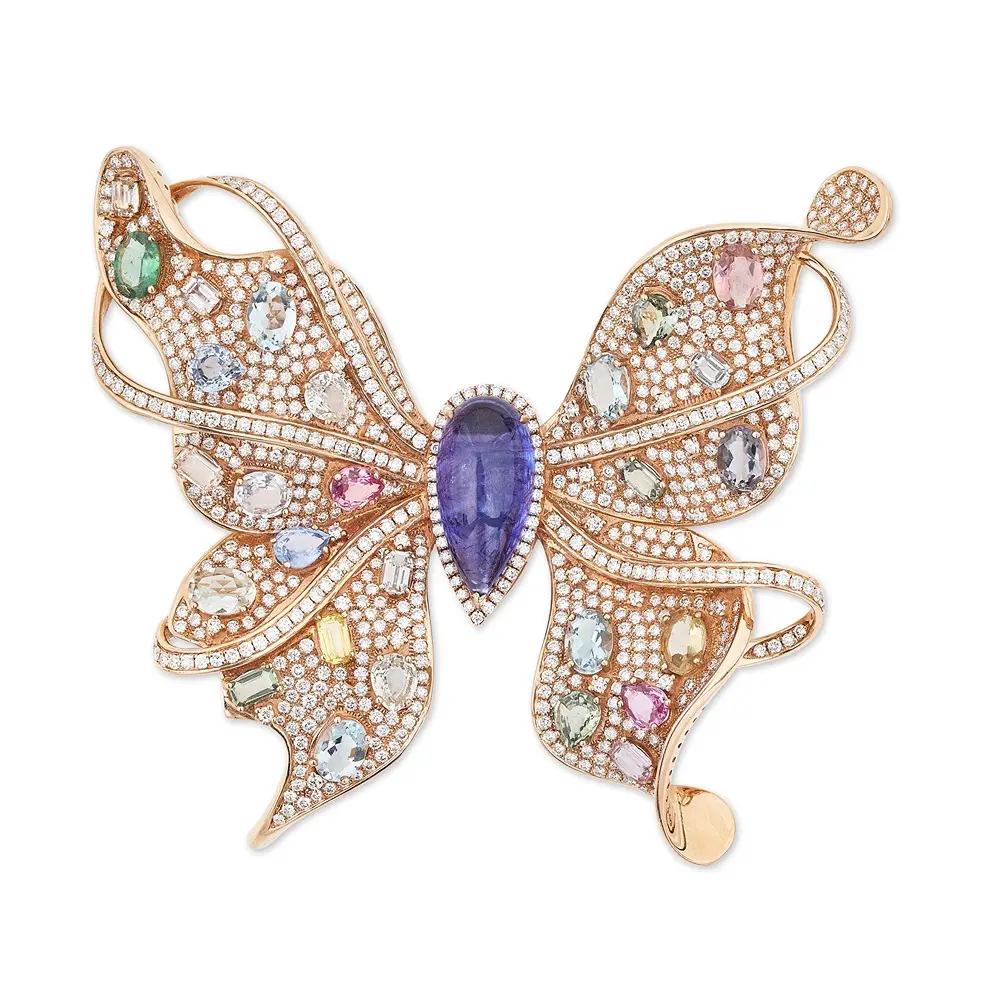
Modern interpretations are equally sought after. A playful Diamond & Sapphire Brooch accented with a turquoise cabochon and an Exquisite Butterfly Brooch featuring a tanzanite cabochon and multi-coloured sapphires demonstrate how contemporary craftsmanship continues to reinvent this centuries-old jewel.

Whether antique or modern, understated or extravagant, brooches have become much more than decorative accessories. They embody history, artistry and individuality—qualities that ensure these timeless jewels remain prized by collectors and cherished across generations.

Read More

A generational shift in wealth is reshaping the art market, opening the door to a more layered landscape

The impact of wealth creation is becoming increasingly visible in the art market

In an art world often drawn to spectacle, Vattakuzhy stands apart for the quiet intensity of his vision

The landscape continues to spotlight a mix of historic Masters and Contemporary icons.

1,881 lots sold at ₹1.18 cr average price mark a robust 2025 for Indian art's elite.

He also emphasises that a good work must evoke a strong, lasting feeling

The Story Behind Every Heirloom

The Story Behind Every Heirloom

Heirloom jewellery carries generations of history, making provenance one of the most valuable assets in today's growing auction market

Every heirloom jewel carries a story. Whether it’s a jadau necklace passed down through generations, an emerald brooch once worn by royalty, or a Basra pearl necklace with a remarkable past, these pieces represent far more than their intrinsic material value. They preserve family histories, craftsmanship and cultural traditions that cannot be recreated.

When such treasures enter the auction market, they begin a new chapter. Consigning heirloom jewellery is not simply about selling an object—it’s about ensuring that an exceptional piece finds a collector who recognises and values its legacy.

Before a jewel is offered at auction, specialists first evaluate what makes it significant. Estate and heirloom jewellery is assessed not only for its gemstones and precious metals, but also for its rarity, age, craftsmanship and historical importance. These qualities often distinguish an extraordinary piece from an ordinary one.

Equally important is provenance—the documented history of ownership and origin. A jewel connected to a distinguished family, royal household or notable collection carries a narrative that can significantly enhance its appeal. For collectors, provenance transforms jewellery from a luxury object into a tangible piece of history, making it one of the most influential factors in determining value.

Leading auction houses such as AstaGuru carefully evaluate each piece, examining its craftsmanship, condition, historical background and supporting documentation before arriving at an estimate. This detailed assessment provides collectors with confidence while ensuring that every jewel receives an accurate and transparent market valuation.

Read the full story in the special ‘Joaillerie Market’ issue of LuxeTrope.

Read More

A generational shift in wealth is reshaping the art market, opening the door to a more layered landscape

The impact of wealth creation is becoming increasingly visible in the art market

In an art world often drawn to spectacle, Vattakuzhy stands apart for the quiet intensity of his vision

The landscape continues to spotlight a mix of historic Masters and Contemporary icons.

1,881 lots sold at ₹1.18 cr average price mark a robust 2025 for Indian art's elite.

He also emphasises that a good work must evoke a strong, lasting feeling

Pixel Provenance: The Digital Narrative of Famous Jewellery Collections

Pixel Provenance: The Digital Narrative of Famous Jewellery Collections

Digital storytelling has transformed the luxury jewellery market, proving that a jewel's provenance can be just as valuable as the gemstone itself

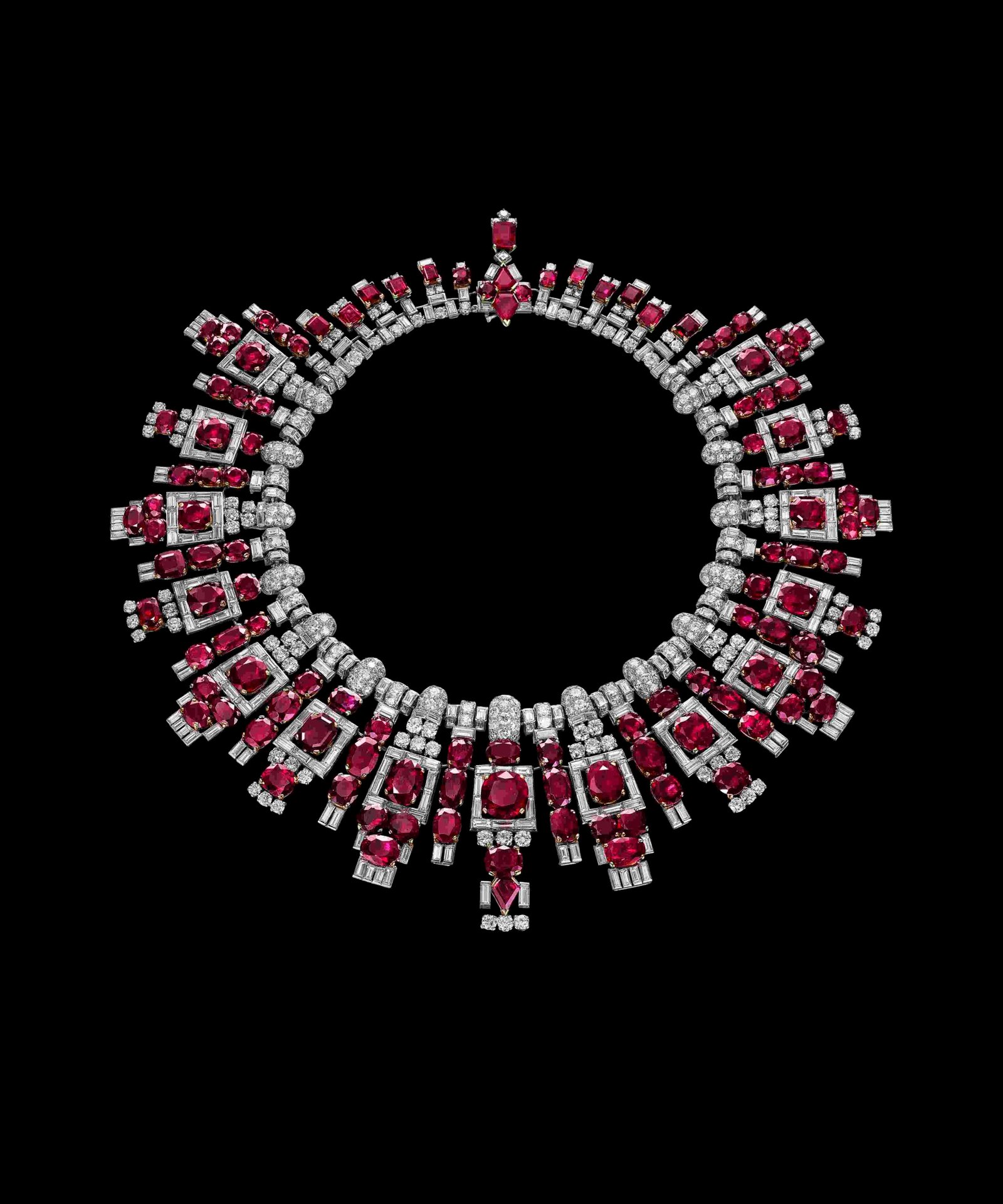
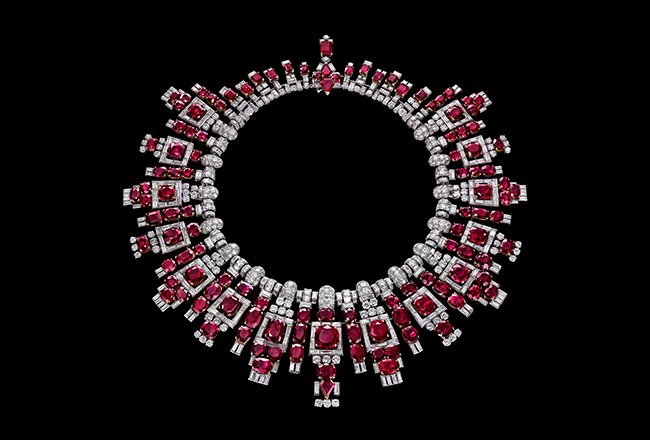
The Nawanagar Ruby Necklace by Cartier (platinum, rubies and diamonds), sold for $3.6 million (₹34.2 crore) | Image: Courtesy of The Al Thani Collection

For generations, the value of high jewellery was measured by its carat weight, clarity and origin. But seasoned collectors have long known that a remarkable story can elevate a jewel far beyond the value of its precious stones. Pieces once owned by icons, royalty and celebrated collectors continue to command extraordinary prices because of the history they carry.

Today, that story has gone digital. Provenance is no longer confined to auction catalogues and printed records. Cinematic videos, social media and immersive online campaigns have reshaped how collectors discover and connect with exceptional jewellery, creating excitement long before the first bid is placed.

The shift began in the late 1990s with landmark auctions such as the Estate of Jacqueline Kennedy Onassis. Demand to view the collection was so overwhelming that thousands entered a lottery simply for a chance to attend the preview. One standout lot—the Lesotho III diamond ring by Harry Winston—was estimated at $500,000 to $600,000, but ultimately sold for an astonishing $2.6 million, demonstrating the immense value of provenance even before the digital era.

That success laid the foundation for today’s luxury auction market, where storytelling, emotion and history often influence bidding as much as rarity and craftsmanship.

Read the full story in the special ‘Joaillerie Market’ issue of LuxeTrope, on stands now.

Read More

A generational shift in wealth is reshaping the art market, opening the door to a more layered landscape

The impact of wealth creation is becoming increasingly visible in the art market

In an art world often drawn to spectacle, Vattakuzhy stands apart for the quiet intensity of his vision

The landscape continues to spotlight a mix of historic Masters and Contemporary icons.

1,881 lots sold at ₹1.18 cr average price mark a robust 2025 for Indian art's elite.

He also emphasises that a good work must evoke a strong, lasting feeling

Inside the Mind of the Modern Meenakar

Inside the Mind of the Modern Meenakar

Veteran jewellery designer Sunita Shekhawat blends heritage with contemporary design to create versatile heirlooms

PHOTOGRAPH: MUNEESH TARSEM

Colour, technique, and motif—these are the fundamentals that guide Sunita Shekhawat when conceptualising a piece of jewellery. Deeply inspired by the beauty and majesty of Rajasthan, Shekhawat’s creative journey began over three decades ago, and today, her brand Sunita Shekhawat Jaipur is widely recognised for its timeless modern heirlooms. She pioneered a contemporary colour palette that broke away from traditional red and green enamelling, giving the ancient art of Meenakari a striking new edge, earning her the title of ‘The Modern Meenakar’.

Rajasthan’s vibrant palette, architecture, textiles, and decorative arts continue to inspire her even today. Reflecting on the lifelong muse that defines her design sensibilities, Shekhawat says, “Whether in the grandeur of palaces like Umaid Bhawan or in the quiet charm of village life, what fascinated me was that regardless of scale or setting, the emotion behind craftsmanship remained the same.”

For the jeweller, the process of turning a concept into a structured piece of jewellery starts with an idea or a story. “The idea is then translated through motifs and brought to life using traditional techniques. From there, the challenge is to create structure and form while preserving the emotion and artistry at the heart of the design,” she adds. The aim, ultimately, is to balance heritage with innovation, transforming inspiration into something timeless and wearable.

When Rajmata Gayatri Devi inaugurated Shekhawat’s boutique in 1999, it provided a much-needed boost to the then-emerging designer. A full circle moment came 25 years later, when Shekhawat was honoured with an award named after the legendary queen who had championed the jeweller in her early days. She recalls, “In fact, the very first cheque  Ireceived was signed by her as ‘Rajmata Gayatri Devi of Jaipur’, which inspired us to adopt the name Sunita Shekhawat Jaipur. She was not only an inspiration to me but to generations of people, and her legacy continues to guide the way we preserve and reinterpret our heritage today.”

Read the full story in the special ‘Joaillerie Market’ issue of LuxeTrope, on stands now.

Read More

A generational shift in wealth is reshaping the art market, opening the door to a more layered landscape

The impact of wealth creation is becoming increasingly visible in the art market

In an art world often drawn to spectacle, Vattakuzhy stands apart for the quiet intensity of his vision

The landscape continues to spotlight a mix of historic Masters and Contemporary icons.

1,881 lots sold at ₹1.18 cr average price mark a robust 2025 for Indian art's elite.

He also emphasises that a good work must evoke a strong, lasting feeling

Jewels that Defined the Auction Season

Beyond the Sparkle: Jewels that Defined the Auction Season

These exceptional pieces proved that rarity, provenance and craftsmanship continue to command record prices at auction

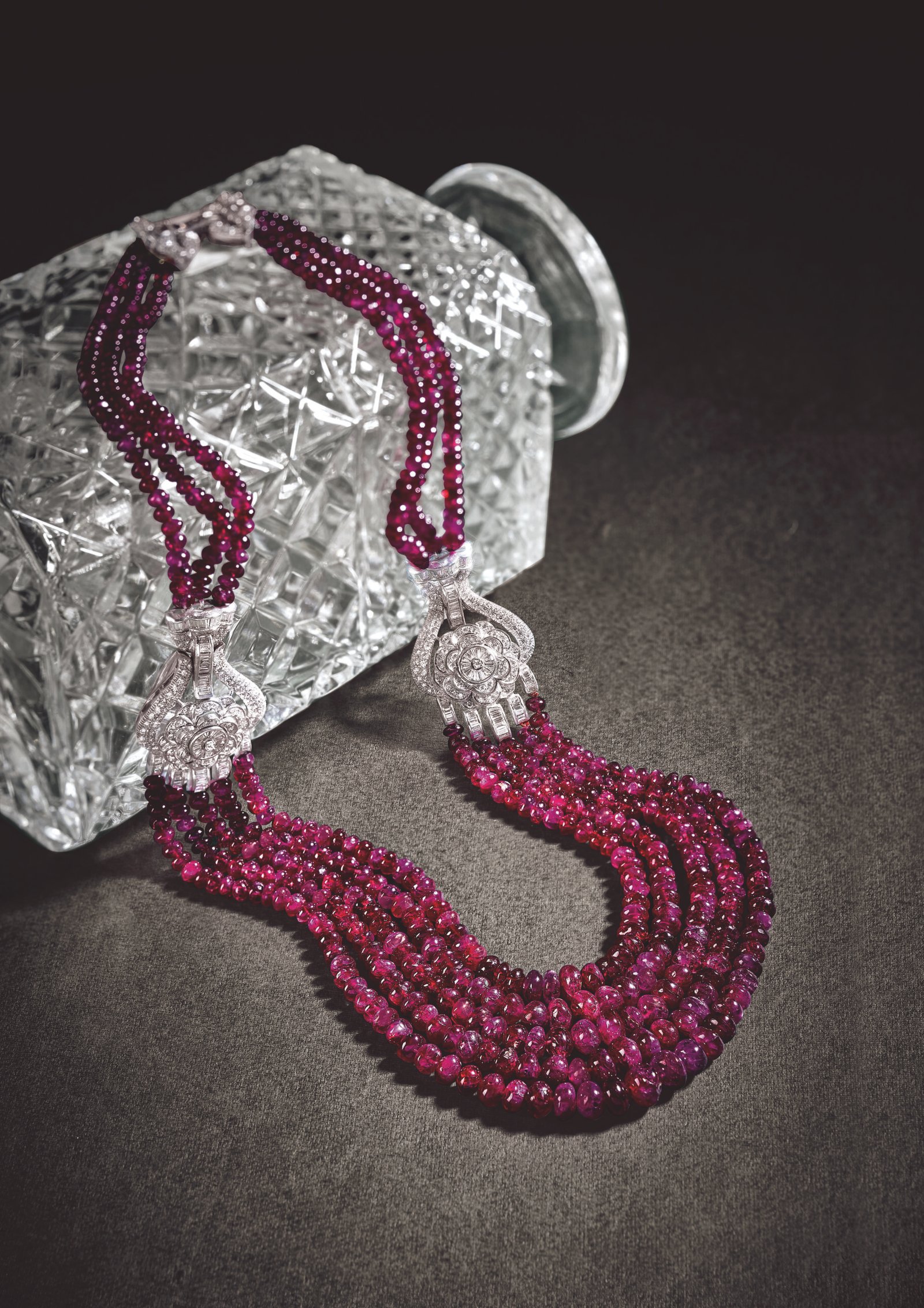
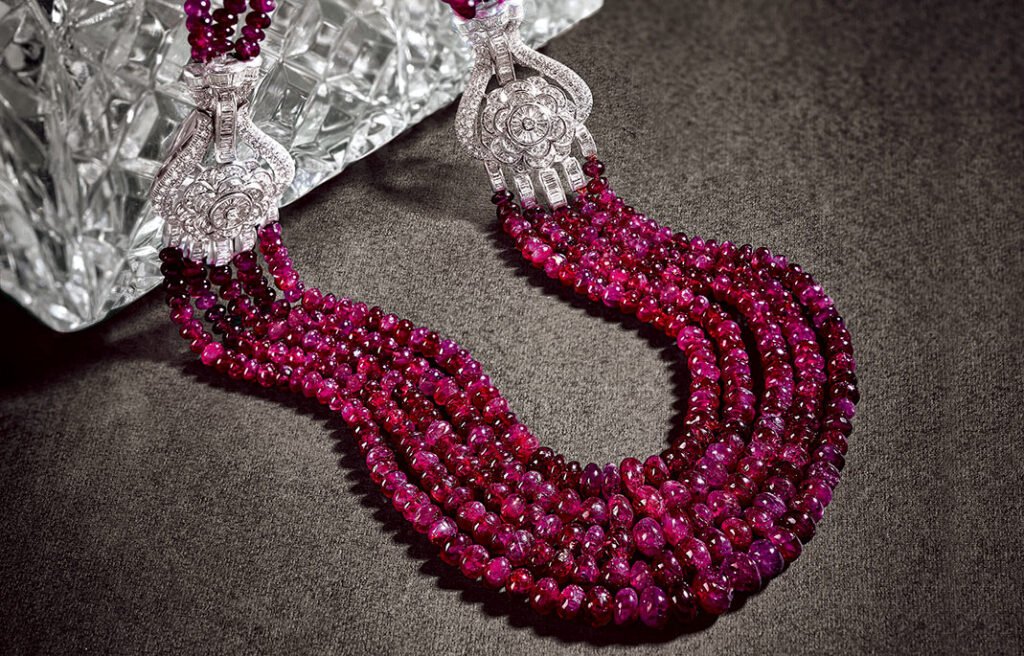
NATURAL BURMESE RUBY BEAD NECKLACE | Rubies: 833.30 cts/565 pcs | Diamonds: 8.40 cts/510 pcs | Sold in 2023 by AstaGuru for ₹76,96,628 ($81,017)

Some jewels are more than exquisite adornments, they are works of art with remarkable histories. These exceptional auction highlights showcase how rarity, provenance and master craftsmanship continue to captivate collectors.

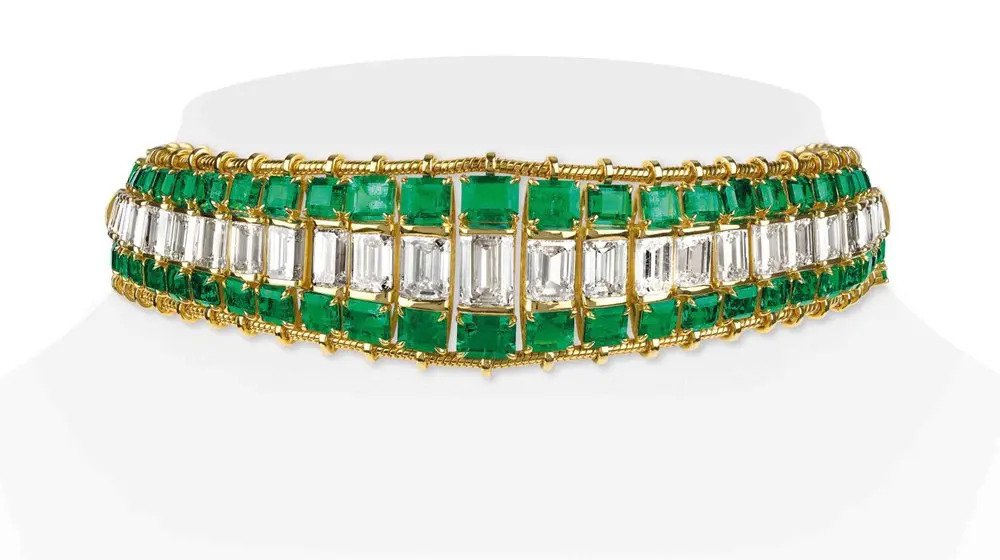
Colombian Emerald & Diamond Choker | Gross Weight: 91.826 g | Emeralds: 54.07 cts/246 pcs | Diamonds: 60.73 cts/207 pcs | Sold in 2024 by AstaGuru for ₹2,51,16,300 ($264,382)

The highest-selling lot on the list, this 18k yellow gold choker pairs 246 precision-matched Colombian emeralds with over 60 carats of diamonds. Its ingenious design allows it to transform into a bracelet, making it as versatile as it is valuable.

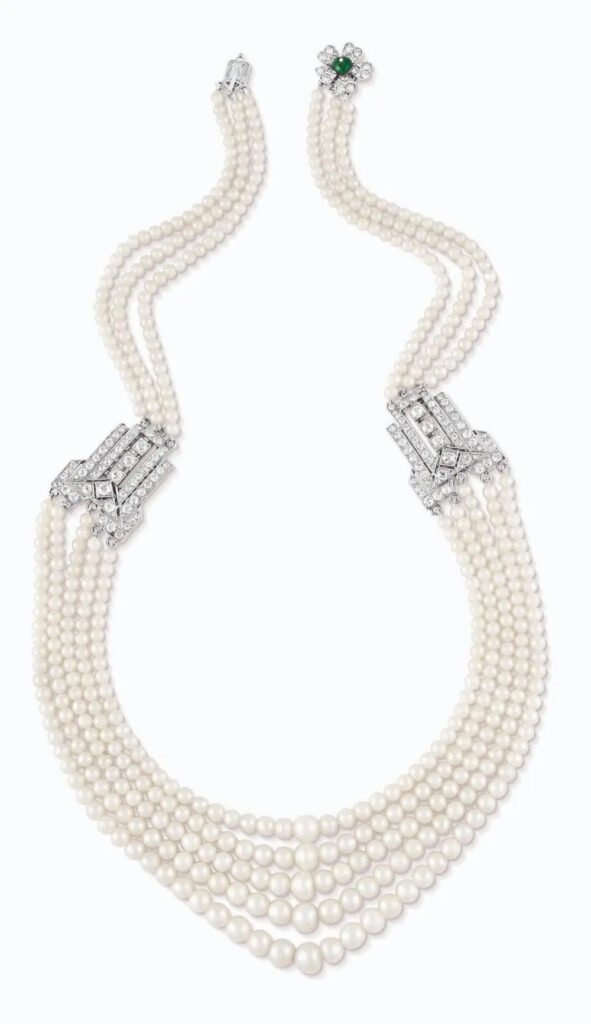
Vintage Natural Pearl Necklace | Natural Pearls: 346.60 chau (424.23 cts)/501 pcs | Diamonds: 11.75 cts/170 pcs | Emerald: 0.60 cts/1 pc | Sold in 2024 by AstaGuru for ₹2,04,88,421 ($215,667)

Five elegant strands of natural pearls meet the glamour of the Art Deco era. Finished with platinum terminals, old-cut diamonds and a striking emerald clasp, this necklace is a rare example of timeless craftsmanship.

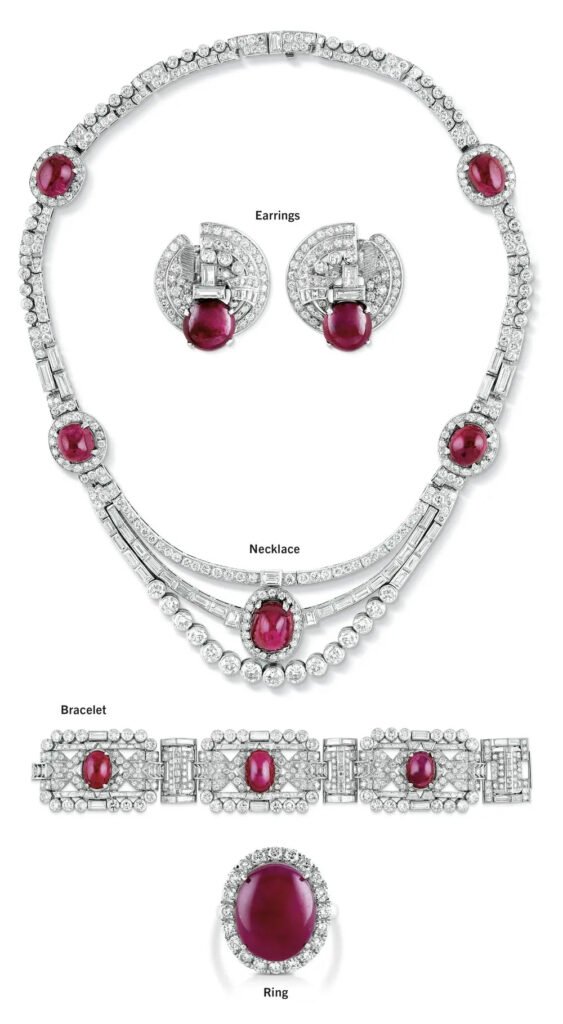
Art Deco Platinum Jewellery Suite | Gross Weight: 240.930 g | Burmese Rubies: 135.00 cts/11 pcs | Diamonds: 145.00 cts/858 pcs | Sold in 2024 by AstaGuru for ₹1,86,91,200 ($196,749)

A complete haute joaillerie suite featuring a necklace, bracelet, ear clips and matching ring, this spectacular set combines rich Burmese ruby cabochons with 145 carats of old European and baguette-cut diamonds.

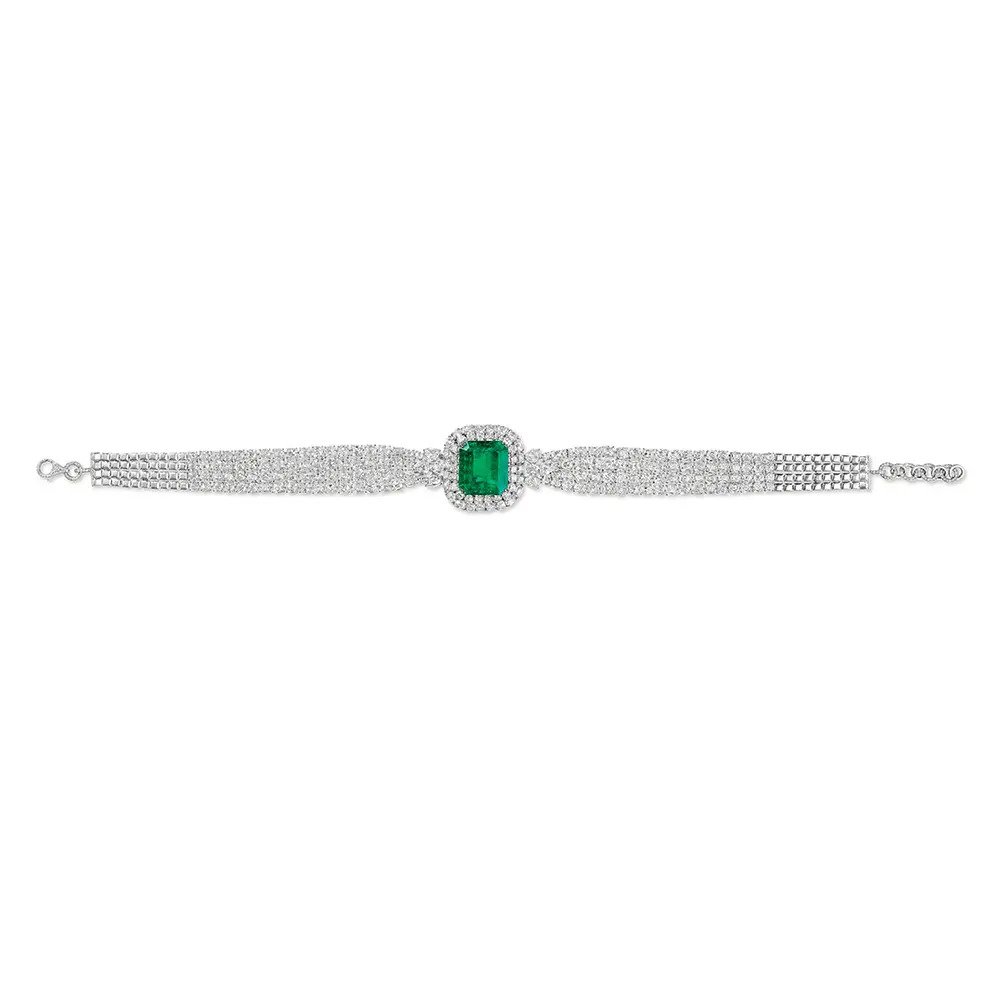
Colombian Emerald & Diamond Choker | Gross Weight: 83.620 g | Emerald: 32.06 cts/1 pc | Diamonds: 82.17 cts/509 pcs | Sold in 2026 by AstaGuru for ₹1,73,88,910 ($183,041)

Centred around a magnificent 32.06-carat Colombian emerald, this white gold choker is framed by more than 82 carats of brilliant-cut diamonds, creating one of the most impressive contemporary auction highlights.

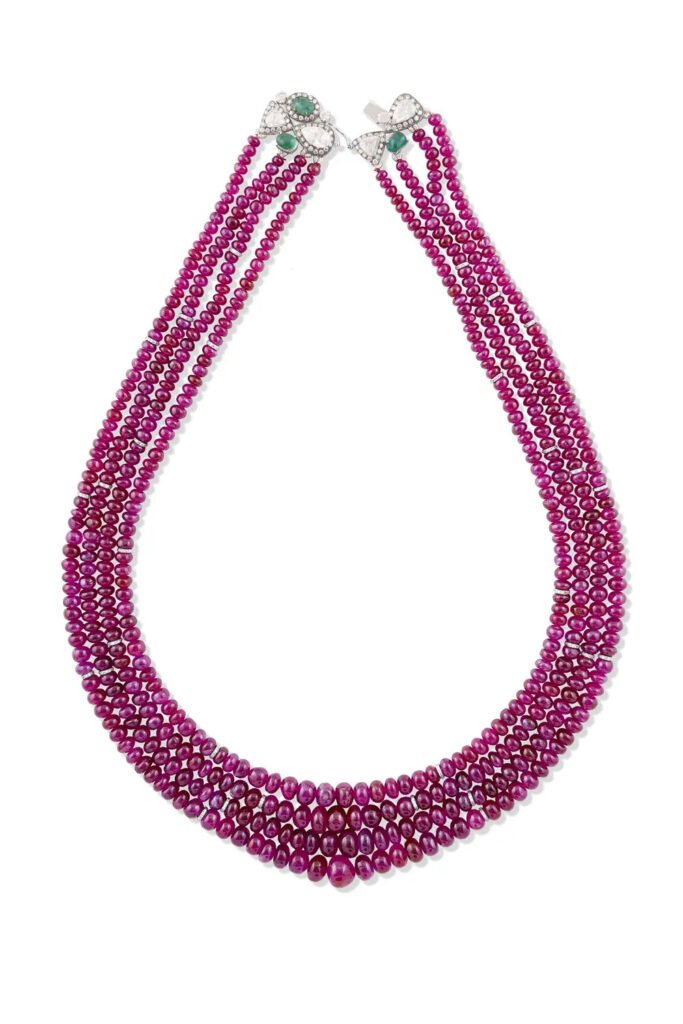
Ruby Bead Necklace | Rubies: 1119.94 cts/548 pcs | Round Diamonds: 5.00 cts/434 pcs | Rose-Cut Diamonds: 2.20 cts/4 pcs | Emeralds: 6.00 cts/3 pcs | Sold in 2022 by AstaGuru for ₹1,71,91,350 ($180,961)

Featuring 548 Burmese ruby beads sourced from the legendary Mogok mines, this regal four-row necklace is accented with diamonds and emeralds. Its exceptional gemstones and royal aesthetic make it one of the finest ruby jewels ever offered at auction.

These remarkable sales highlight the growing appetite for museum-worthy jewellery, where exceptional gemstones, heritage and craftsmanship continue to drive demand among collectors worldwide.

Read the full story in the special ‘Joaillerie Market’ issue of LuxeTrope, on stands now.

Read More

A generational shift in wealth is reshaping the art market, opening the door to a more layered landscape

The impact of wealth creation is becoming increasingly visible in the art market

In an art world often drawn to spectacle, Vattakuzhy stands apart for the quiet intensity of his vision

The landscape continues to spotlight a mix of historic Masters and Contemporary icons.

1,881 lots sold at ₹1.18 cr average price mark a robust 2025 for Indian art's elite.

He also emphasises that a good work must evoke a strong, lasting feeling

Epic New Releases: Top 10 Luxury Watches of 2026

Epic New Releases: Top 10 Luxury Watches of 2026

A look at standout novelties from Watches and Wonders Geneva

Mechanical watchmaking in 2026 is increasingly as much about emotion as engineering, crafting objects that feel sculptural, poetic and technically audacious all at once. From ultra-thin design evolutions to space‑ready tool watches and poetic moon-phase tableaux, these ten new references map where the highest tiers of watchmaking are headed next.

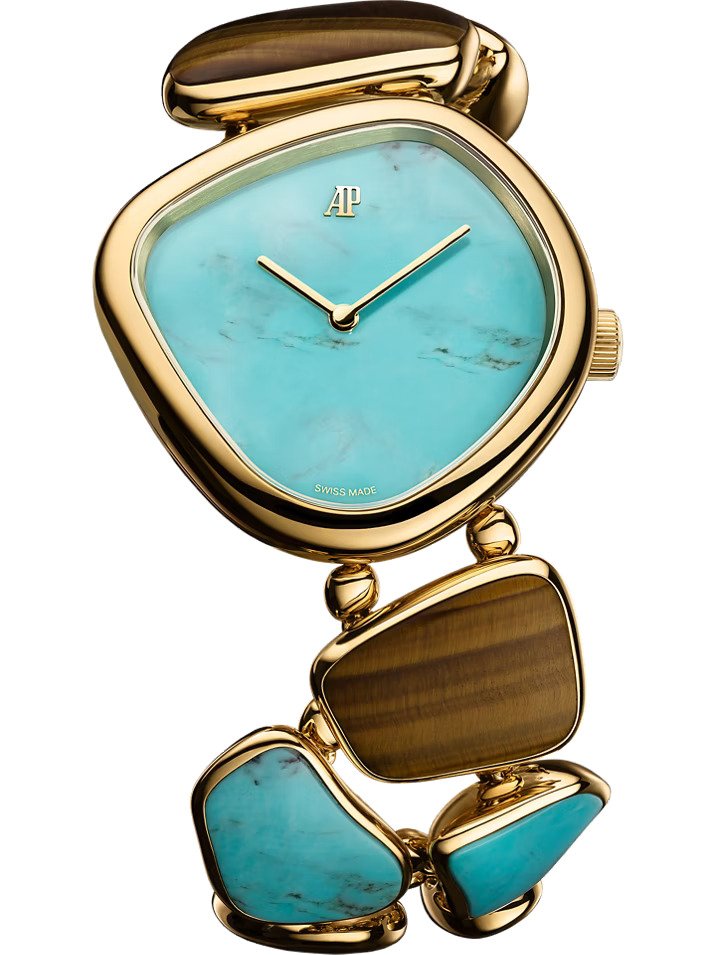
Audemars Piguet Établisseurs Galets

Inspired by the water‑smoothed stones of the Vallée de Joux, the Établisseurs Galets is a pebble‑shaped 31 mm bracelet watch in 18k yellow gold, with a natural stone dial and stone‑set gold links that drape fluidly around the wrist. Inside beats the ultra‑slim, hand‑wound Calibre 3098 adapted to follow the organic case shape, making this high‑jewellery object part of a trio of highly limited, atelier‑crafted pieces produced in very small numbers rather than as a large series.

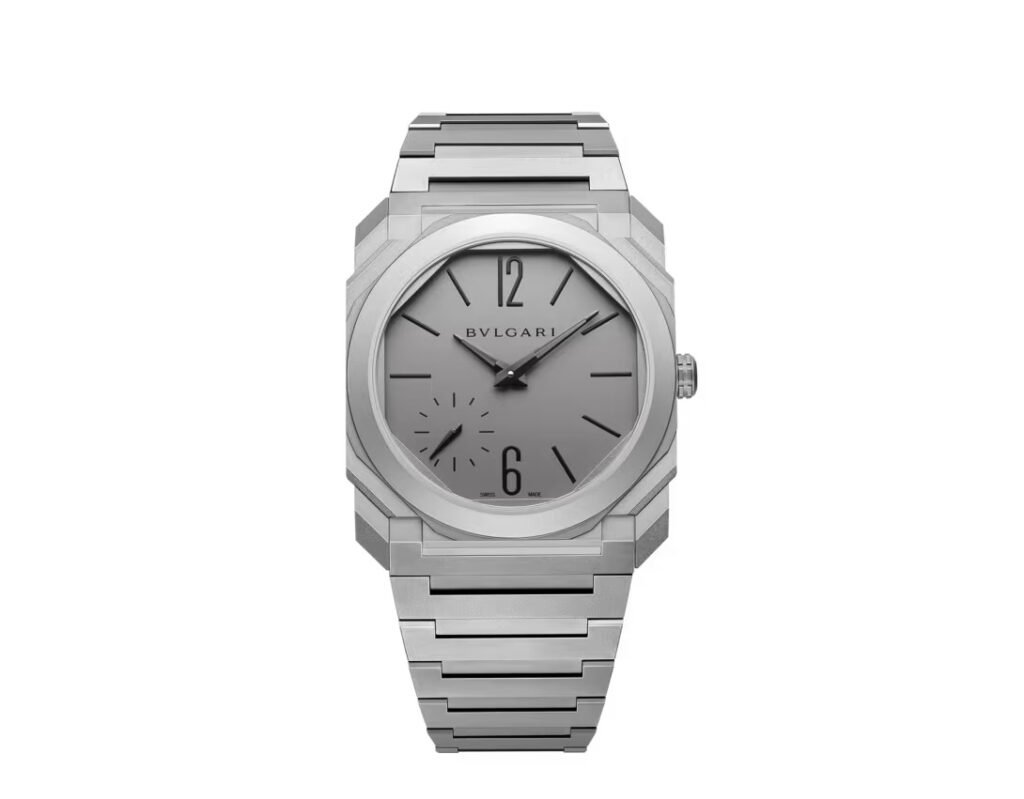
Bvlgari Octo Finissimo 37

Bvlgari’s new Octo Finissimo 37 mm refocuses the brand’s ultra‑thin icon with more compact proportions, offered in feather‑light titanium with either sandblasted or satin‑polished finishes instead of steel. It’s powered by the new in‑house automatic Calibre BVF 100—an ultra‑thin movement with a 72‑hour power reserve.

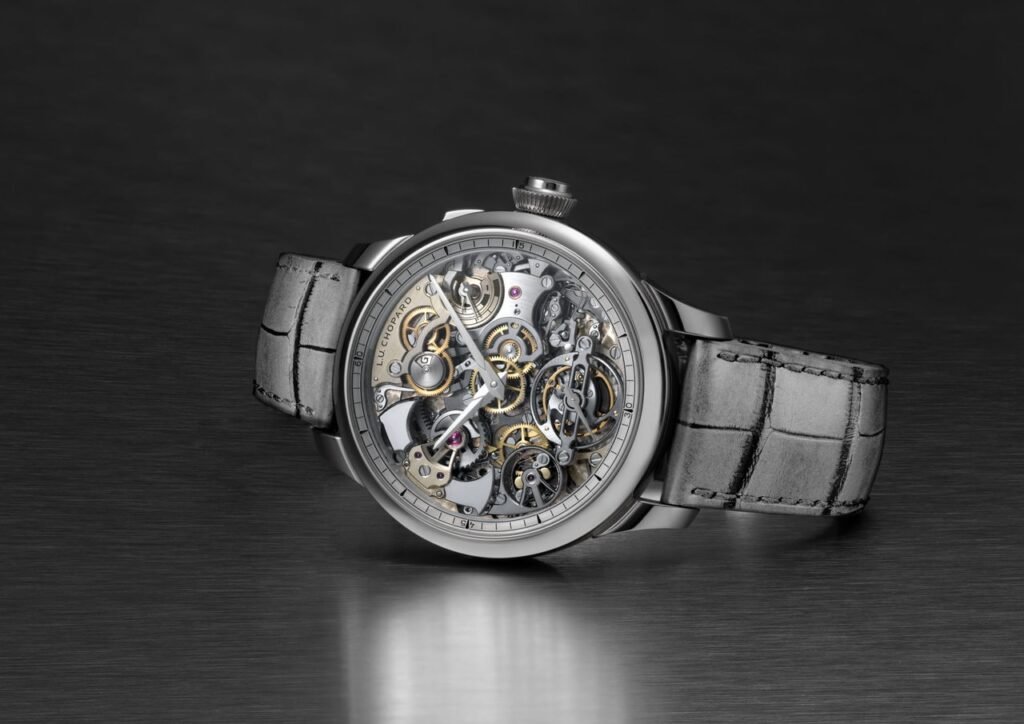
Chopard L.U.C Grand Strike

The L.U.C Grand Strike is Chopard’s most complex chiming watch to date, housed in an 18k ethical white‑gold case and showcasing grande and petite sonnerie, minute repeater and tourbillon functions on an openworked dial. At its heart is the hand‑wound L.U.C 08.03‑L calibre, a 686‑component movement with Chopard’s sapphire monobloc gong technology, positioning this as an ongoing haute horlogerie piece.

IWC Schaffhausen Pilot’s Venturer Vertical Drive

Engineered from the ground up for human spaceflight, the Pilot’s Venturer Vertical Drive pairs a white zirconium‑oxide ceramic case with a Ceratanium bezel and caseback, creating a highly robust, temperature‑resistant tool watch for orbital missions. It runs on the IWC‑manufactured automatic Calibre 32722 featuring a hybrid winding system controlled via an innovative rotating bezel.

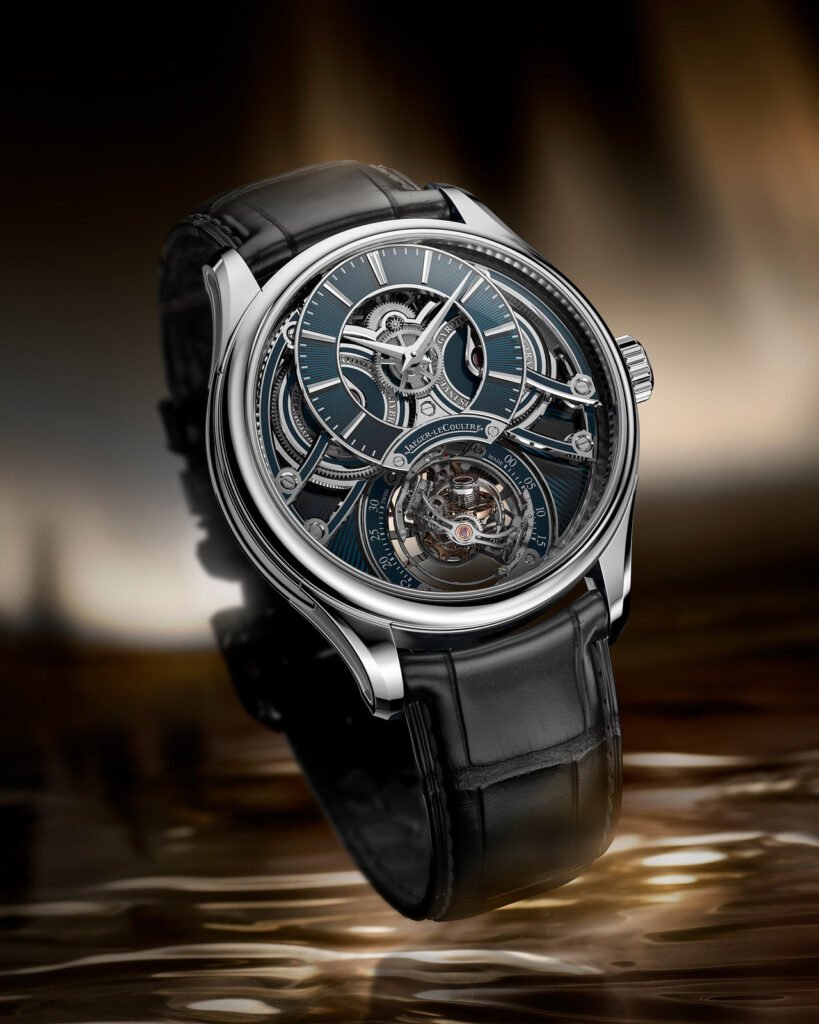
Jaeger‑LeCoultre Master Hybris Inventiva Gyrotourbillon à Stratosphère

Jaeger‑LeCoultre houses its latest triple‑axis tourbillon Calibre 178, inside a 42 mm platinum case, combining a 4 Hz regulating organ with a 72‑hour power reserve and extraordinary hand‑finishing. Decorated with 16 different types of finishing across plates and bridges, the movement anchors a strictly limited run of just 20 pieces, underscoring its status as the pinnacle of the brand’s “Hybris” high‑complication family.

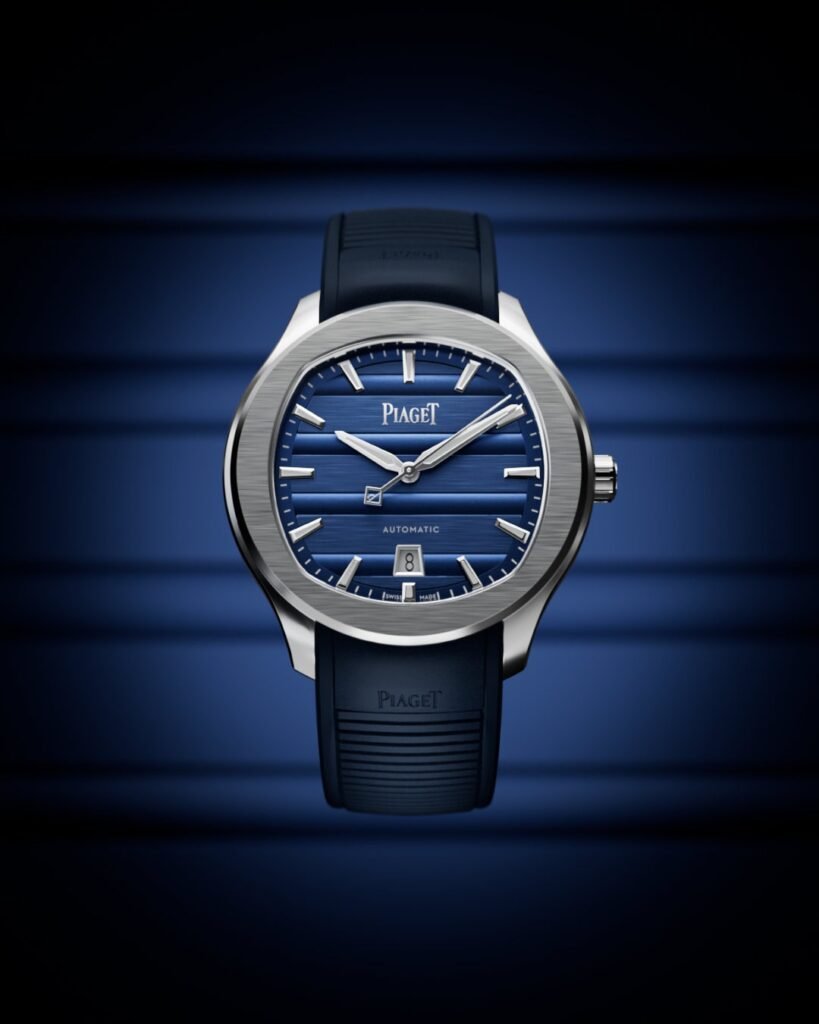
Piaget Polo Signature

Piaget’s 2026 evolution of the Polo 79 pairs a 38 mm white‑gold case and integrated bracelet with a gadroon‑pattern dial that fuses white gold elements and sodalite, highlighting the Maison’s love of rare stones. Inside, the ultra‑thin automatic Calibre 1200P with 22k yellow‑gold microrotor keeps the profile slim and refined, with this reference positioned as a regular but inherently exclusive precious‑metal Polo.

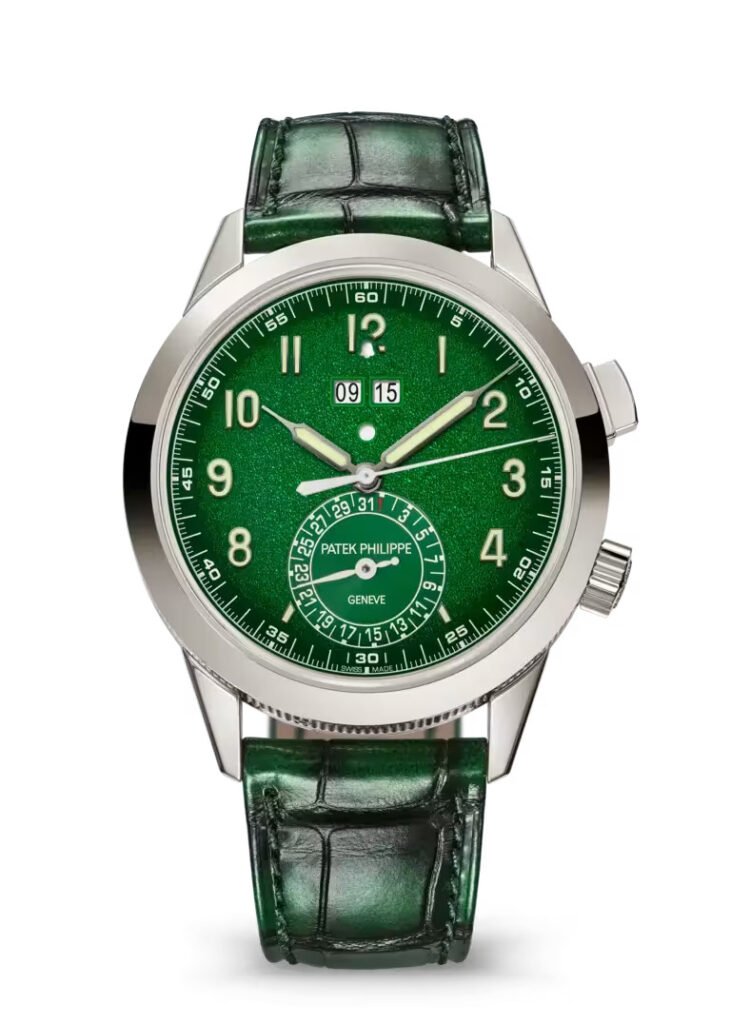
Patek Philippe REF. 5322G-010: 24h Alarm

This timepiece places a new 24‑hour alarm complication inside an 18k white‑gold Calatrava case, framed by a guilloché hobnail (Clous de Paris) pattern and a textured green lacquered dial. Its self‑winding AL 30‑660 S C calibre, comprising 524 components, drives time, date and a 24‑hour alarm on classic gongs.

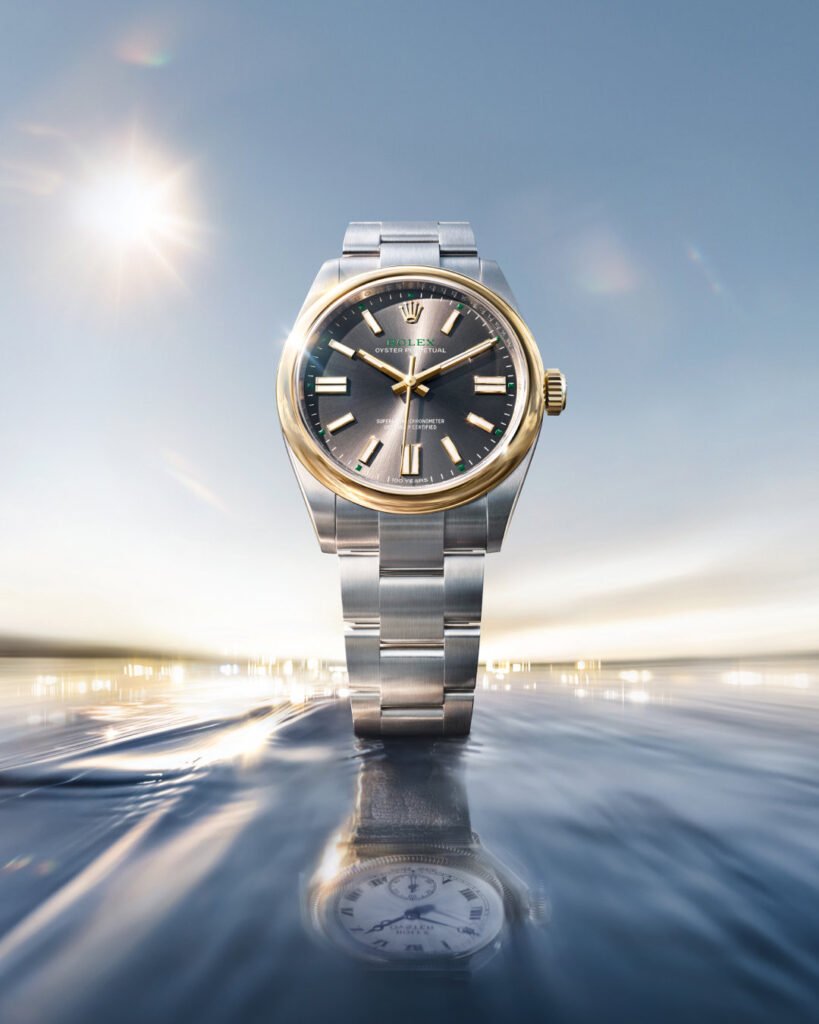
Rolex The Oyster Perpetual

To mark a century of the Oyster, Rolex introduces a new Oyster Perpetual 41 mm anniversary reference that returns to core codes: an Oystersteel and yellow‑gold Rolesor case, a slate‑grey dial with Chromalight lume and the timeless three‑hand layout. The watch is powered by the automatic Calibre 3230 with an approximately 70‑hour power reserve and Superlative Chronometer certification, joining the main Oyster Perpetual line.

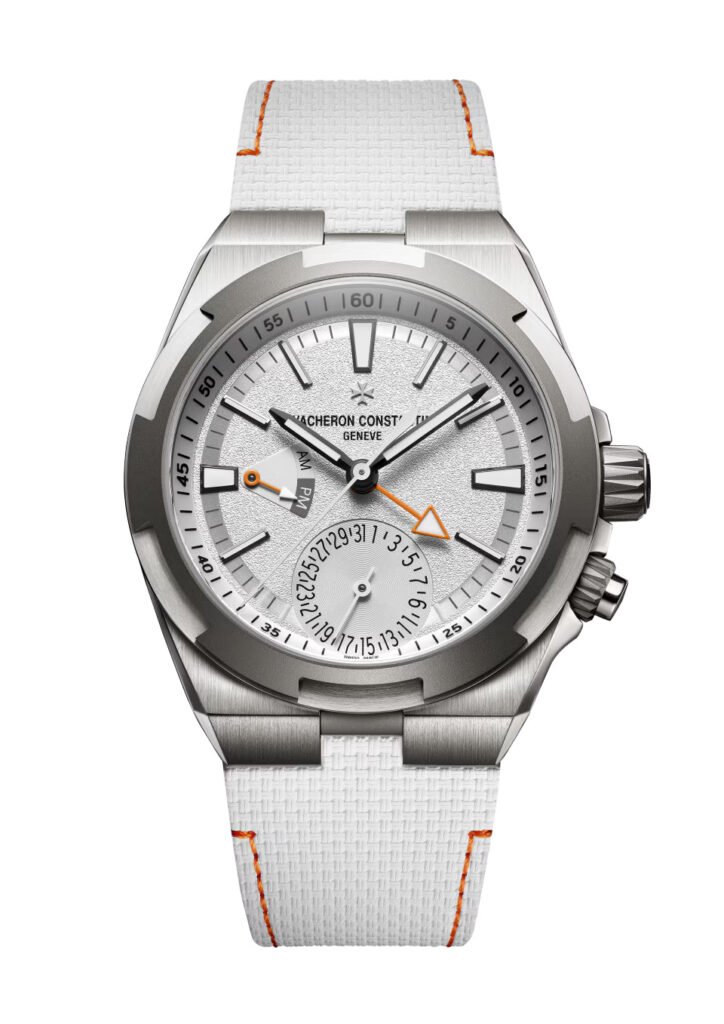
Vacheron Constantin Overseas Dual Time Cardinal Points

The Overseas Dual Time Cardinal Points marks 30 years of Vacheron Constantin’s travel collection with a fully titanium 41 mm case and integrated bracelet, paired with bold colour‑coded indications for local and home time. It is driven by the manufacture self‑winding Calibre 5110 DT/3 with dual‑time, day/night and date functions plus a 22k gold wind‑rose rotor.

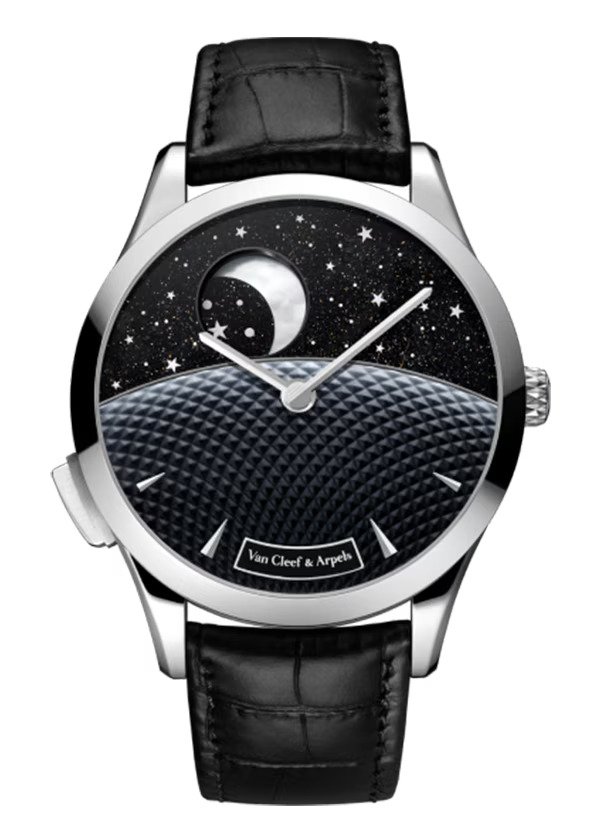
Van Cleef & Arpels Midnight Jour Nuit Phase de Lune

Van Cleef & Arpels expands its Jour Nuit line with the Midnight Jour Nuit Phase de Lune, a 42 mm white‑gold watch whose dial combines black Murano aventurine glass, guilloché yellow‑gold sun and layered mother‑of‑pearl moon imagery. An automatic mechanical movement drives both a poetic day/night display and realistic moon‑phase with animation on demand.

Read More

A generational shift in wealth is reshaping the art market, opening the door to a more layered landscape

The impact of wealth creation is becoming increasingly visible in the art market

In an art world often drawn to spectacle, Vattakuzhy stands apart for the quiet intensity of his vision

The landscape continues to spotlight a mix of historic Masters and Contemporary icons.

1,881 lots sold at ₹1.18 cr average price mark a robust 2025 for Indian art's elite.

He also emphasises that a good work must evoke a strong, lasting feeling

10 Statement Jewels that Redefined Luxury

10 Statement Jewels that Redefine Luxury

A look back at the top-selling jewellery lots of 2025

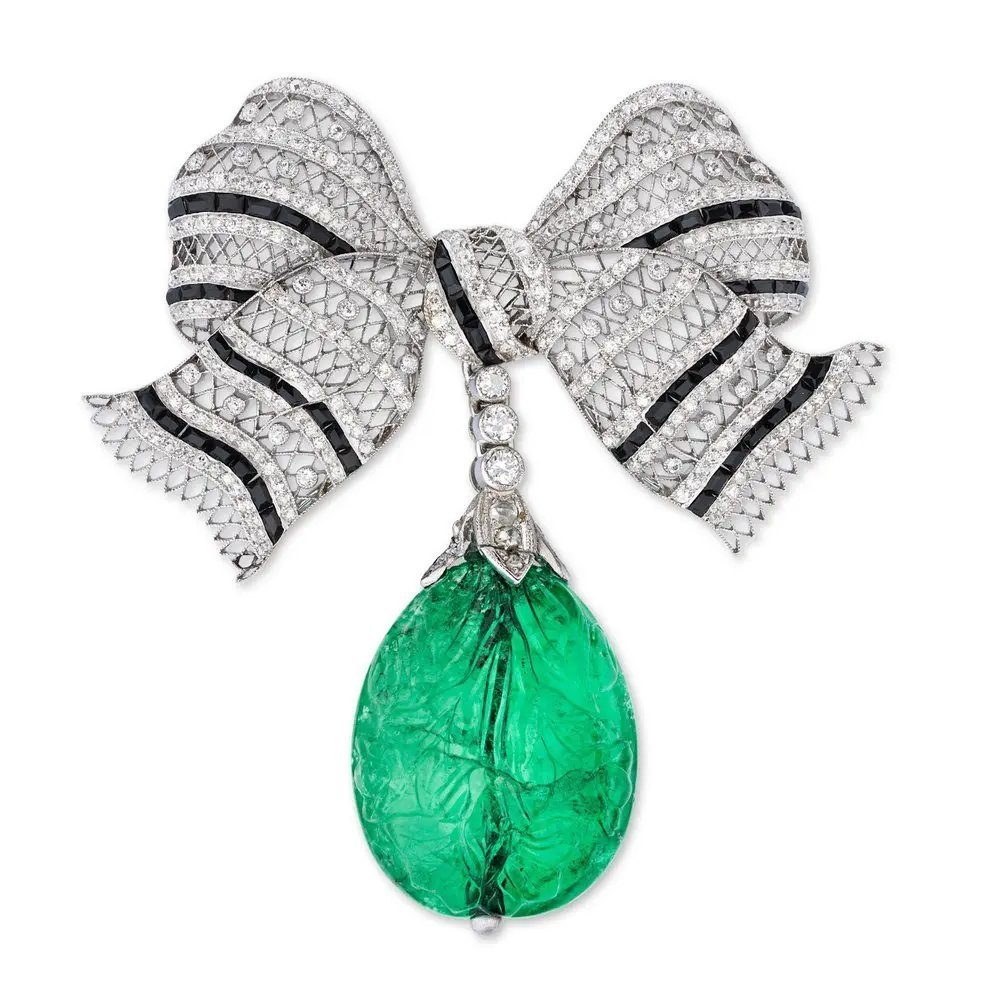
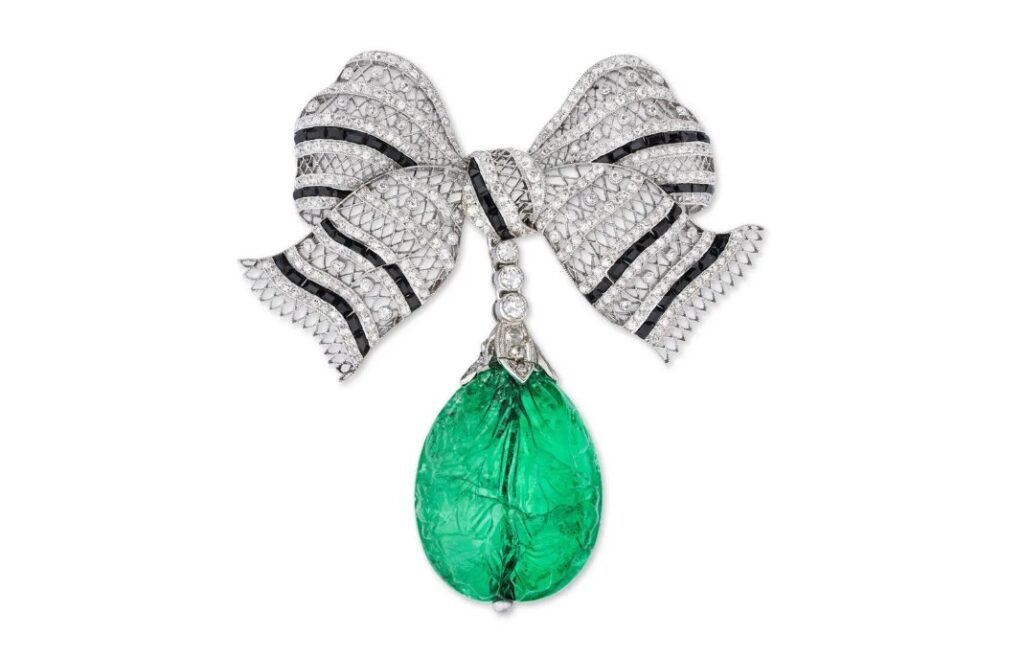
A Vintage French Art Deco Bow Brooch | Sold for ₹1,92,75,300

Jewellery is perhaps the most personal art form we own, meant to be worn and lived in, catching the light and carrying a history that only deepens with time. In 2025, this appreciation for wearable legacy was clear as AstaGuru’s jewellery auctions realised a combined total of over ₹18.48 crore.

The year’s most significant acquisition was a Vintage French Art Deco Bow Brooch, set with luminous diamonds and vivid Colombian emeralds, which topped AstaGuru’s 2025 jewellery lots at ₹1.92 crore.

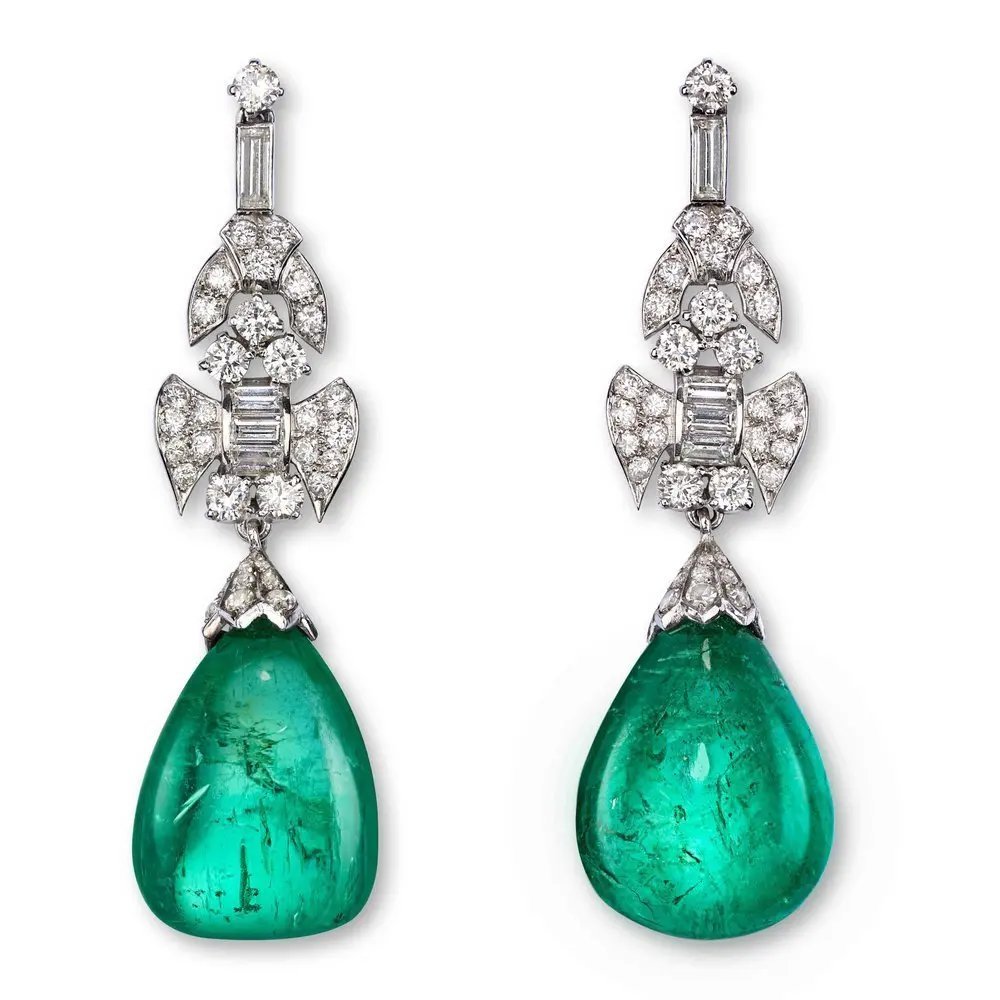
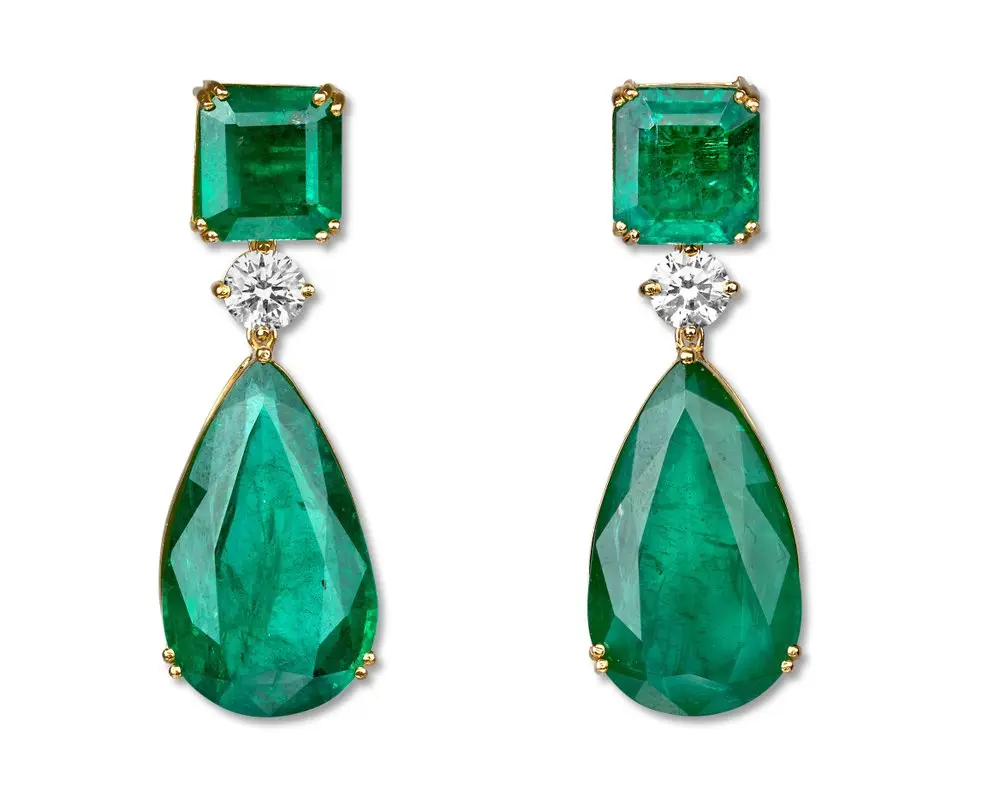
Vintage Colombian Emerald & Diamond Ear Pendants | Sold for ₹1,57,70,700

This was followed closely by a pair of Vintage Colombian Emerald & Diamond Ear Pendants. These vintage ear pendants, showcasing richly hued Colombian emeralds framed by finely matched diamonds, realised an impressive ₹1.57 crore. Their refined vertical silhouette balances heirloom-level stones with a contemporary, effortlessly wearable design.

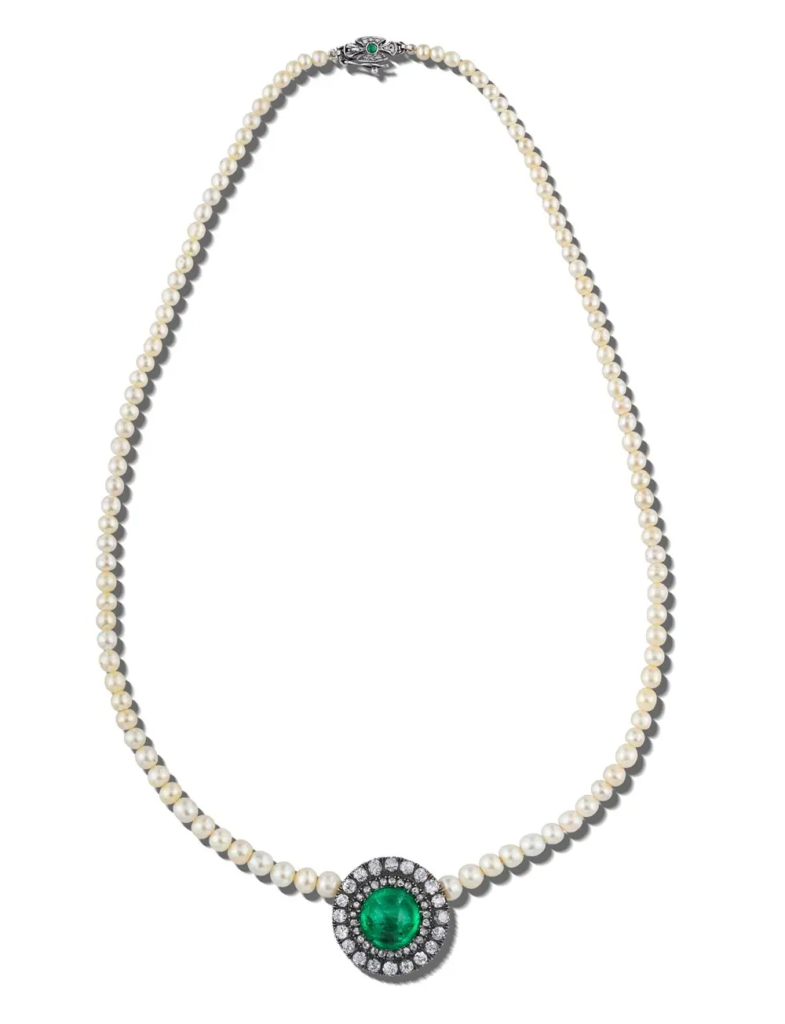
Pearl, Emerald & Diamond Necklace | Sold for ₹99,29,700

The demand for classic, wearable silhouettes continued with a Magnificent Pearl, Emerald & Diamond Necklace. This long necklace, draping in a cascade of lustrous pearls anchored by an emerald-and-diamond centre, achieved a winning bid of ₹99 lakh. Romantic yet versatile, it moves easily from ceremonial occasions to modern red-carpet styling.

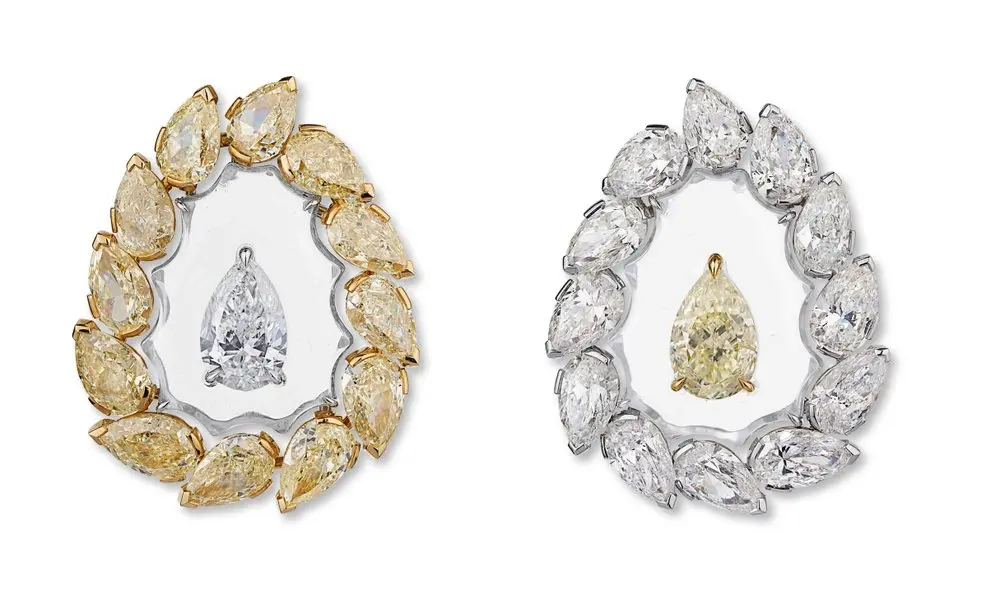
Exquisite Diamond Ear Tops | Sold for ₹91,99,575

This pair of Diamond Ear Tops followed closely behind, achieving ₹92 lakh. Set with brilliantly cut diamonds and finished with crystalline drops, they frame the face with bold, sculptural brilliance, reflecting strong demand for statement, occasion-ready ear jewellery.

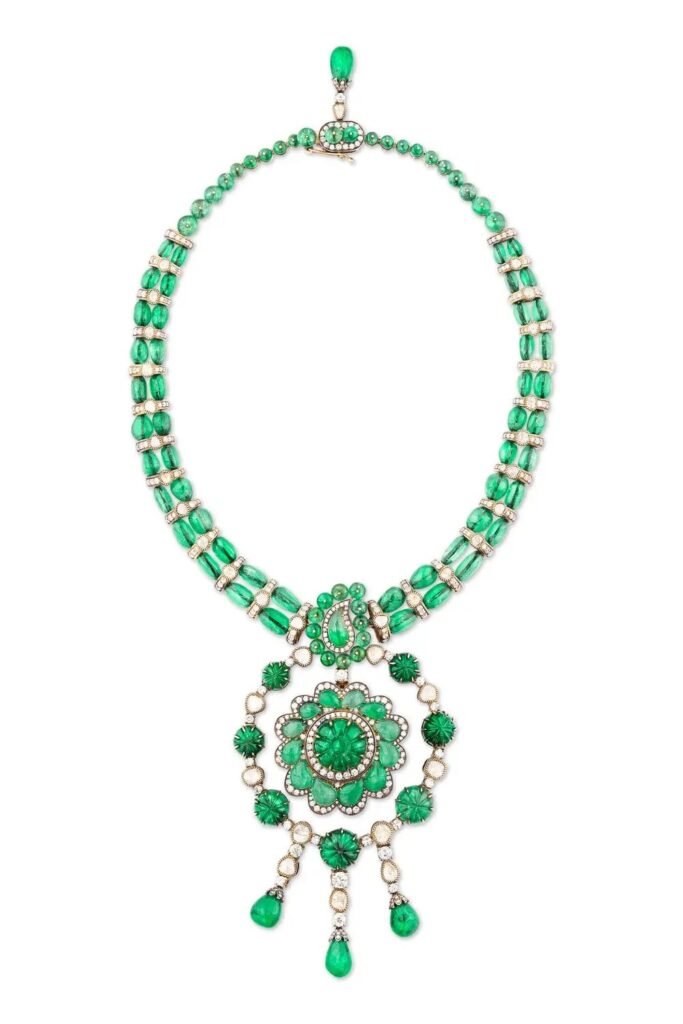
Panjshir Emerald & Diamond Necklace | Sold for ₹57,17,250

The global resonance of rare geography was also felt with a Panjshir Emerald & Diamond Necklace, fetching ₹57 lakh, showcasing the distinctive beauty of Afghan emeralds. Composed of finely matched Panjshir emerald beads and accented with diamonds, its vivid green hue and elegant simplicity underscore the rarity and prestige of these exceptional stones.

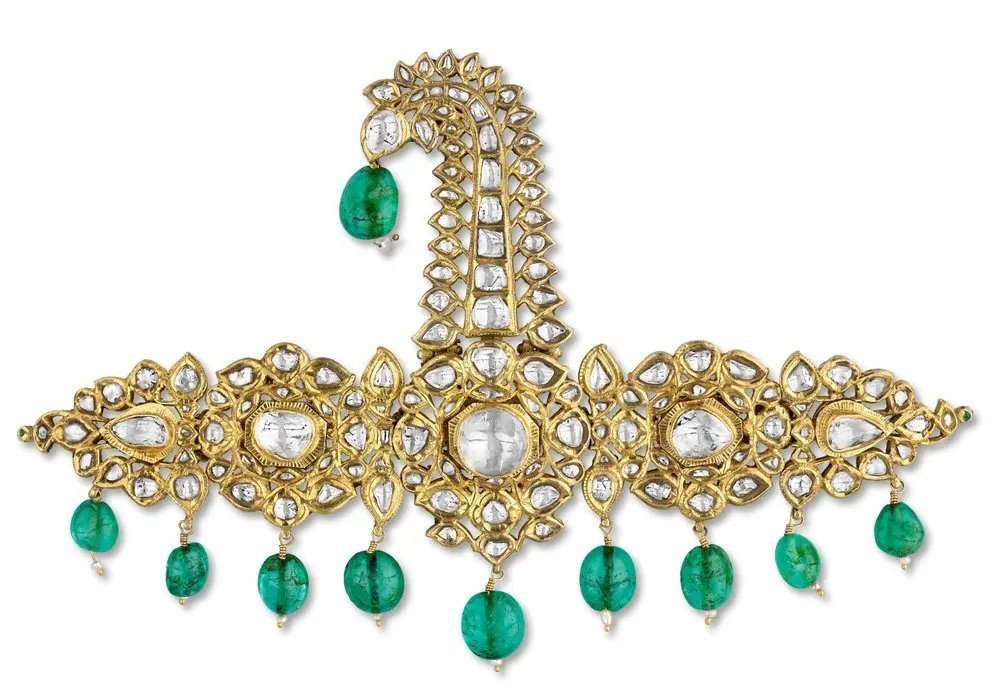
Traditional Turban Ornament With Diamonds & Emeralds | Sold for ₹42,05,520

Cultural heritage remained a central theme, exemplified by a traditional gold turban ornament (sarpech) adorned with diamonds and emeralds, which went under the hammer at ₹42 lakh. Echoing the splendour of historic Indian courts, the piece, whether worn on a turban or displayed as an objet d’art embodies the intersection of royal heritage and collectible jewellery artistry.

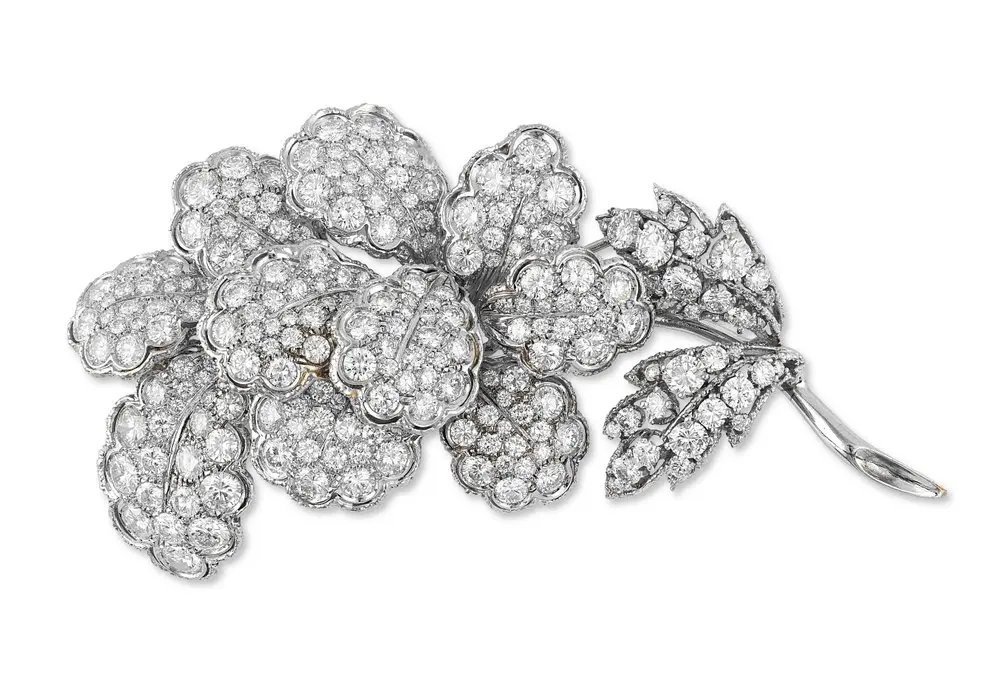
An Exceptional Diamond Bouquet Brooch | Sold for ₹38,72,000

Shaped as a three-dimensional floral bouquet and pavé-set with diamonds, this striking brooch achieved a sale price of ₹38 lakh. Its generous scale turns any lapel, sash or evening gown into a dramatic stage for light and texture.

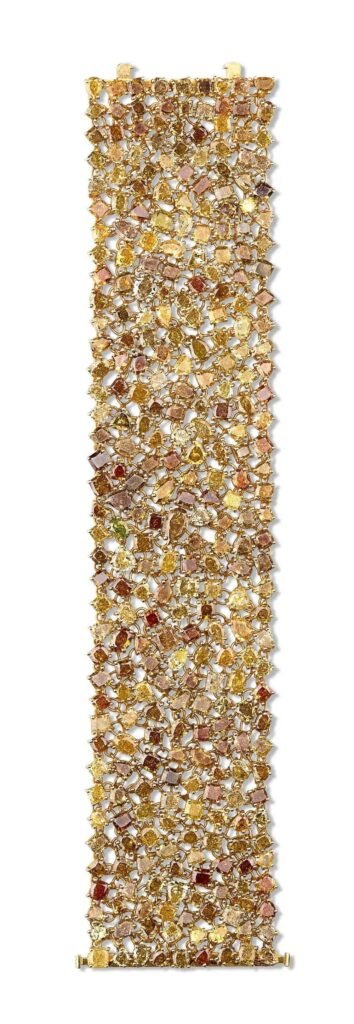
An Exquisite Diamond Bracelet | Sold for ₹35,04,600

This exquisite bracelet is composed of scintillating diamonds that form a fluid, articulated band around the wrist, giving it a quietly opulent, second-skin feel. Achieving ₹35 lakh at auction, it underscores collectors’ enduring appetite for impeccably crafted, easy-to-wear diamond classics.

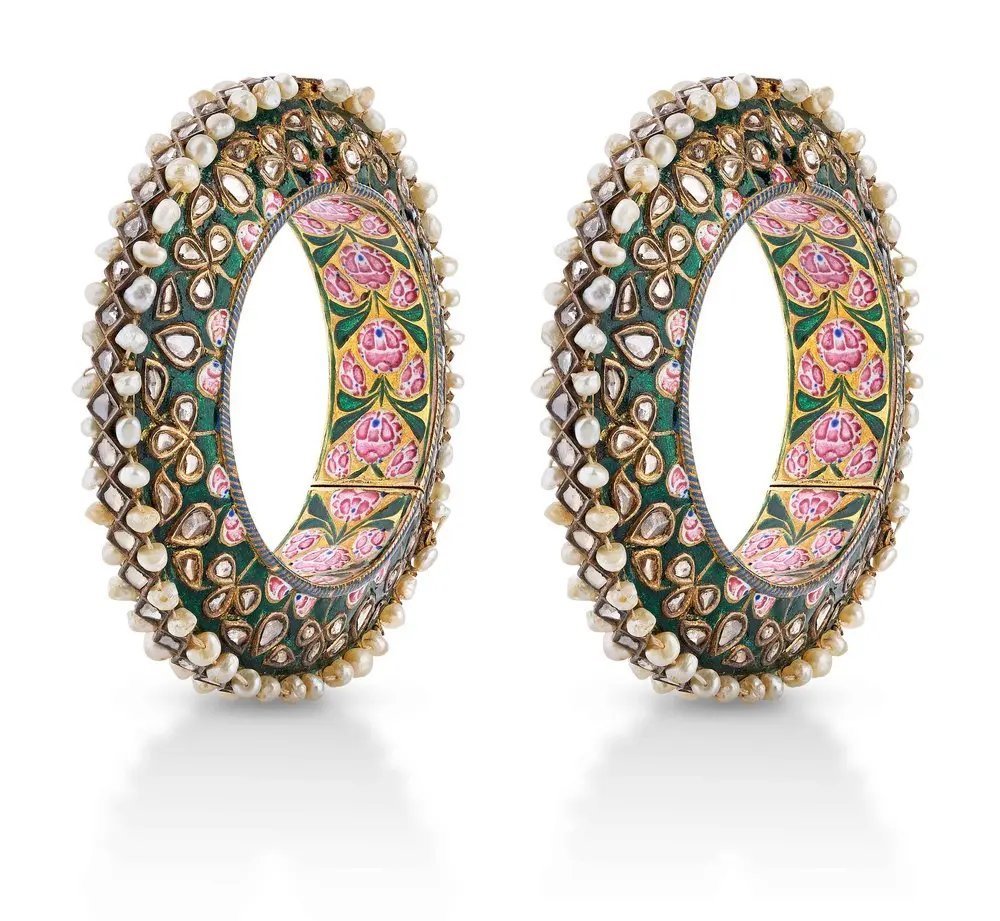
A Significant Pair Of Period Jadau Kada Bangles | Sold for ₹31,64,150

These period jadau kadas, glowing with uncut diamonds and coloured stones set in gold, realised ₹31 lakh. Rooted in traditional Indian craftsmanship, they bring museum-level gravitas and old-world opulence to a contemporary jewellery stack.

A Pair Of Emerald Ear Pendants | Sold for ₹30,37,320

Rounding out the year’s top ten was this pair of Emerald Ear Pendants, which realised ₹30 lakh at auction. Designed as elongated drops set with richly hued emeralds and accented by diamonds, they create a graceful line of movement along the neck, offering a refined yet statement-making way to wear coloured gemstones.

Read More

A generational shift in wealth is reshaping the art market, opening the door to a more layered landscape

The impact of wealth creation is becoming increasingly visible in the art market

In an art world often drawn to spectacle, Vattakuzhy stands apart for the quiet intensity of his vision

The landscape continues to spotlight a mix of historic Masters and Contemporary icons.

1,881 lots sold at ₹1.18 cr average price mark a robust 2025 for Indian art's elite.

He also emphasises that a good work must evoke a strong, lasting feeling