luxetrope.com

Female Artists and Collectors Redefine the Art Market

Female Artists and Collectors Redefine the Art Market

A new generation of collectors, especially women, is reshaping the market while female artists continue to set fresh auction benchmarks

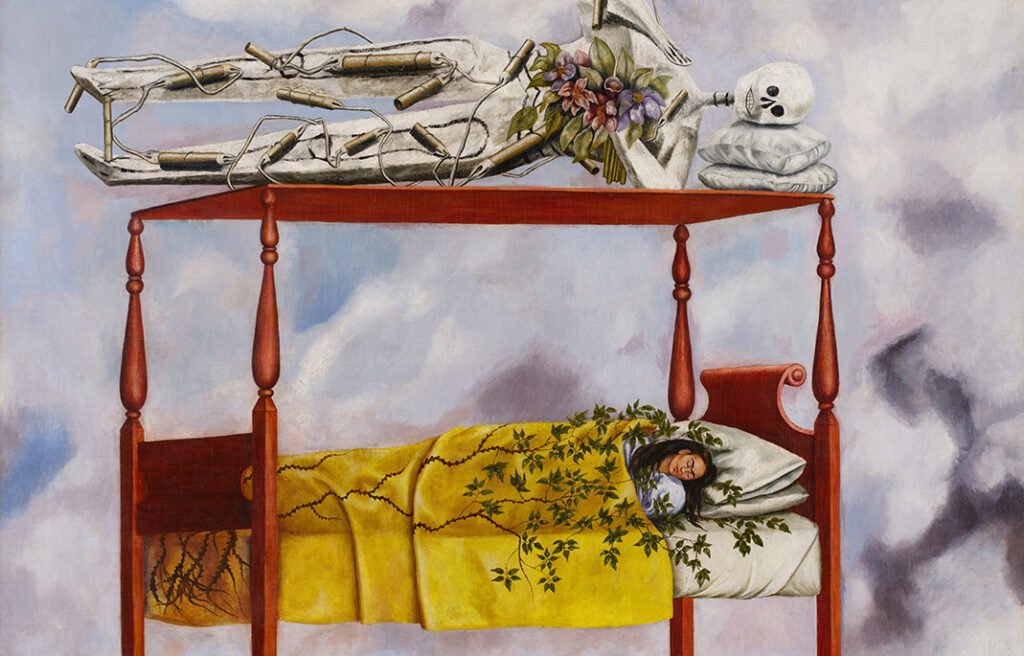
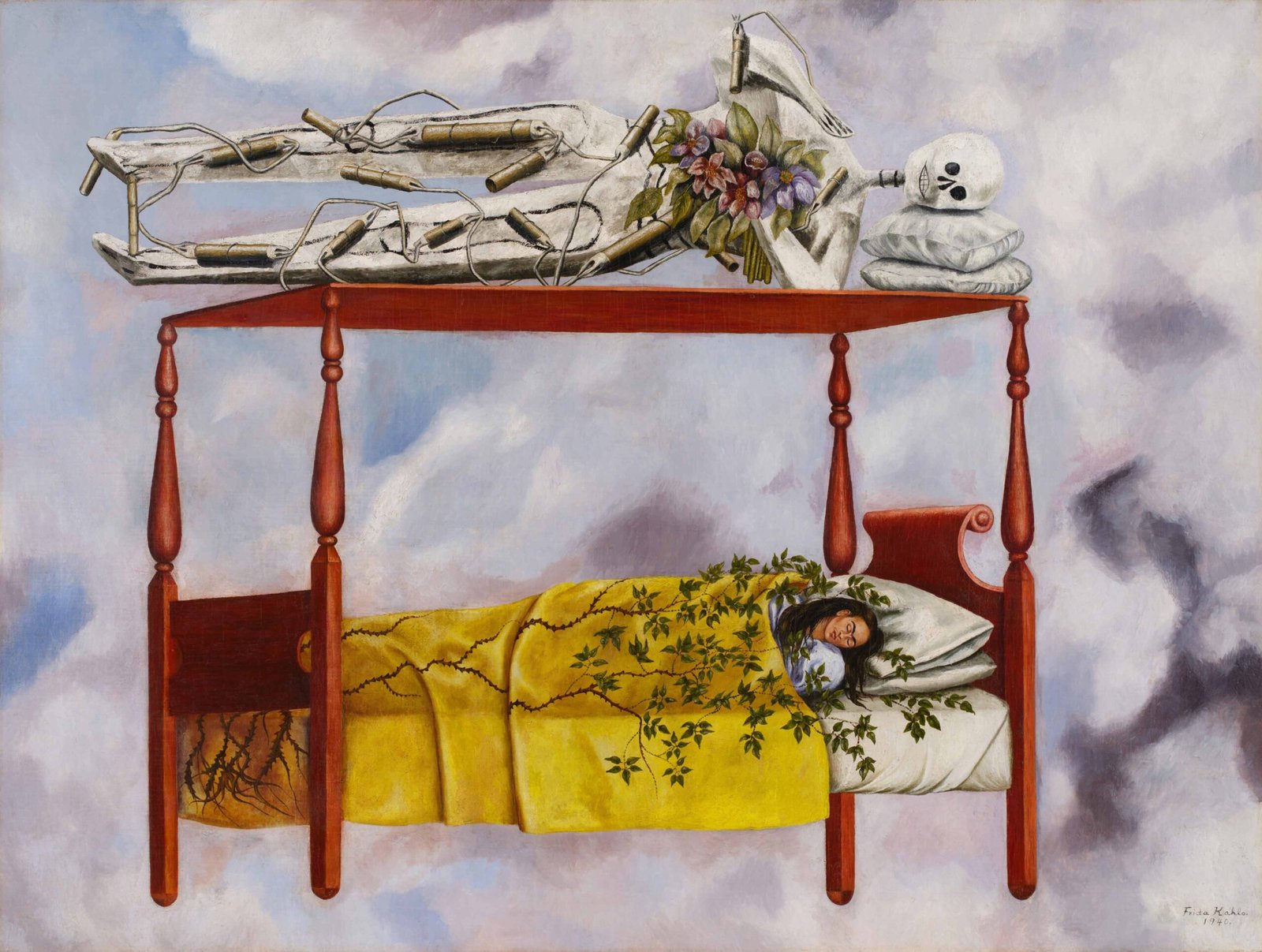
FRIDA KAHLO | El sueño (La cama) | 29 in x 39 in | Oil on canvas | 1940 | Sold for $54.7 million (₹481.36 crore)

Frida Kahlo’s El sueño (La cama) made history in 2025, selling for $54.7 million and setting a new all-time auction record for a female artist. That result sat within a market that was already changing shape, as collectors increasingly moved toward female artists, contemporary voices, and a broader, higher-volume trade.

The shift is tied to a major transfer of wealth and a younger collector base. Nearly three-quarters of active high net worth collectors now belong to the Millennial and Gen Z generations, and 98 per cent of younger collectors surveyed view their collections as a strategic part of wealth management. These buyers are drawn to Surrealists, women artists, and Contemporary figures such as Jean-Michel Basquiat, KAWS, and Banksy.

Female buyers are also making their presence felt. In 2024, female collectors spent 46 per cent more on average than male collectors, reaching an average expenditure of $519,960. Their collections are also more heavily weighted toward women artists, with 49 per cent of female collectors’ collections made up of works by female artists, compared with 40 per cent in men’s collections.

That demand is already translating into records. Marlene Dumas set an auction record for a living female painter at $13.6 million for Miss January, while Lisa Brice reached $6.9 million for After Embah. Together, those results show how women artists are being priced not as exceptions, but as central players in the market.

The broader auction landscape also points to a more accessible market, with works under $5,000 accounting for 85 per cent of all contemporary auction results, and online-only sales adding momentum. At the same time, the mid-market is emerging as a stabilising force, giving collectors more entry points while keeping demand active across price bands.

Read the full story in the premiere issue of LuxeTrope, on stands now.

Read More

A primer for beginners on the art of selling your collection at auction

From folk-inspired aesthetics to meditative abstractions, women artists are claiming elite ranks among collectors

From Jangarh Singh Shyam to Lado Bai, once-overlooked voices now thrive in museums and auctions.

As wealth preferences evolve, HNIs are increasingly turning to art and alternative collectibles

Himmat Shah’s work combines material sensitivity, quiet force and enduring collector appeal

A mix of legacy, transparency and new collector behaviour is driving the art market’s expansion

Thota Vaikuntam Records 239 Lots in Auction Sales

Thota Vaikuntam Records 239 Lots in Auction Sales

A steady five-year rise in auction value, from 2021 to 2025, reflects strong demand for Vaikuntam’s rural Telangana vision

Vaikuntam artwork
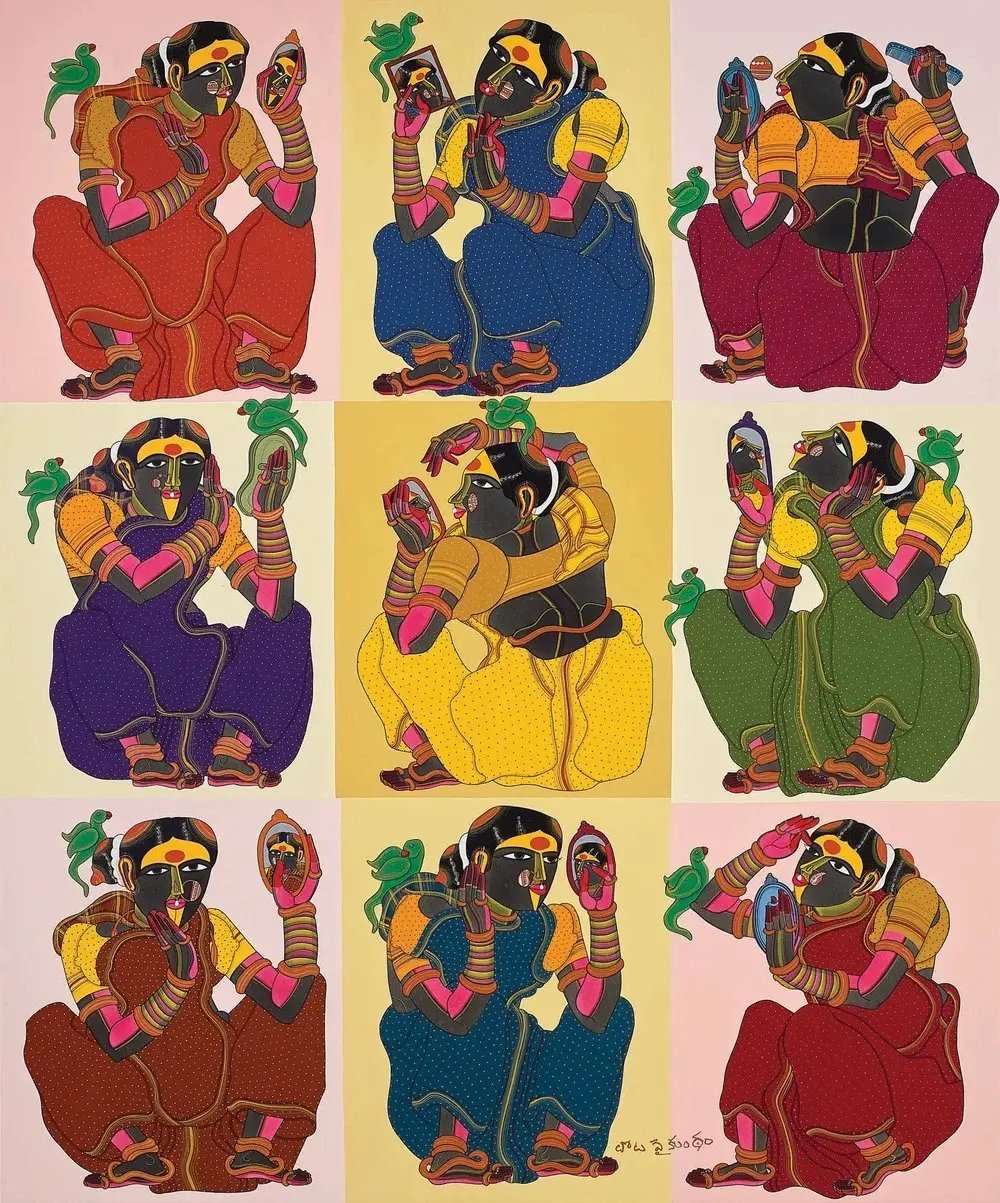
UNTITLED | 72 x 60 in | Acrylic on canvas | Sold in 2024 by AstaGuru for ₹99,33,779 ($112,883)

Thota Vaikuntam’s auction history from 2021 to 2025 reflects growing collector interest in his rural Telangana imagery. Over this five-year span, his works sold 239 times at auction. The yearly count moved from 16 lots in 2021 to 18 in 2022, 54 in 2023, 77 in 2024, and 74 in 2025.

2025 was a standout year, with 74 artworks sold. Between 2021 and 2025, 98 works sold in the ₹10 lakh to ₹50 lakh range, while 2025 alone accounted for 32 works in that bracket.

The breakdown by price point adds more context to his auction activity. Across 2021–2025, the artist sold 126 works up to ₹10 lakh, 98 works in the ₹10 lakh to ₹50 lakh range, 12 works between ₹50 lakh and ₹1 crore, and 3 works between ₹1 crore and ₹10 crore. In 2025, the distribution was 37 up to ₹10 lakh, 32 in the ₹10 lakh to ₹50 lakh range, 4 in the ₹50 lakh to ₹1 crore range, and 1 between ₹1 crore and ₹10 crore.

These figures sit alongside a consistent auction presence that has continued to build over the years. Vaikuntam’s works have remained active across the market, with his paintings and sculptures maintaining steady visibility through the period.

Read the full story in the premiere issue of LuxeTrope, on stands now.

Read More

A primer for beginners on the art of selling your collection at auction

From folk-inspired aesthetics to meditative abstractions, women artists are claiming elite ranks among collectors

From Jangarh Singh Shyam to Lado Bai, once-overlooked voices now thrive in museums and auctions.

As wealth preferences evolve, HNIs are increasingly turning to art and alternative collectibles

Himmat Shah’s work combines material sensitivity, quiet force and enduring collector appeal

A mix of legacy, transparency and new collector behaviour is driving the art market’s expansion

T Vaikuntam

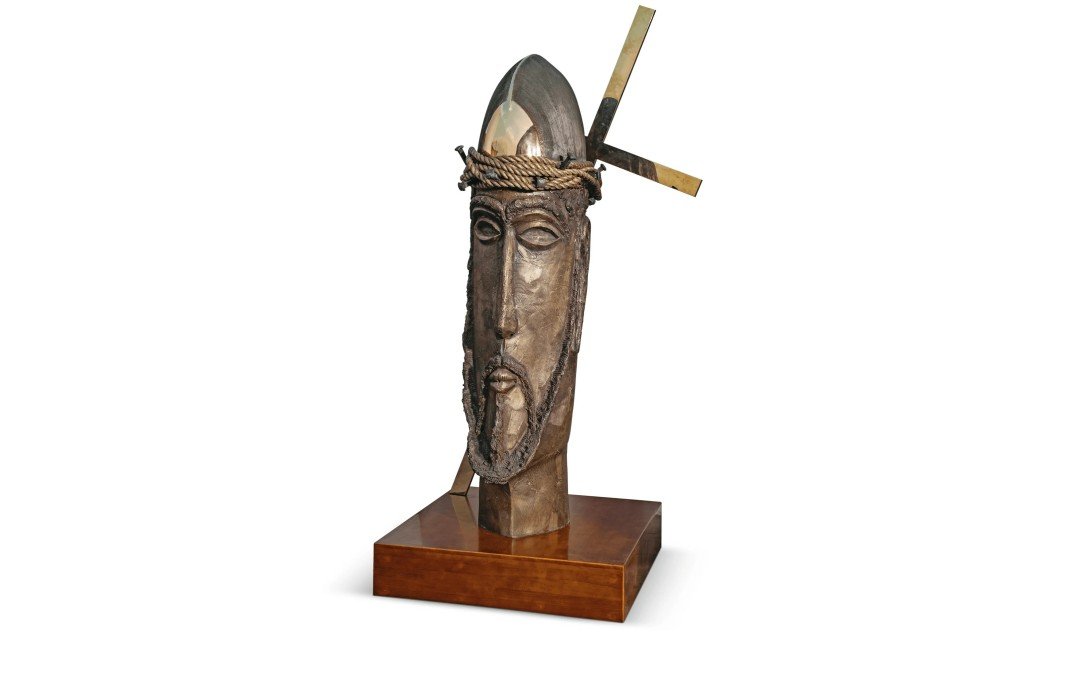
Himmat Shah’s Auction Volume Surges to 125 Lots

Himmat Shah’s Sculptural Works See Major Uptick in Total Lots Sold

From 9 lots in 2021 to 35 in 2025, Shah has rapidly emerged as one of India’s most active sculptors at auction

Himmat Shah
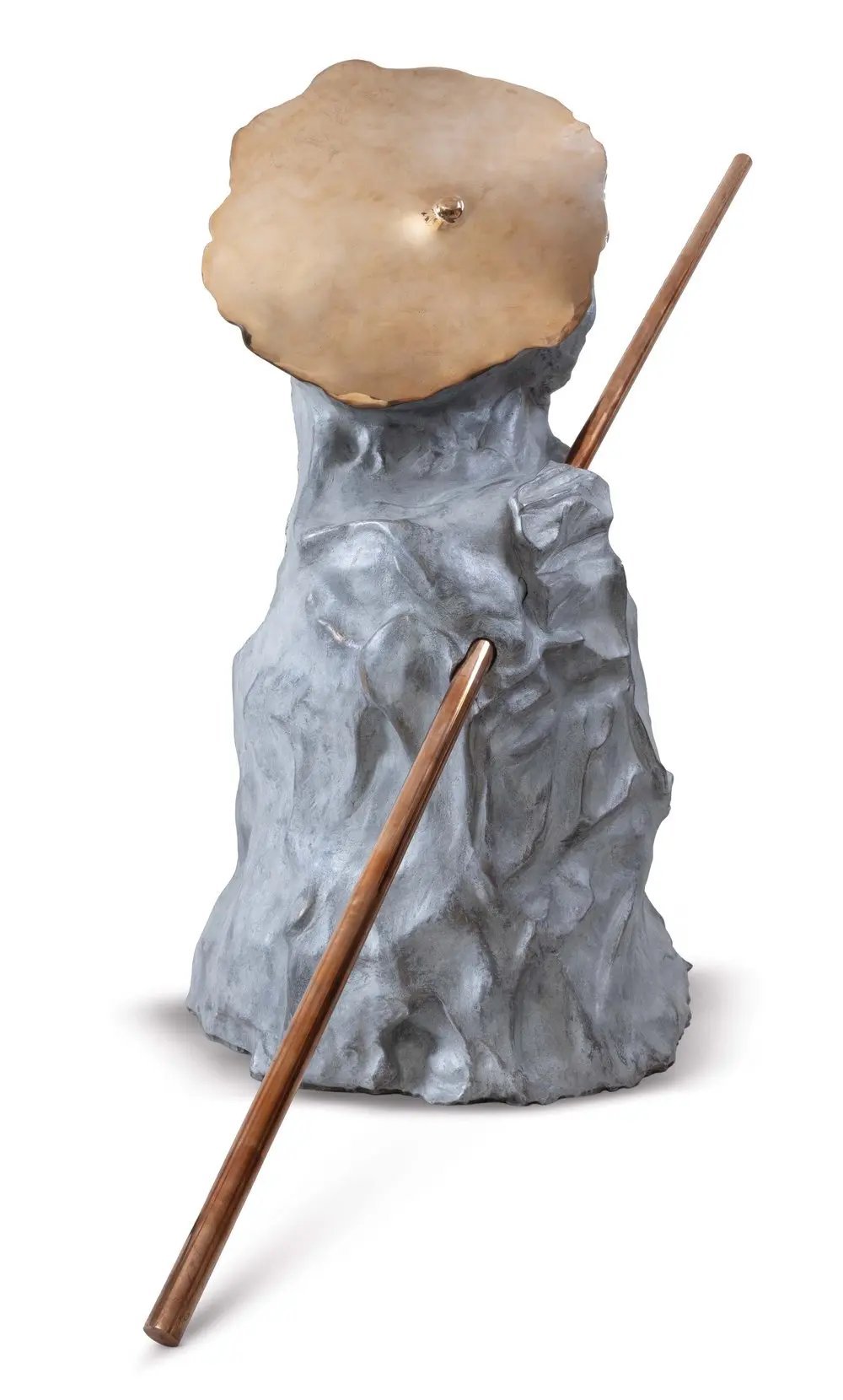
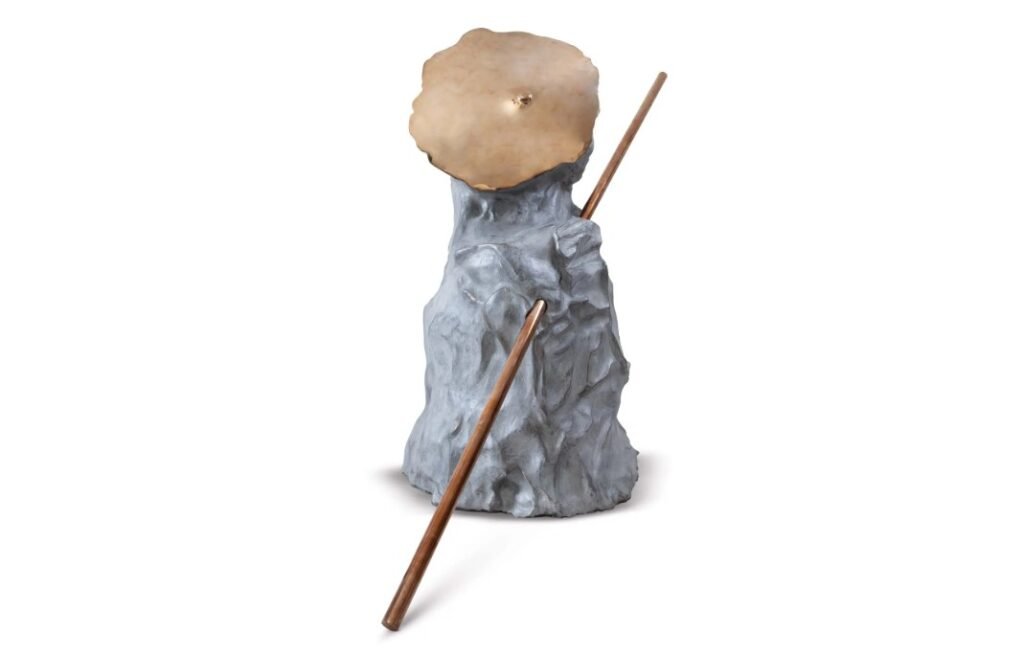
MAN FROM MOON | 60 x 34 x 76 in | Bronze | Sold in 2025 by AstaGuru for ₹93,29,245 ($105,681)

Himmat Shah stands out as one of India’s most prolific sculptors, selling more than 74 works at auction in the last two years alone. Annual lots sold show sharp growth: 9 in 2021, 16 in 2022, 26 in 2023, 41 in 2024, and 33 in 2025. Total lots sold between 2021 and 2025 reached 125.

This volume aligns with his rising profile, fueled by bronzes, terracottas, stone heads, torsos, and works on paper. Between 2021 and 2025, Shah’s works gained a higher sell-through rate, with 71 lots selling between ₹10 lakh to ₹50 lakh. In 2025, 69.7% of lots sold were between ₹10 and ₹50 lakh.

Price breakdowns highlight the momentum. For 2025: 7 up to ₹10 lakh, 23 from ₹10 lakh–₹50 lakh, and 3 from ₹50 lakh–₹1 crore. Across 2021–2025: 47 up to ₹10 lakh, 71 from ₹10 lakh–₹50 lakh, 6 from ₹50 lakh–₹1 crore, and 1 from ₹1–10 crore.

These figures underscore sustained collector engagement with Shah’s elemental to monumental sculptures.

Read the full story in the premiere issue of LuxeTrope, on stands now.

Read More

A primer for beginners on the art of selling your collection at auction

From folk-inspired aesthetics to meditative abstractions, women artists are claiming elite ranks among collectors

From Jangarh Singh Shyam to Lado Bai, once-overlooked voices now thrive in museums and auctions.

As wealth preferences evolve, HNIs are increasingly turning to art and alternative collectibles

Himmat Shah’s work combines material sensitivity, quiet force and enduring collector appeal

A mix of legacy, transparency and new collector behaviour is driving the art market’s expansion

Himmat Shah sculpture

How the Navratna Artists Anchor India’s Cultural Wealth

Guarding the Legacy: How the Navratna Artists Anchor India’s Cultural Wealth

Nine towering figures who shaped Indian art now stand as icons of both history and the auction market

Jamini Roy Navratna
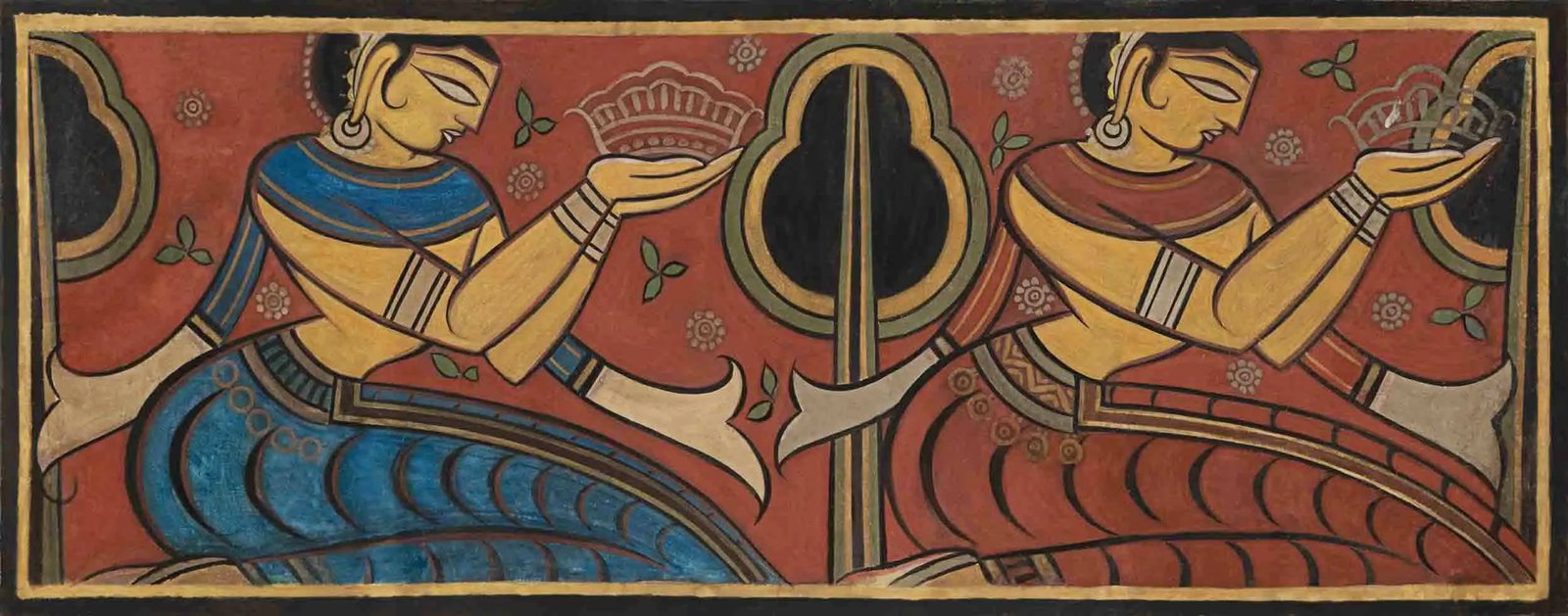
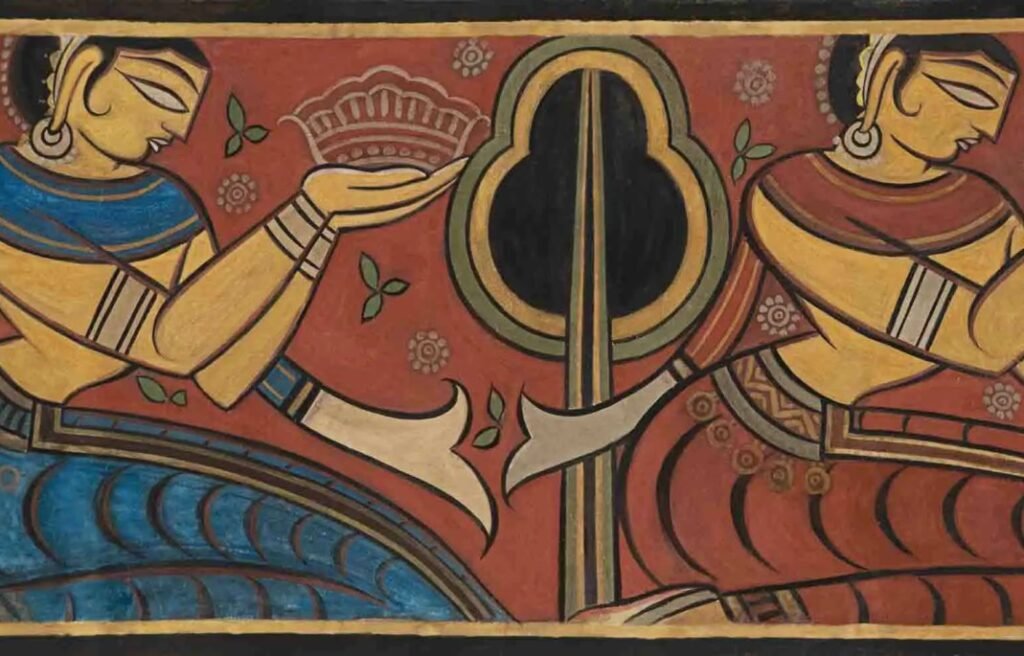
JAMINI ROY | Untitled (Nayikas) | 29 x 78 in | Tempera on cloth pasted on board | Sold in 2025 by AstaGuru for ₹73,20,500 ($83,187)

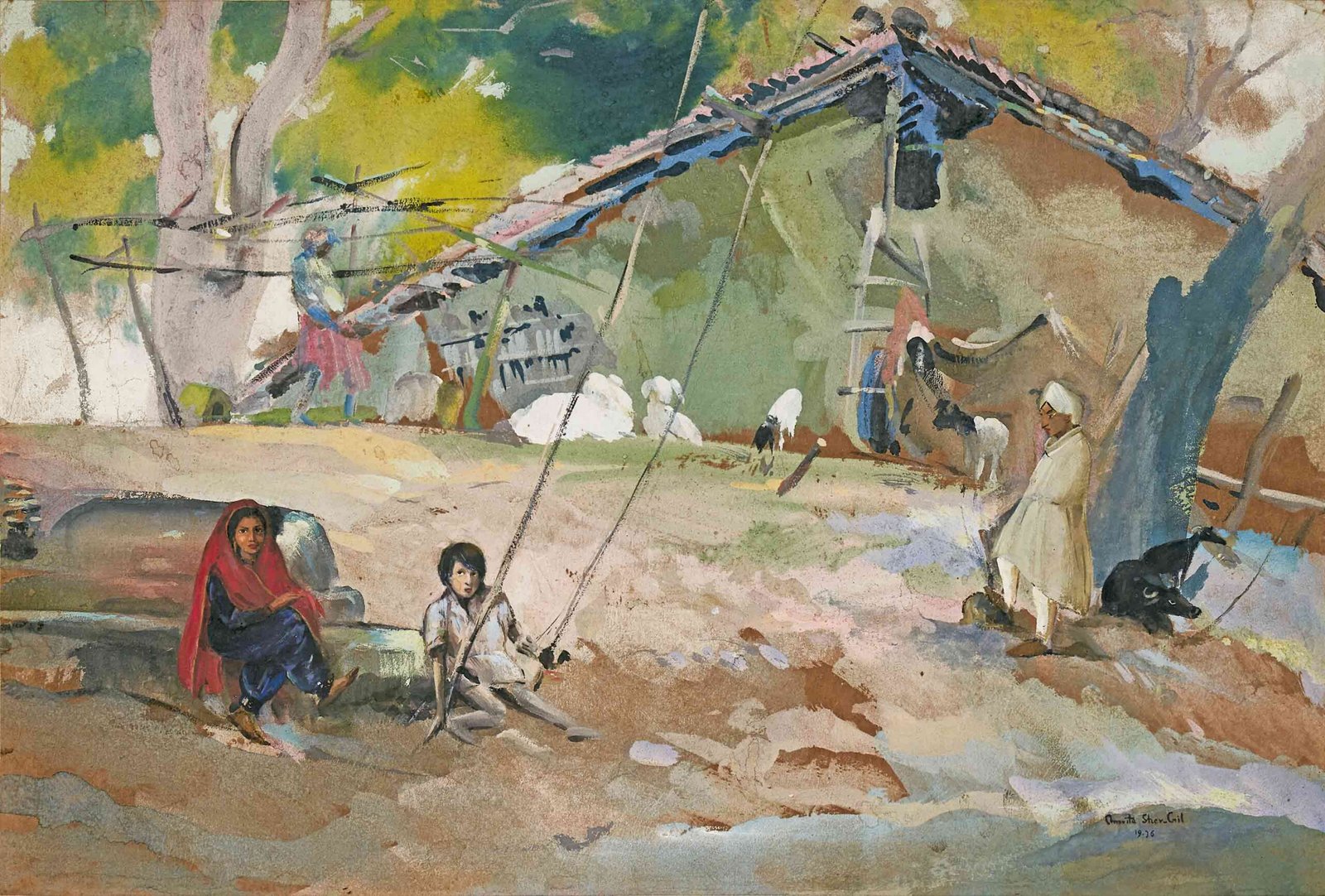
In the Indian art market, the Navratna artists remain icons, making them an essential part of our living history and an unquestioned draw at auctions. They are nine towering figures—Raja Ravi Varma, Amrita Sher-Gil, Jamini Roy, Rabindranath Tagore, Nandalal Bose, Abanindranath Tagore, Gaganendranath Tagore, Sailoz Mookherjea, and Nicholas Roerich—who influenced the development of Indian art from the late 19th to the early 20th century. 

Raja Ravi Varma is described as arguably the first Indian artist to operate within a recognisable national art economy. His mastery of European academic Realism and his adoption of oil painting marked a decisive shift in Indian visual culture, amplified by the wide circulation of his chromolithographic prints. As a result, important original oils are rare, and the appearance of a significant Ravi Varma canvas at auction becomes a notable event capable of shifting the price index for these pioneers of Modern art.

The transition from academic realism to cultural nationalism was articulated most powerfully through the Bengal School, led by Abanindranath Tagore. He and contemporaries such as Nandalal Bose, Rabindranath Tagore, Gaganendranath Tagore, and Sailoz Mookherjea rejected colonial aesthetics to construct an indigenous visual language rooted in Indian tradition, spirituality, and identity. Their works were produced in small quantities and are intrinsically fragile, concentrating demand around rare, historically significant, and well-preserved pieces.

Jamini Roy occupies a particularly important market position among the Navratnas. His rejection of Western naturalism in favour of folk-inspired forms produced a visual language that remains immediately recognisable and widely accessible, translating directly into liquidity and consistent transaction volume. Nicholas Roerich, with his exceptional depictions of the Himalayas, has found resonance among collectors in India and has also stood out in the global market.

Amrita Sher-Gil forms the commercial and symbolic apex of early Indian Modernism. Her tragically brief career and the institutional absorption of much of her oeuvre have rendered her works very scarce, with each auction appearance treated as a landmark event that reshapes price benchmarks.

Read the full story in the premiere issue of LuxeTrope, on stands now.

Read More

A primer for beginners on the art of selling your collection at auction

From folk-inspired aesthetics to meditative abstractions, women artists are claiming elite ranks among collectors

From Jangarh Singh Shyam to Lado Bai, once-overlooked voices now thrive in museums and auctions.

As wealth preferences evolve, HNIs are increasingly turning to art and alternative collectibles

Himmat Shah’s work combines material sensitivity, quiet force and enduring collector appeal

A mix of legacy, transparency and new collector behaviour is driving the art market’s expansion

Jamini Roy artwork

Raja Ravi Varma Masterpieces Command Crores at Auction

Raja Ravi Varma Masterpieces Command Crores at Auction

As a Navratna pioneer, Ravi Varma’s rare oils command top prices and shift market benchmarks

Raja Ravi Varma painting
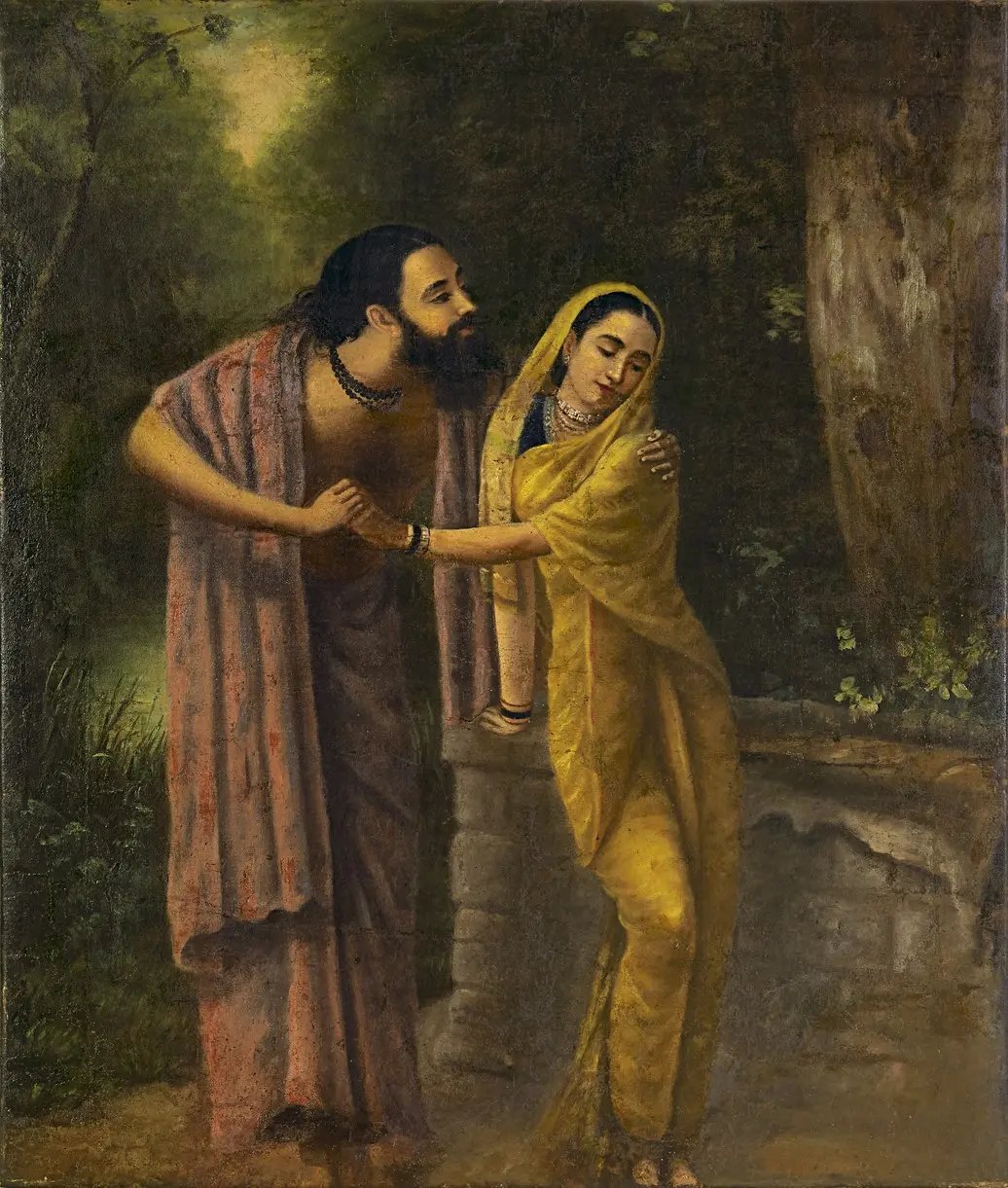
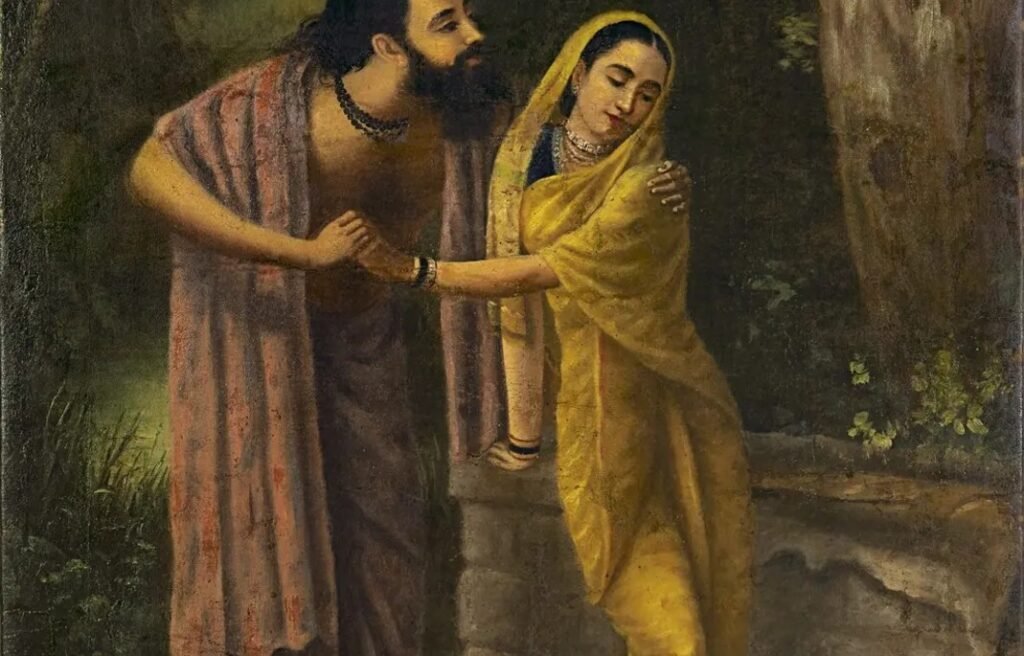
Arjun And Subhadra | 23 x 20 in | Oil on canvas | Circa 1910 | Sold in 2016 by AstaGuru for ₹3,66,15,510 ($416,085)

The roots of the Indian art market can be traced to Raja Ravi Varma, arguably the first Indian artist to operate within a recognisable national art economy. His mastery of European academic Realism and adoption of oil painting marked a decisive shift in Indian visual culture. He was among the first Indian artists to influence how people looked at art, aided significantly by the dissemination of his imagery through chromolithographic prints.

While these prints democratised access to art, they also had an unintended long-term effect: by contrast, his original oil paintings became increasingly rare. Today, with the most important works residing in institutional collections or tightly-held private hands, the appearance of a significant Ravi Varma at auction is a notable market event. It also has the power to shift the price index significantly for these pioneers of Modern art.

Over the last five years, his works have generated a total auction turnover of roughly ₹163.98 crore ($18.63 million), with merely 21 lots sold. Among these, over 60 per cent have been sold in the higher price bracket of above ₹1 crore. In 2025, the sale of his seven works generated a total revenue of ₹23.94 crore ($2.72 million). Similarly, nearly 60 per cent of these were sold in the higher price bracket, exceeding the sale value of over ₹1 crore.

Such competitive bidding reflects his extreme historical significance and shows that Ravi Varma represents the genesis of value creation in Indian art. Additionally, 38 per cent of Raja Ravi Varma lots sold for above ₹10 crore at auction between 2021 and 2025.

Read the full story in the premiere issue of LuxeTrope, on stands now.
Read More

A primer for beginners on the art of selling your collection at auction

From folk-inspired aesthetics to meditative abstractions, women artists are claiming elite ranks among collectors

From Jangarh Singh Shyam to Lado Bai, once-overlooked voices now thrive in museums and auctions.

As wealth preferences evolve, HNIs are increasingly turning to art and alternative collectibles

Himmat Shah’s work combines material sensitivity, quiet force and enduring collector appeal

A mix of legacy, transparency and new collector behaviour is driving the art market’s expansion

Raja Ravi Varma artwork

S.H. Raza Commands Strong Auction Values

S.H. Raza Auction Results: A Guide to the Artist’s Rising Market Value

A steady rise in Raza’s turnover over five years underscores sustained demand and strong collector confidence

Raza turnover
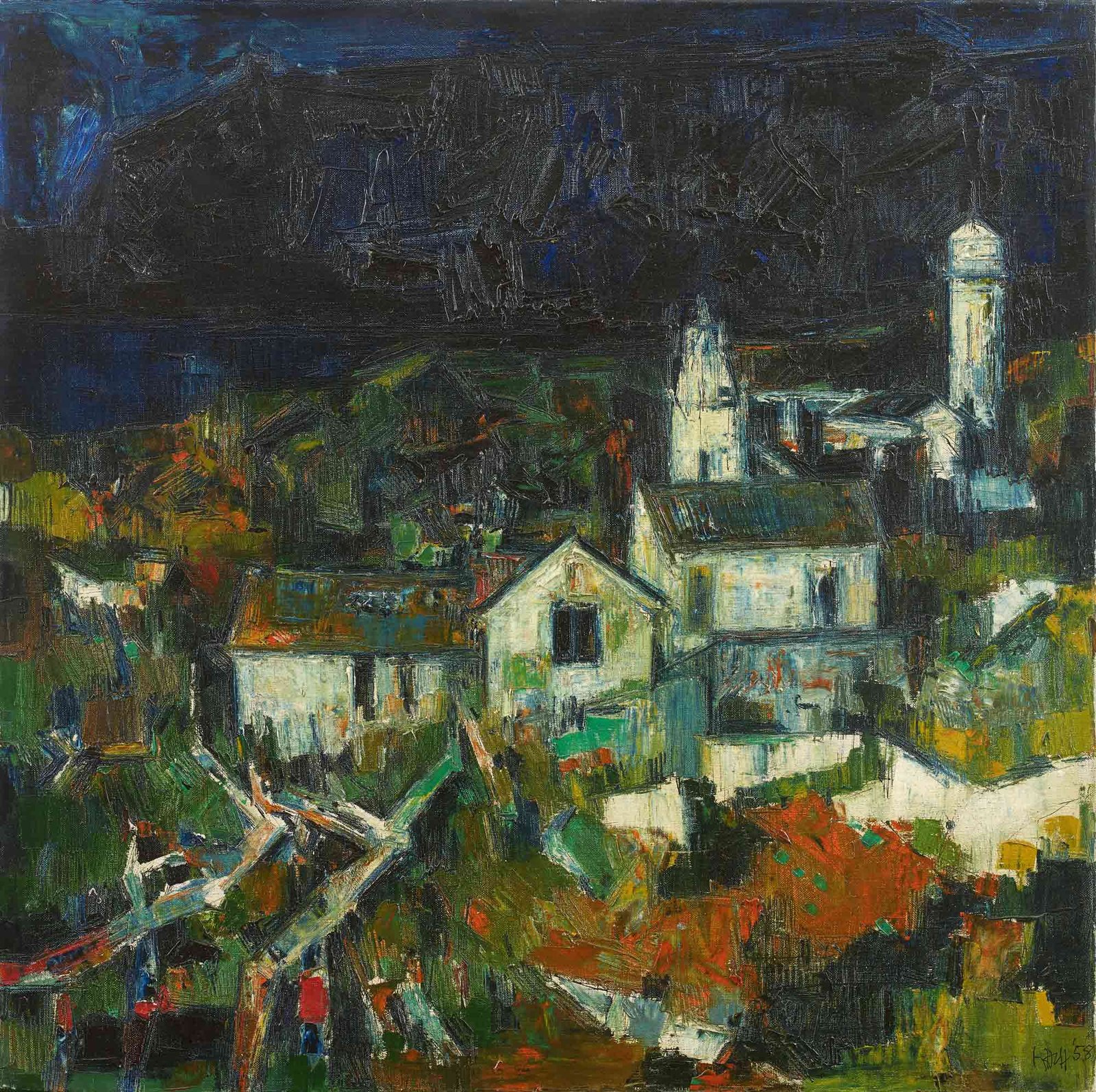
Paysage Corse | 27.5 x 27.5 in | Oil on canvas | 1958 | Sold in 2017 by AstaGuru for ₹4,02,50,000 ($457,386)

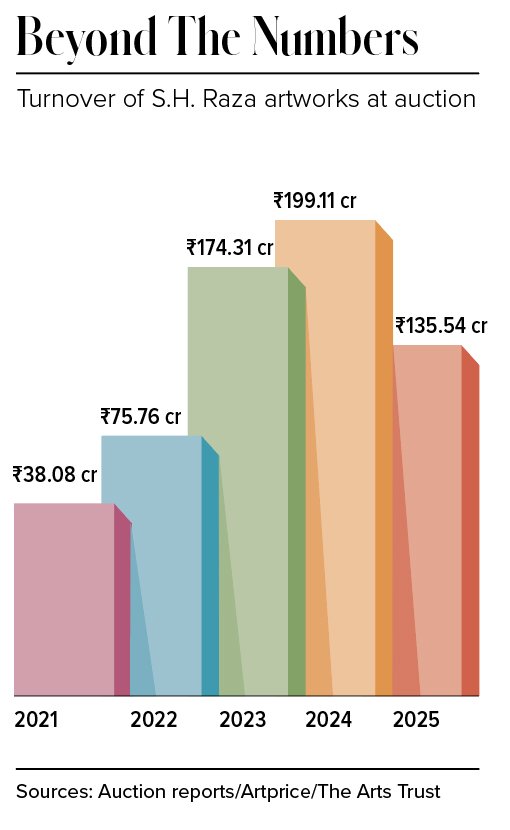
S.H. Raza’s auction performance stands out for its steady climb, with turnover figures that reflect enduring collector interest. Between 2021 and 2025, his works generated a total of ₹622.79 crore in sales, underscoring his blue-chip status in the Indian art market.

The year-by-year breakdown reveals clear momentum. Auction turnover started at ₹38.08 crore in 2021, rose to ₹75.76 crore in 2022, then climbed to ₹174.31 crore in 2023. It peaked at ₹199.11 crore in 2024 before moderating to ₹135.54 crore in 2025.

Raza turnover graph

This cumulative ₹622.79 crore comes from 567 lots sold over the five years, with nine works breaching the ₹10 crore mark. The market’s reliability shines through in consistent sales, where Raza’s paintings deliver financial stability alongside cultural value.

Raza’s appeal spans formats, from large canvases to works on paper keeping the market active. His steady value growth makes him a go-to for collectors seeking both beauty and investment security.

Read the full story in the premiere issue of LuxeTrope, on stands now.
Read More

A primer for beginners on the art of selling your collection at auction

From folk-inspired aesthetics to meditative abstractions, women artists are claiming elite ranks among collectors

From Jangarh Singh Shyam to Lado Bai, once-overlooked voices now thrive in museums and auctions.

As wealth preferences evolve, HNIs are increasingly turning to art and alternative collectibles

Himmat Shah’s work combines material sensitivity, quiet force and enduring collector appeal

A mix of legacy, transparency and new collector behaviour is driving the art market’s expansion

Navratna Nine Show Strong Auction Demand in 2025

Navratna Artists Show Strong Auction Demand in 2025

Jamini Roy dominates lots while Ravi Varma and Sher-Gil drive high-value sales among the nine icons

Roerich artwork
NICHOLAS ROERICH | Himalayas | 18.3 x 30.8 in | Tempera on canvas | Circa 1940 | Sold in 2022 by AstaGuru for ₹5,50,06,969 ($6,25,079)

The Navratna artists—Raja Ravi Varma, Amrita Sher-Gil, Jamini Roy, Rabindranath Tagore, Nandalal Bose, Abanindranath Tagore, Gaganendranath Tagore, Sailoz Mookherjea, and Nicholas Roerich—continue commanding reverence in 2025 auctions. Key turnover figures spotlight their market pull.

Sher-Gil led with ₹37.52 crore total turnover at auction in 2025. Raja Ravi Varma followed, generating ₹23.94 crore ($2.72 million) from just seven lots sold, nearly 60 per cent exceeding ₹1 crore. Rabindranath Tagore achieved ₹14.78 crore from only five lots. Jamini Roy claimed 52% share of all Navratna lots at auction that year, with 91 works sold.

Lot-wise breakup for 2025 reveals the spread: Nicholas Roerich at 14 lots, Sailoz Mookherjea at 4, Gaganendranath Tagore at 5, Abanindranath Tagore at 4, Raja Ravi Varma at 7, Amrita Sher-Gil at 25, Rabindranath Tagore at 5, and Nandalal Bose at 20.

These results affirm the Navratna artists as consistently sought-after assets with competitive bidding and long-term value retention as the Indian art market matures.

Read the full story in the premiere issue of LuxeTrope, on stands now.
Read More

A primer for beginners on the art of selling your collection at auction

From folk-inspired aesthetics to meditative abstractions, women artists are claiming elite ranks among collectors

From Jangarh Singh Shyam to Lado Bai, once-overlooked voices now thrive in museums and auctions.

As wealth preferences evolve, HNIs are increasingly turning to art and alternative collectibles

Himmat Shah’s work combines material sensitivity, quiet force and enduring collector appeal

A mix of legacy, transparency and new collector behaviour is driving the art market’s expansion

Nicholas Roerich artwork

F.N. Souza Sees Surge in Auction Sales

F.N. Souza Auction Sales 2025: Trends and Record-Breaking Prices

From ₹49 crore in 2021 to ₹227 crore in 2025, Souza dominates Modern Indian art sales

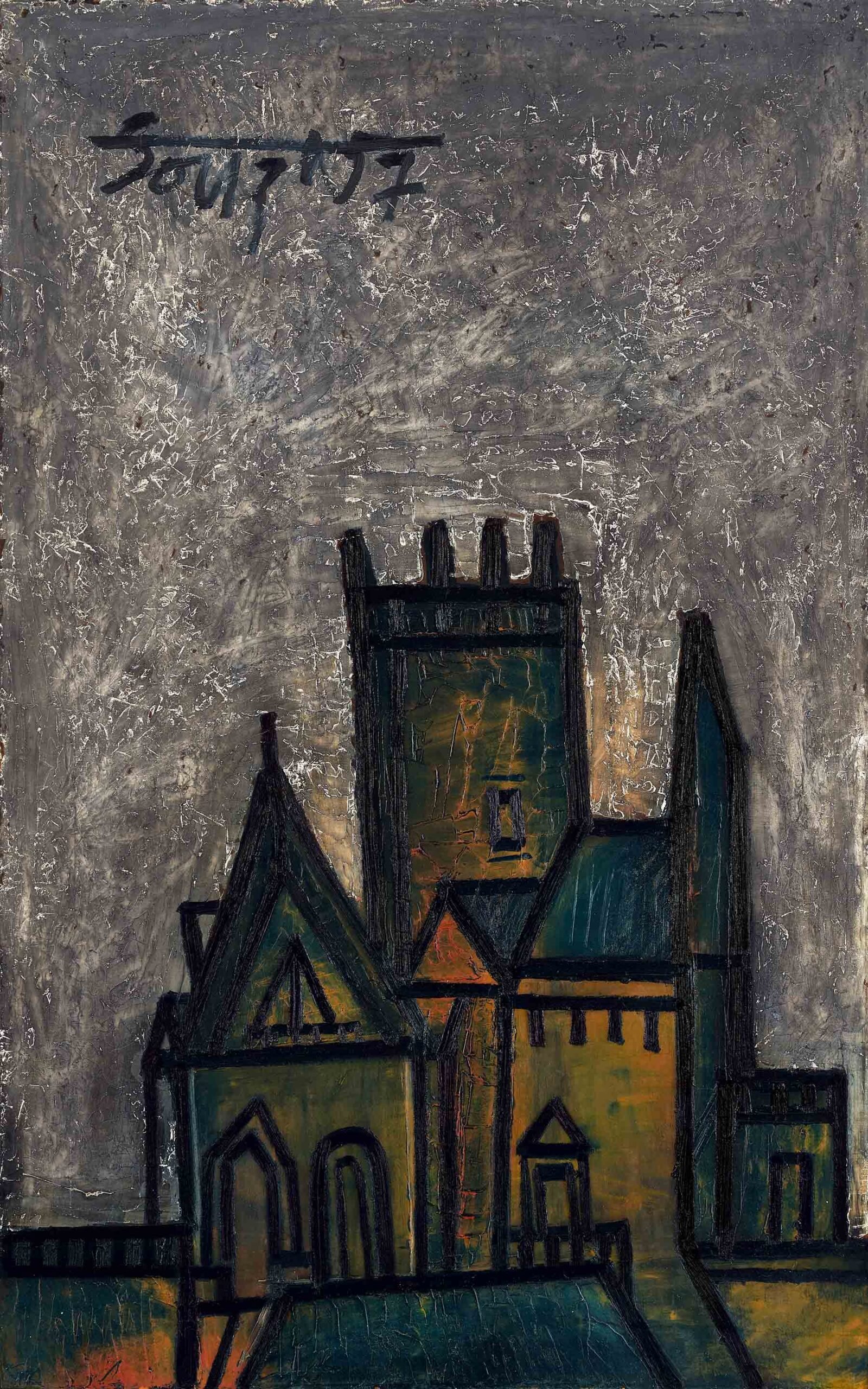
FN Souza The Castle
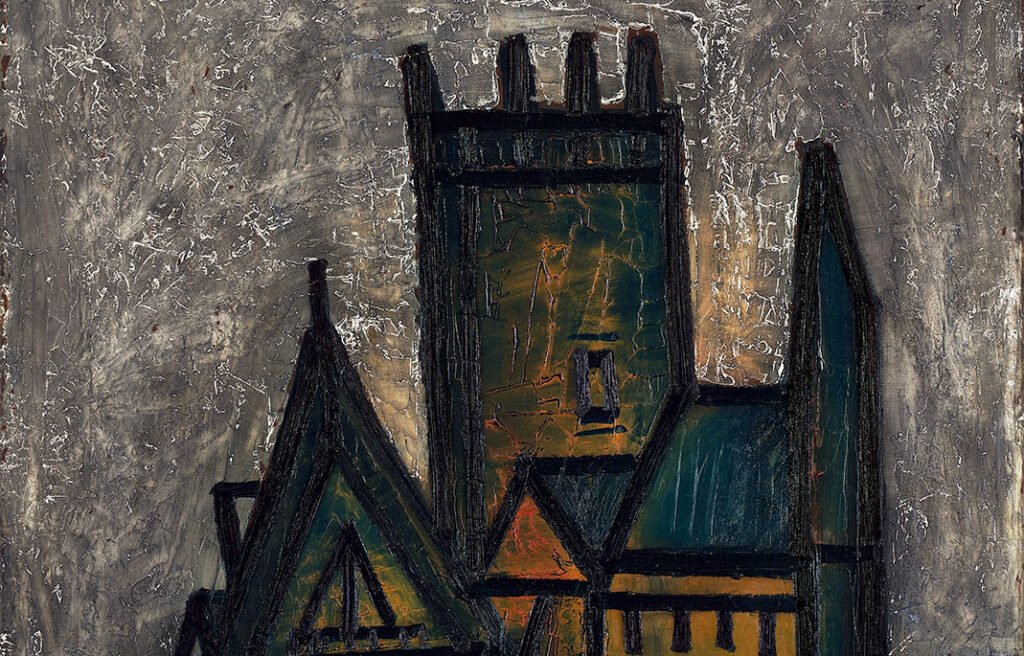
The Castle | 48 x 30 in | Oil on masonite board | Sold in 2025 by AstaGuru for ₹9,08,51,985

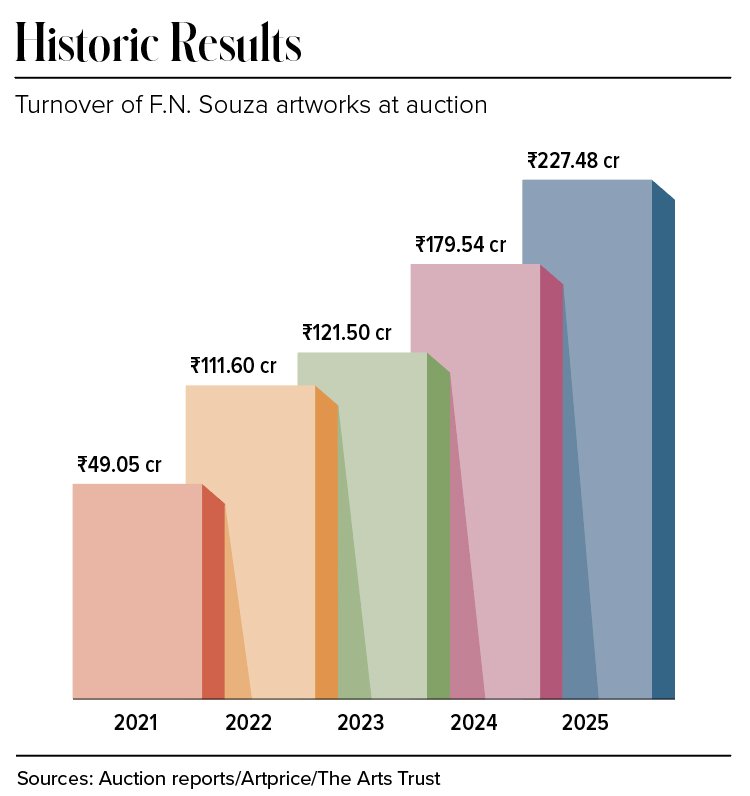
Francis Newton Souza commands one of the strongest positions in the Indian art market, with his auction turnover reflecting consistent demand and remarkable growth. Between 2021 and 2025, his works generated ₹689.17 crore ($78.31 million) across more than 800 lots sold, showcasing a market that spans drawings, paper works, oils, and iconic nudes.

The annual figures trace a clear upward trajectory. Turnover began at ₹49.05 crore in 2021, rose to ₹111.60 crore in 2022 and ₹121.50 crore in 2023, then jumped to ₹179.54 crore in 2024—when Souza claimed the top spot by turnover among artists. The momentum peaked in 2025 at ₹227.48 crore ($25.85 million), a 21 per cent increase over 2024 despite 62 fewer lots sold that year (179 vs 241).

Souza turnover graph

This performance underscores Souza’s market depth rather than reliance on sporadic blockbusters. In 2025 alone, four works breached the ₹10 crore mark, contributing significantly to the annual total. The Progressive Artists’ Group pioneer continues to outperform, with his broad appeal across mediums driving sustained liquidity.

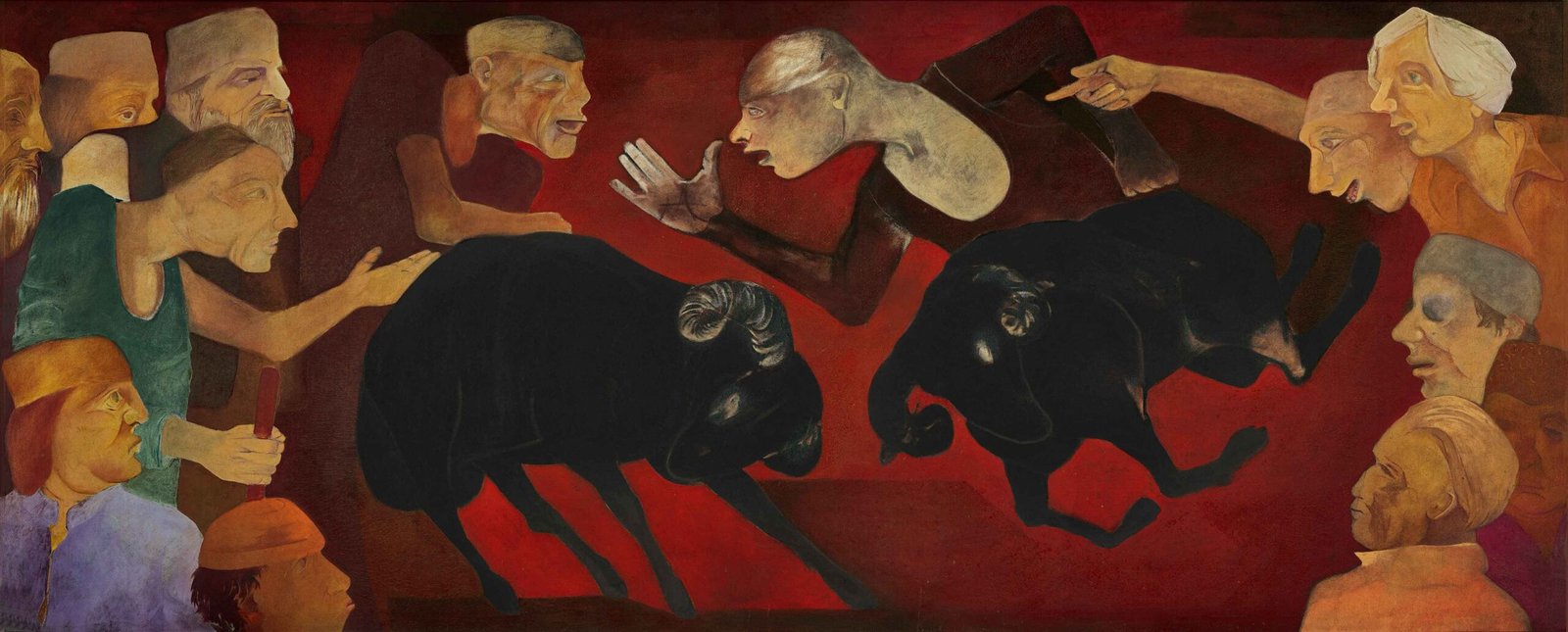
Souza’s dominance extends beyond volume—his turnover leadership in 2024 and strong 2025 results affirm collector confidence in works that span his provocative figures, deconstructed religious iconography, and introspective landscapes.

Read the full story in the premiere issue of LuxeTrope, on stands now.
Read More

A primer for beginners on the art of selling your collection at auction

From folk-inspired aesthetics to meditative abstractions, women artists are claiming elite ranks among collectors

From Jangarh Singh Shyam to Lado Bai, once-overlooked voices now thrive in museums and auctions.

As wealth preferences evolve, HNIs are increasingly turning to art and alternative collectibles

Himmat Shah’s work combines material sensitivity, quiet force and enduring collector appeal

A mix of legacy, transparency and new collector behaviour is driving the art market’s expansion

Souza The Castle

Krishen Khanna’s Highest-Selling Works at Auction

Krishen Khanna’s Highest-Selling Works at Auction

A look at Khanna’s five highest-selling works between 2021 and 2025 reveals the consistency and depth of his auction performance

UNTITLED | Sold for ₹3,34,82,256 ($380,480)

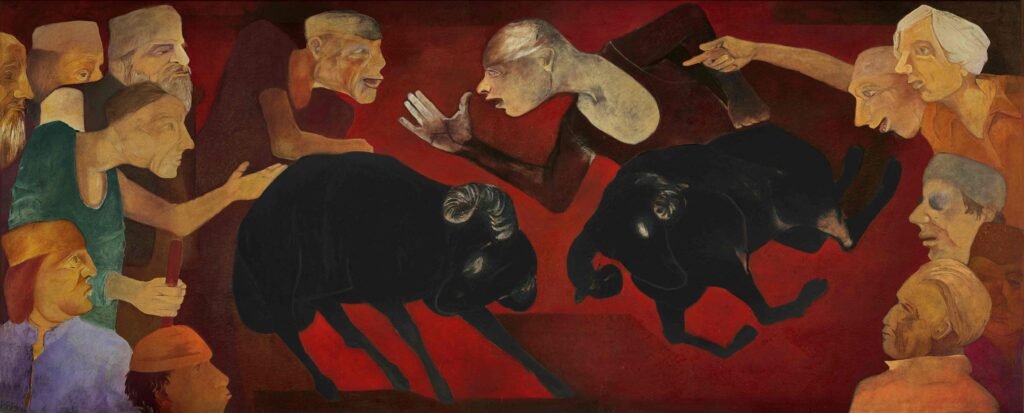
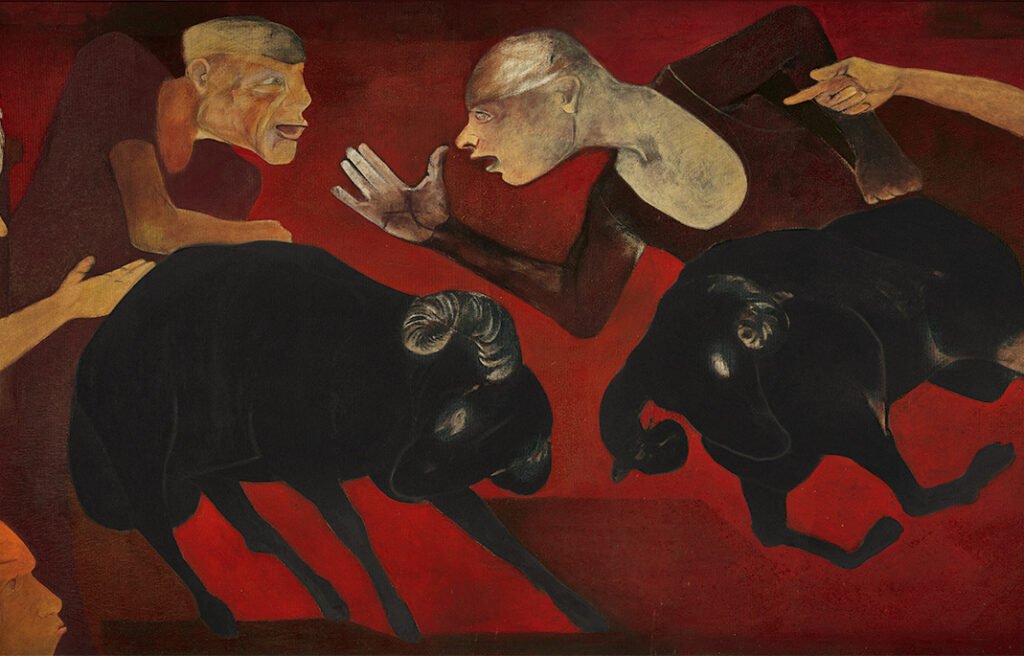
Krishen Khanna’s auction journey is marked by a set of standout works that continue to anchor his market performance. These top five lots, sold between 2021 and 2025, reflect both the strength of his artistic legacy and the sustained interest of collectors.

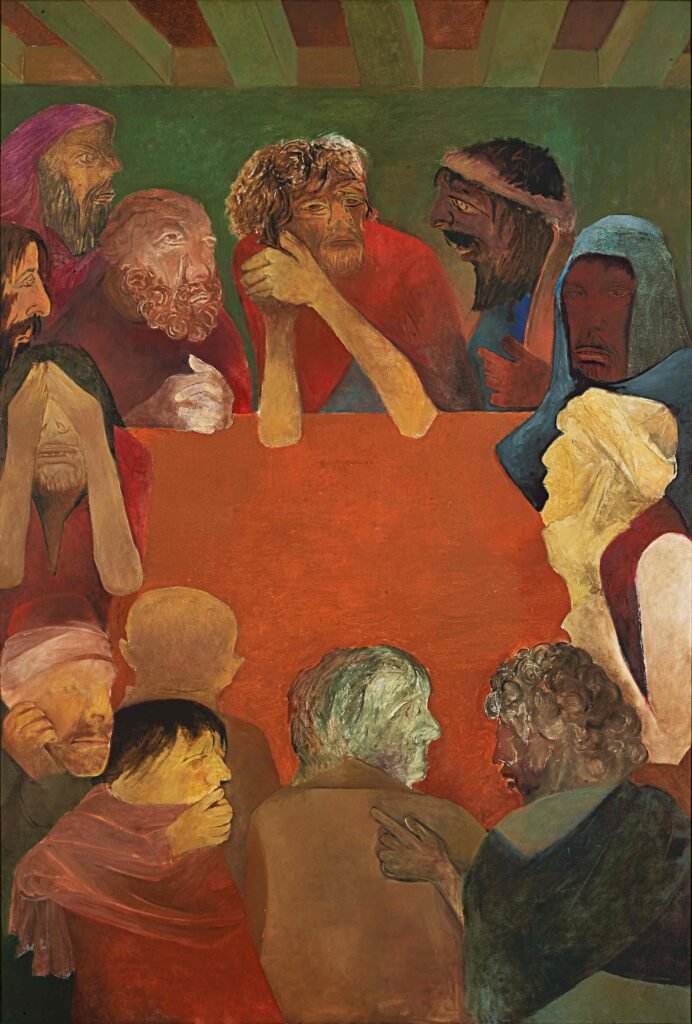
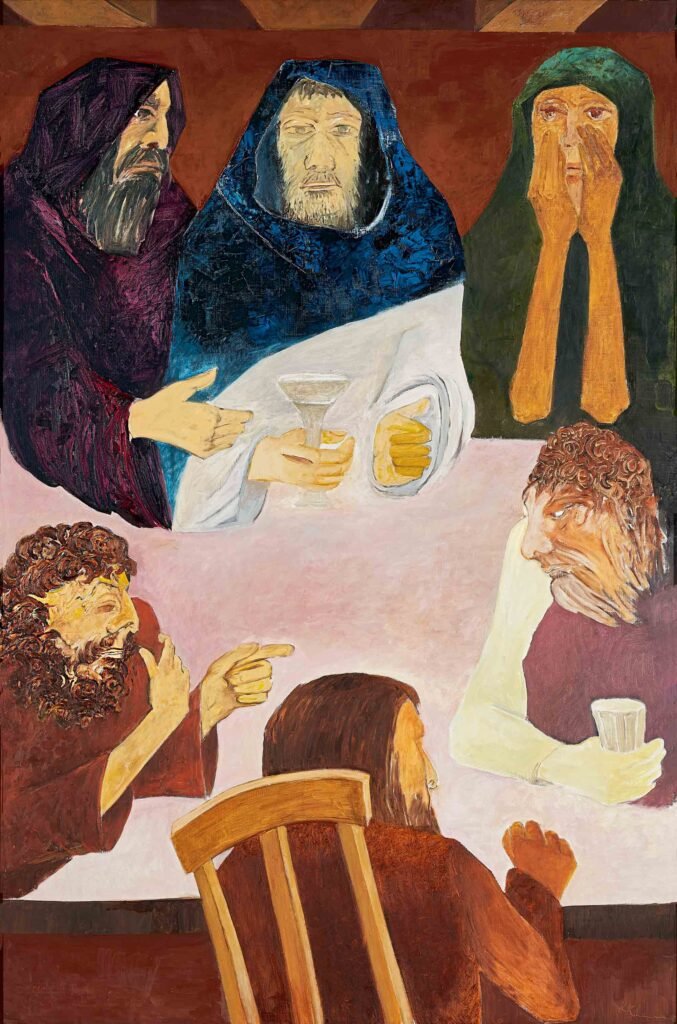
THE LAST SUPPER | Sold for ₹8,66,03,709 ($984,133)

Leading the group is The Last Supper, which achieved ₹8,66,03,709 ($984,133), making it the highest-selling work among his top auction results. The sale underscores the significance of this work within his oeuvre and its strong reception in the market.

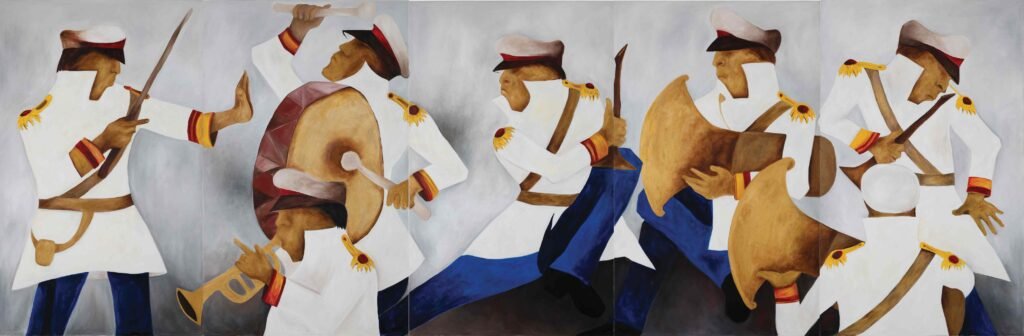
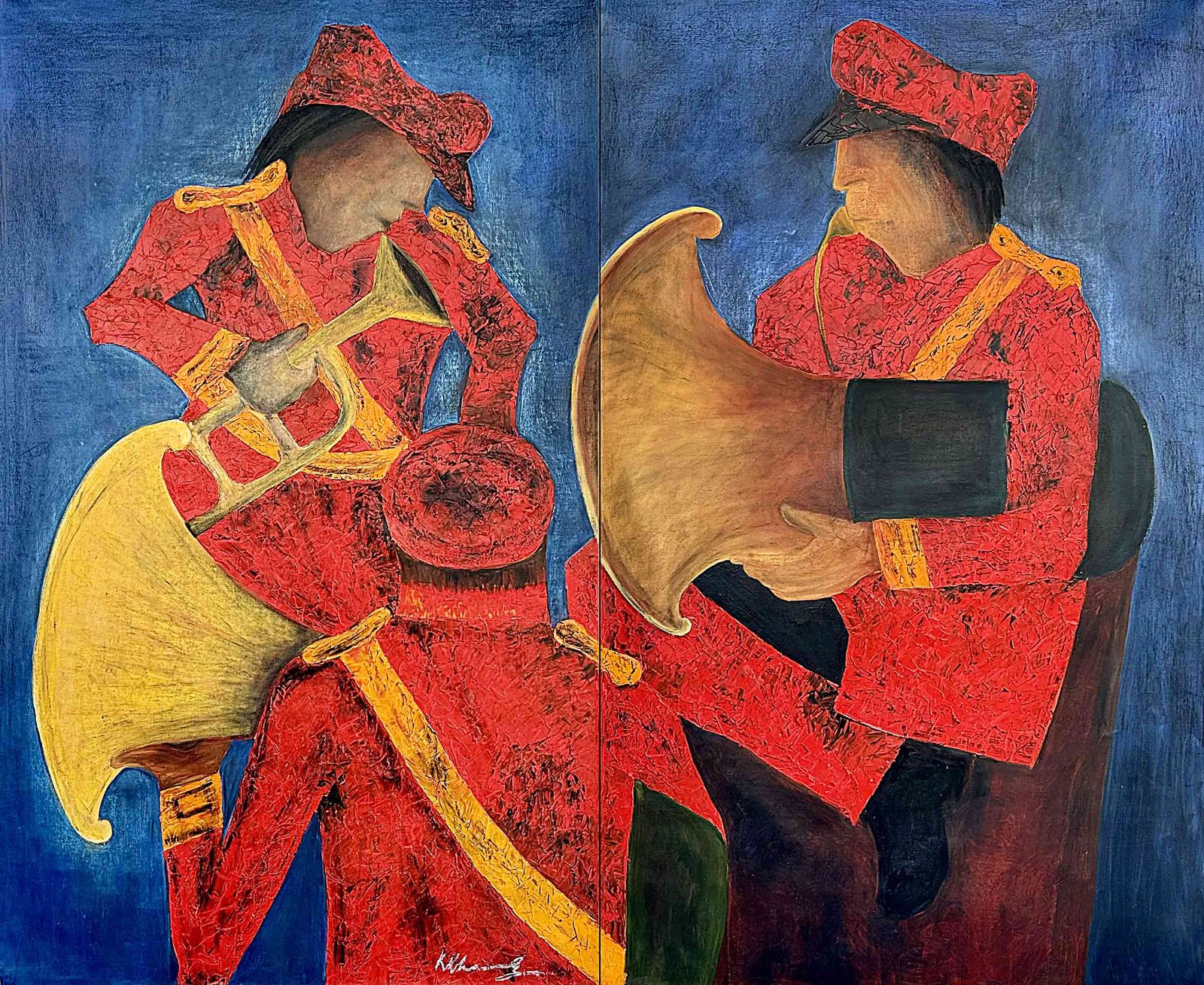
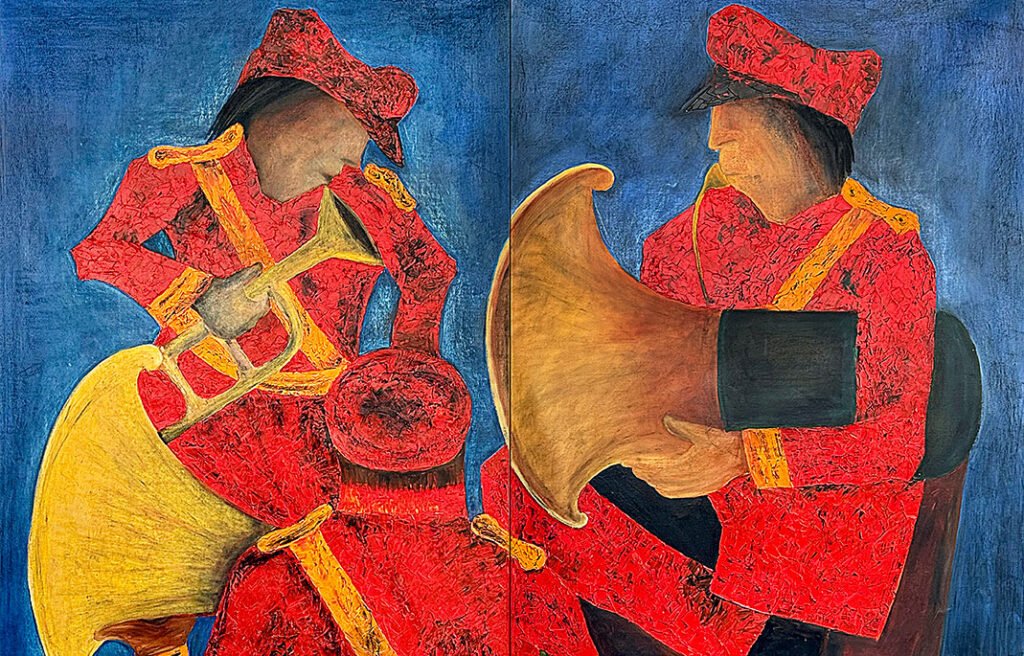
UNTITLED: BANDWALLA PROCESSION (PENTAPTYCH) | Sold for ₹7,79,28,401 ($885,550)

Following closely is Untitled: Bandwalla Procession (Pentaptych), which sold for ₹7,79,28,401 ($885,550). Rooted in one of Khanna’s most enduring themes, the Bandwalla series continues to resonate with collectors and remains a key contributor to his top auction results.

UNTITLED | Sold for ₹3,34,82,256 ($380,480)

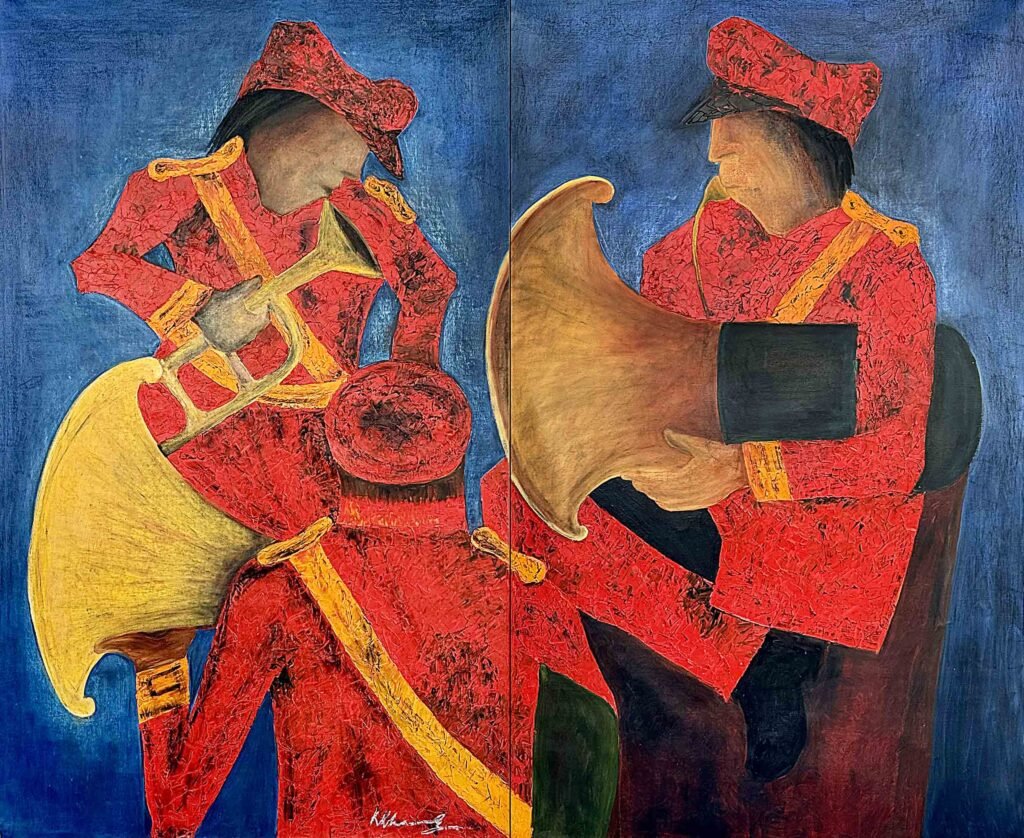
Another major sale is Untitled, which realised ₹3,34,82,256 ($380,480). This is closely followed by Bandwallas (Diptych), which fetched ₹3,29,82,791 ($374,804), reinforcing the continued demand for works linked to this recurring subject.

BANDWALLAS (DIPTYCH) | Sold for ₹3,29,82,791 ($374,804)

Completing the top five is Jesus at Emmaus, which sold for ₹3,11,99,183 ($354,536). Together, these works span a range of themes and formats, yet collectively demonstrate the consistency of Khanna’s performance at the higher end of the market.

JESUS AT EMMAUS Sold for ₹3,11,99,183 ($354,536)

These top results not only highlight the value of individual works but also point to a broader trend of sustained collector confidence. With multiple works crossing significant price thresholds, Khanna’s presence at auction remains both strong and stable.

Read the full story in the premiere issue of LuxeTrope, on stands now.

Read More

A primer for beginners on the art of selling your collection at auction

From folk-inspired aesthetics to meditative abstractions, women artists are claiming elite ranks among collectors

From Jangarh Singh Shyam to Lado Bai, once-overlooked voices now thrive in museums and auctions.

As wealth preferences evolve, HNIs are increasingly turning to art and alternative collectibles

Himmat Shah’s work combines material sensitivity, quiet force and enduring collector appeal

A mix of legacy, transparency and new collector behaviour is driving the art market’s expansion

The Top 10 Living Artists by Turnover at Auction

The Top 10 Living Artists by Turnover at Auction

The market for Indian art, riding on record sales, has some clear bestsellers

Krishen Khanna artwork
KRISHEN KHANNA | Bandwallas (Diptych) | 60 x 72 in | Oil on canvas | Sold in 2025 by AstaGuru for ₹3,89,74,342 ($442,890)

Even as India’s art market captivates global audiences, the landscape at auction has thrown up some surprises. From January to December 2025, while Masters’ works rooted in legacy have outperformed expectations, some Contemporary artists’ works have also made major strides.

With lots commanding admiration and demand, Krishen Khanna retained the spot as the top living artist in both turnover and lots sold in 2025. With 145 lots sold at auction, Khanna’s artworks fetched a total turnover of ₹59.6 crore ($6.77 million) across top auction companies in 2025. The year also saw a new world record for the artist for The Last Supper, which was sold for ₹10.22 crore ($1.16 million) by AstaGuru. Khanna is followed by Sakti Burman, whose surrealist works and landscapes continued to find loyal admirers. His total turnover at auction was ₹40.8 crore ($4.64 million), which includes an oil on canvas painting titled Durga, sold for ₹4.15 crore ($471,590) by AstaGuru.

Acclaimed sculptor Anish Kapoor’s works clocked in third in terms of turnover in 2025, selling 44 lots at auction for ₹31.1 crore ($3.53 million). His stainless steel and resin sculptures found a consistent demand building on the gains made in 2024. The ever-experimental Arpita Singh continued to appeal to collectors, and her works came in fourth in turnover with ₹17.2 crore ($1.95 million). A 1996 untitled watercolour on paper work sold for ₹40.8 lakh ($46,363)—the same work was auctioned by AstaGuru in September 2024 for ₹29.5 lakh ($33,522). Singh was followed by Thota Vaikuntam, with a turnover at auction of ₹15.3 crore ($1.74 million) across the top auction houses, while he sold the third highest number of lots at 74 for a living artist. Inspired by life in rural Telangana, an impressive acrylic on canvas, Untitled (Temple Wedding), sold for ₹2.96 crore ($336,363) in 2025.

Read the full story in the premiere issue of LuxeTrope, on stands now.
Read More

A primer for beginners on the art of selling your collection at auction

From folk-inspired aesthetics to meditative abstractions, women artists are claiming elite ranks among collectors

From Jangarh Singh Shyam to Lado Bai, once-overlooked voices now thrive in museums and auctions.

As wealth preferences evolve, HNIs are increasingly turning to art and alternative collectibles

Himmat Shah’s work combines material sensitivity, quiet force and enduring collector appeal

A mix of legacy, transparency and new collector behaviour is driving the art market’s expansion