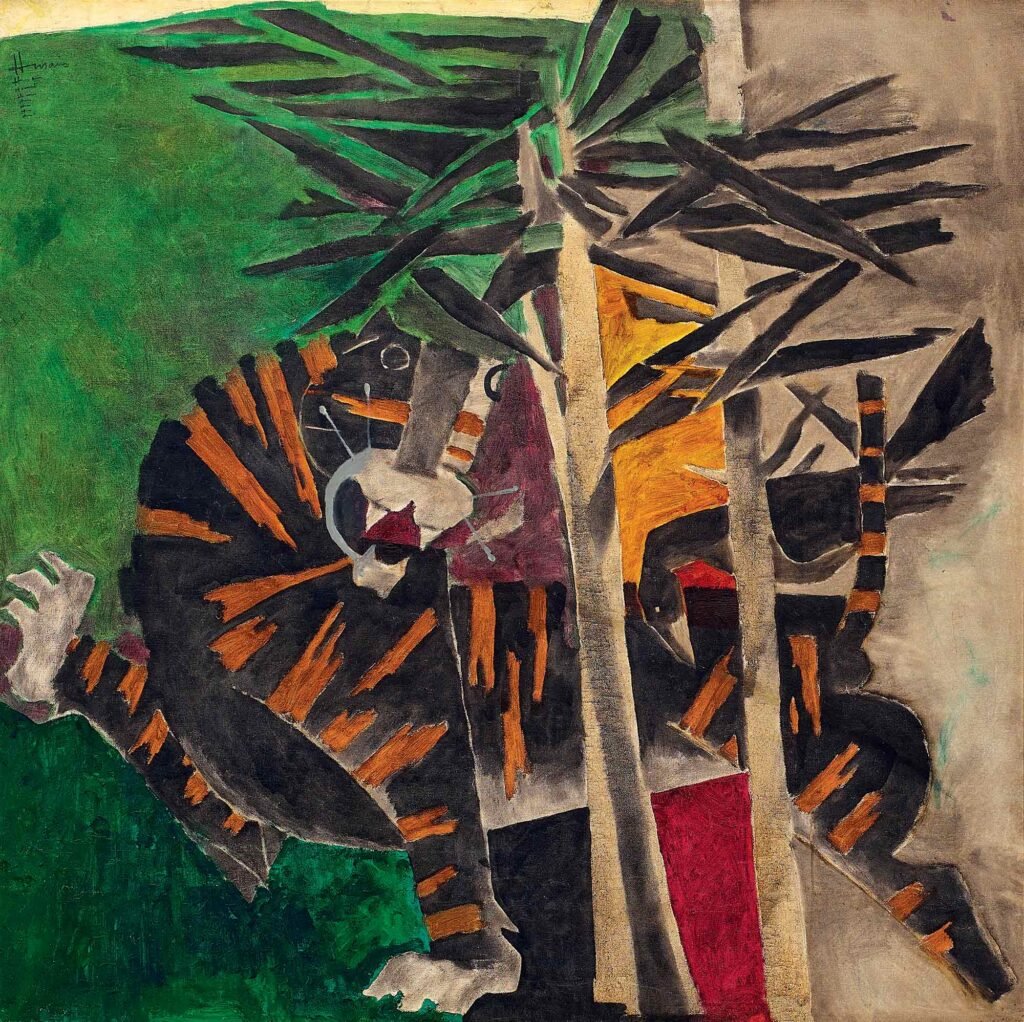
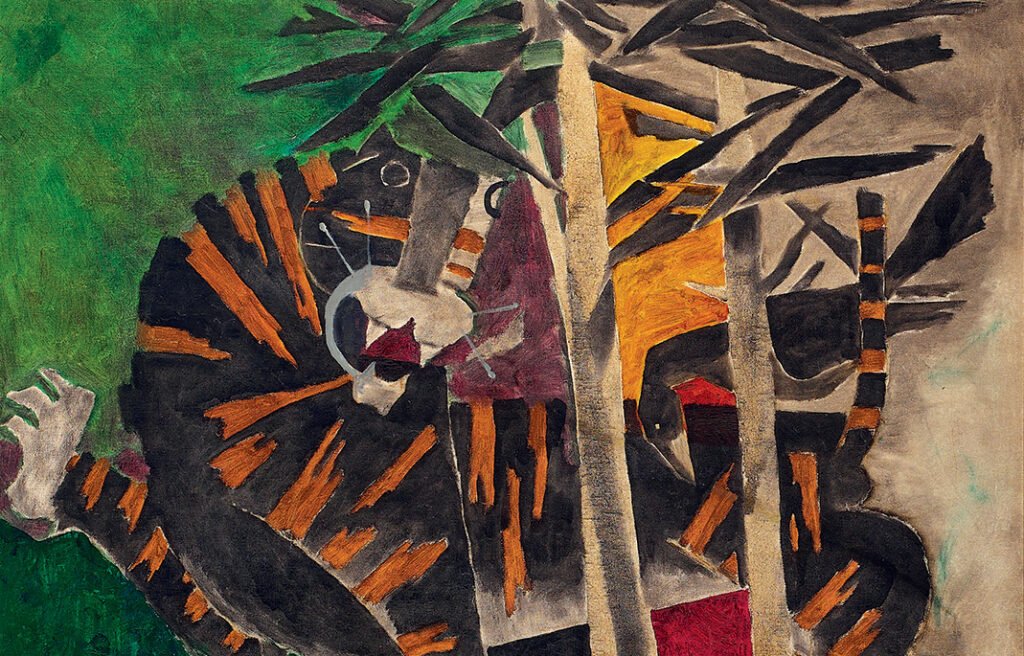
luxetrope.com

Art As The Ultimate Alternative Asset

Art As The Ultimate Alternative Asset

As younger investors up the game by diversifying their asset portfolios, the fine art and luxury collectibles market is emerging as a major choice

Art as an asset

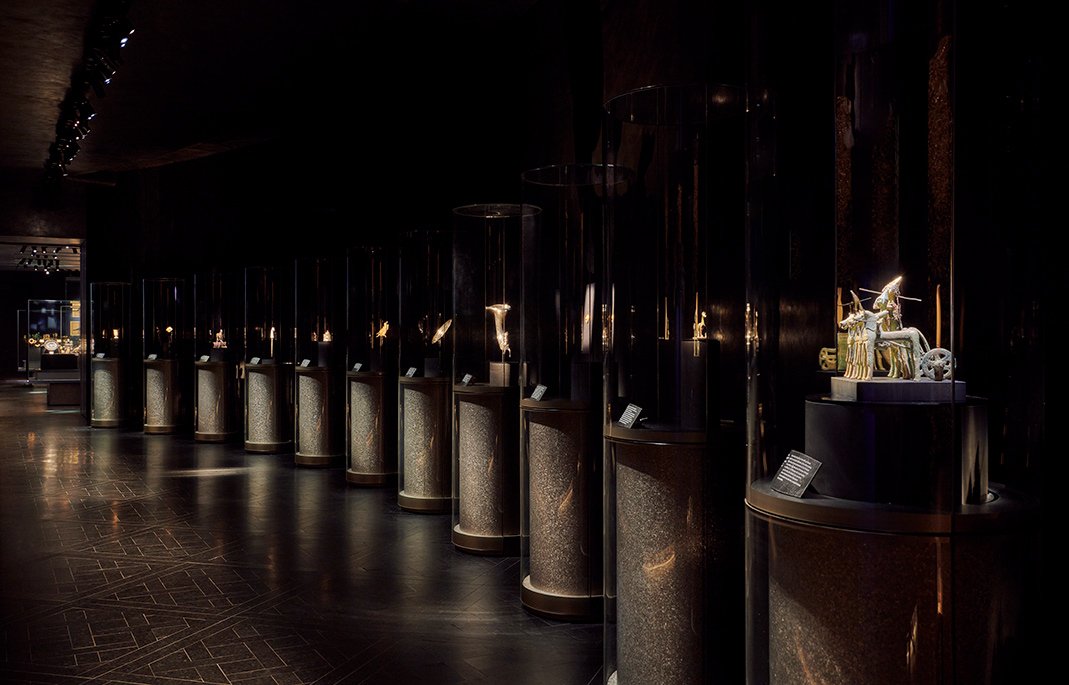
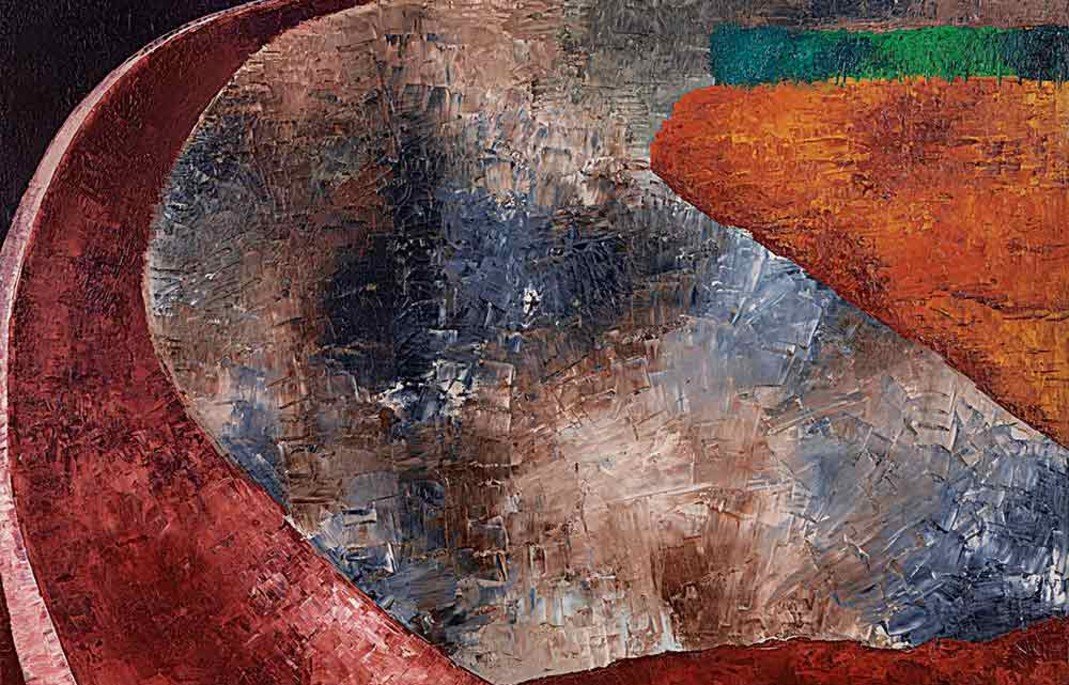
There’s a quiet but impactful revolution in the world of wealth—new and seasoned investors in India are including fine art and collectibles such as rare books, watches, silverware, antiquities, jewellery, and limited-edition prints in their portfolios. While the most significant share for auctions worldwide still constitutes paintings, many in the business are realising the potential of including a diverse range of collectibles within the fold.

A SILENT DIVERSIFICATION
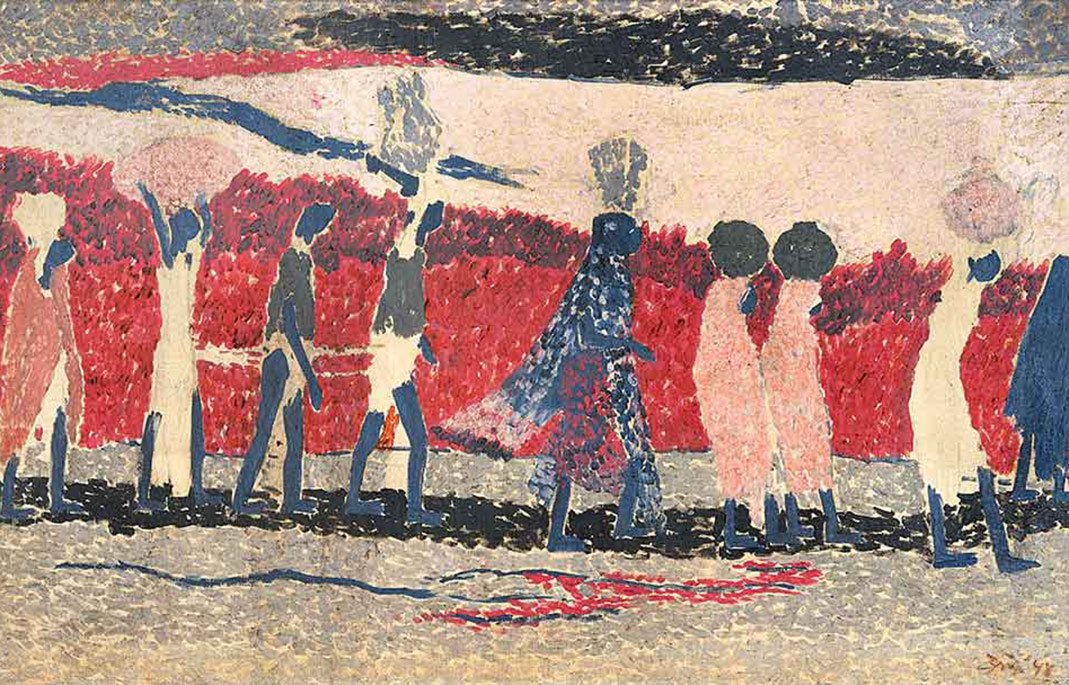
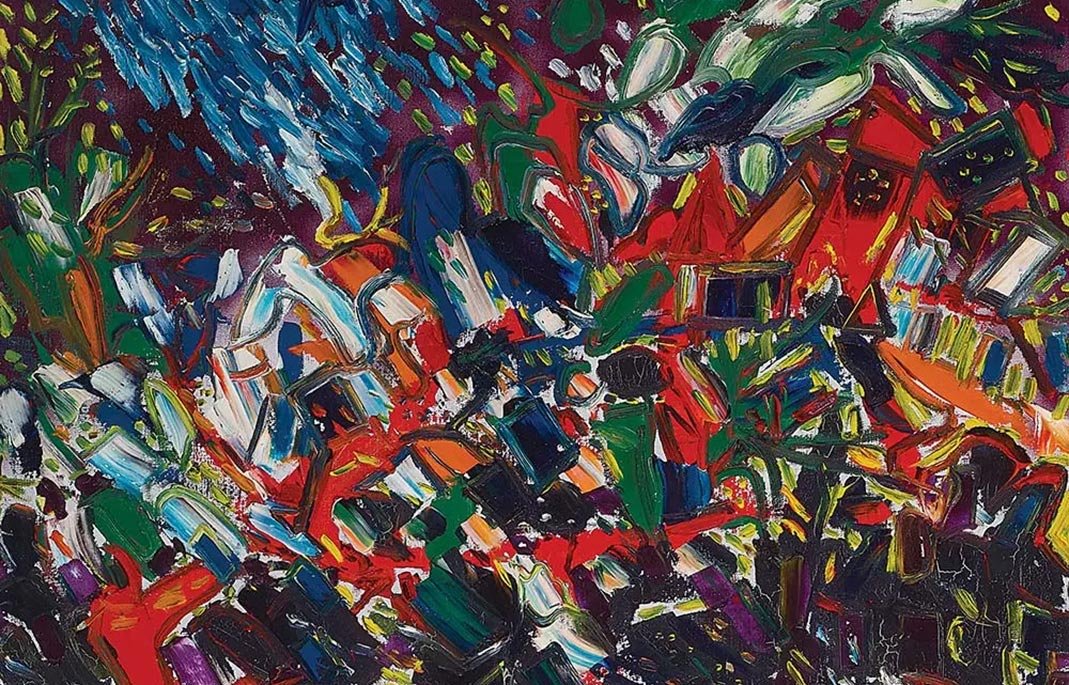
In 2025, fine art performed at a high level, achieving many records, most notably for the Progressive Artists’ Group. According to the Deloitte-ArtTactic 2025 report, luxury collectibles is one of the fastest-growing segments in the auction world. It’s growing by 2 to 6 per cent year-on-year. Another 2025 report by Art Basel and UBS highlighted the same, and most auction houses are seeing a growth of 20 to 25 per cent in the category.

RETHINK THE ‘HEDGE’
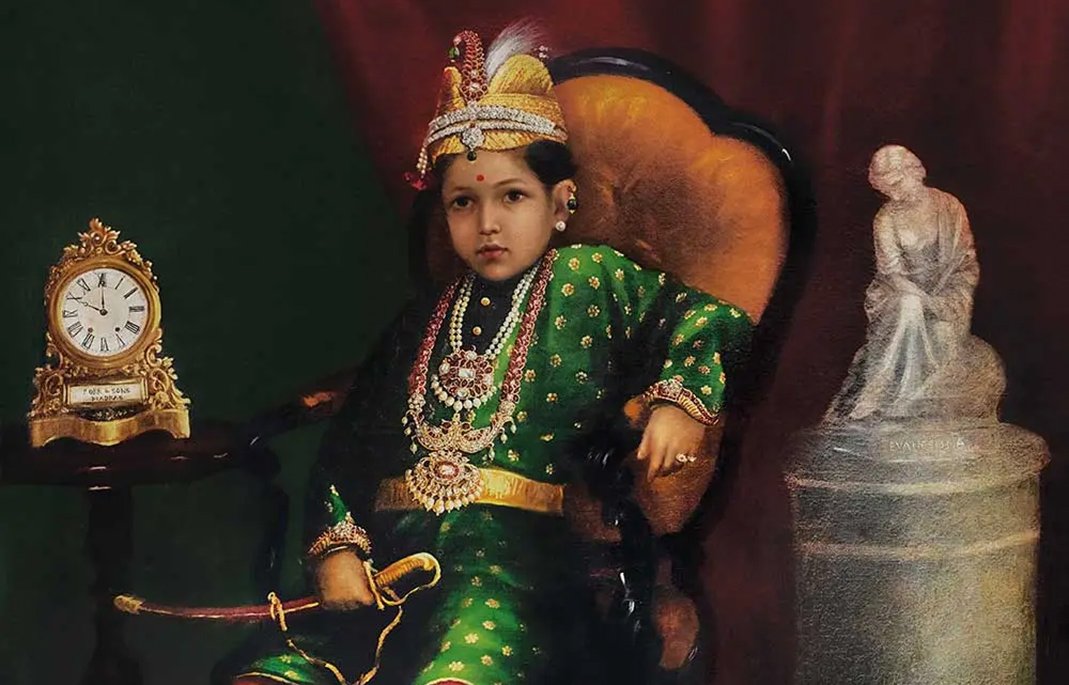
Analysts and experts agree that art can be seen as an ‘inflation hedge’, as works of art appreciate in value over time, getting recognised not only for the financial value but also for the artist’s provenance, the rarity of the work, the emotional resonance of the artwork, and the artist’s journey, among other aspects. That said, there’s no denying that art continues to attract attention—in India, textile art, for instance, is gaining prominence among collectors, as is tribal art.

Art is also an asset class given that many are passing on their prized collections within the family to future generations. To illustrate: the college-going daughter of a celebrity recently got an F.N. Souza paperwork from the 1960s as a birthday gift from her father, in a bid to start building a collection. Ditto for an earlier auction where a phone bidder bought Gogi Saroj Pal’s 1980s work to gift it to his mother on her birthday.

Read the full story in the premiere issue of LuxeTrope, on stands now.

Read More

India's art market has grown nearly 200-fold in 25 years, fuelled by record-breaking auctions and rising collector confidence

From Mughal jewels to ancient sculptures, 'Animalia' explores humanity's enduring fascination with the animal kingdom through rare works from The Al Thani Collection​

While India's iconic Progressives continue to dominate the market, a new wave of artists is rewriting auction records

Art historian, curator, and director of The Al Thani Collection, Dr. Amin Jaffer believes great collections are built on stories that connect cultures across time

The auction brought together leading names in Modern Indian art, with several works achieving standout prices

Ornamentation in Indian art tells stories of power, identity and cultural memory

Collectors Tanuj Berry & Saman Malik Decode the Art Market

Collectors Tanuj Berry & Saman Malik Decode the Art Market

The duo speaks about the true reward of collecting, and how an “unemotional” approach towards art lets them truly enjoy their collections

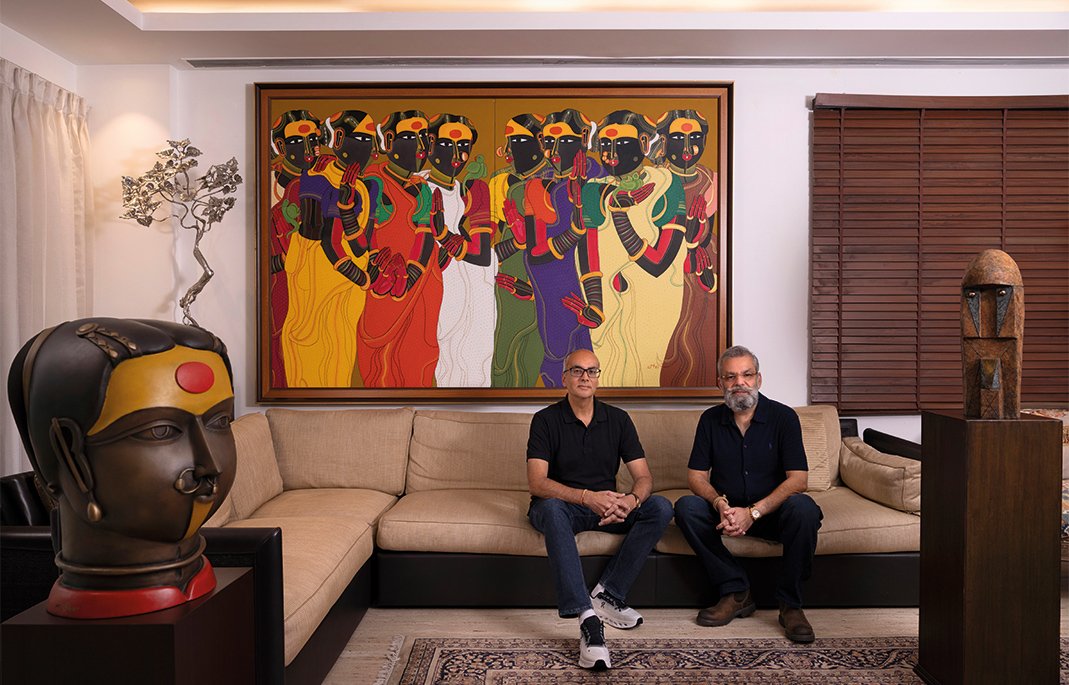
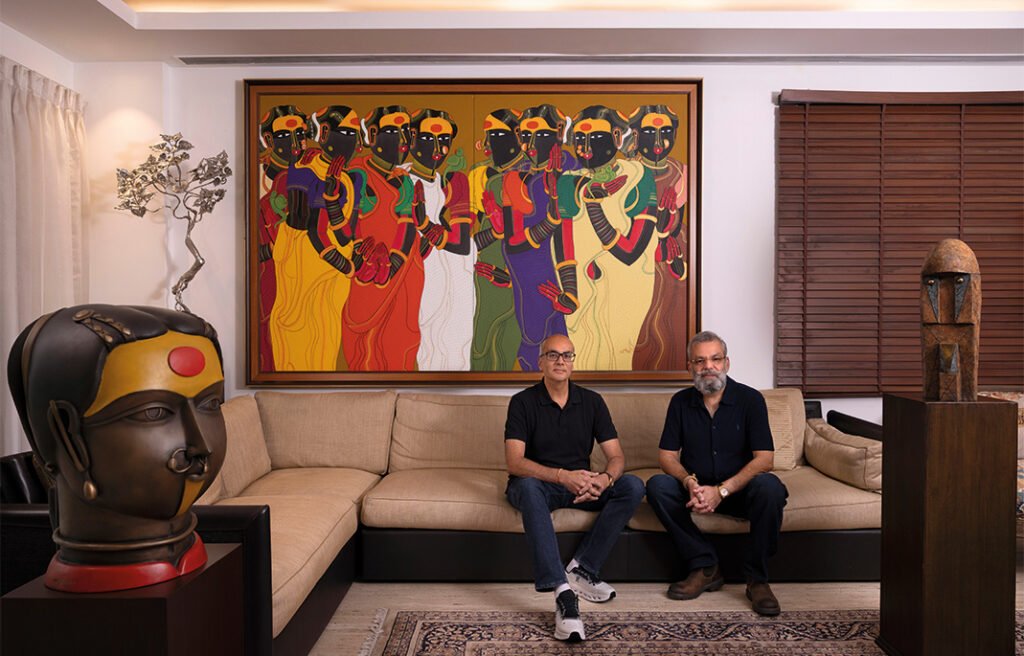
The vibrant scene of London’s auction houses in the 1990s set Tanuj Berry and Saman Malik on the path to appreciating art. For the two of them—who claim they’re not collectors per se—art has always been a matter of careful curation rather than impulse. They individually, and collectively, approach art with the precision of an investor, having built a philosophy that places their collections as both a store of value and a long-term asset. They have, through business and in their own way, also championed Contemporary Indian artists, who they feel hold true auction potential.

How did you start collecting, and what was the first piece you bought?
Berry: It was the concept, excitement and idea of prompt and transparent transactions at auctions that attracted me to auction rooms in London in the ’90s. Not that I bought anything at auction then, but it piqued my interest towards art. I began to look at Indian artists on my travels. The first artwork I bought was a K.M. Adimoolam on a visit to Chennai. I met the artist at his studio next to Cholamandal Artists’ Village. Over time, he became a dear friend and business associate like many other artists.

What’s your personal philosophy when it comes to collecting art?
Malik: Personally, I see art as an investment. Not taking anything away from its aesthetic value, but the reason for buying art then, and even today, is purely as investment. That may be why I’ve been able to sell works of art over time without having to dwell upon the idea of parting with them.

Were there any artworks that were particularly challenging to acquire?
Both: None; an unemotional approach removes most challenges in both buying and selling art.

You’ve spoken about choosing to invest in art rather than more conventional financial instruments. Does that still hold true?
Berry: It does. However, due to the larger entry and exit cost as compared to other assets, art does require a longer-term view. Even though some are able to speculate and trade for gains, art remains a long-term investment that also gives a recurring dividend of aesthetic pleasure to the buyer during the holding period.

You famously said you bought art in your children’s names. Why was that, and do you still do it?
Berry: Yes, it was something we started when our children were young. This way, we could hold some artworks in their name, so they stayed as long-term investments and allowed the children to unlock their value to further their education or career. We’ll continue to encourage our children to use this as an integral and important category for their investment strategy.

What are the biggest changes you’ve witnessed in the art market?
Malik: The consistency of auction houses in ensuring availability, reliability of authentication, and transparency in pricing is what has allowed the art market to thrive over the last few decades. Overall, awareness of Indian art and its acceptance as an important asset class has made it a more relevant and suitable investment.

Read the full story in the premiere issue of LuxeTrope, on stands now.

Read More

India's art market has grown nearly 200-fold in 25 years, fuelled by record-breaking auctions and rising collector confidence

From Mughal jewels to ancient sculptures, 'Animalia' explores humanity's enduring fascination with the animal kingdom through rare works from The Al Thani Collection​

While India's iconic Progressives continue to dominate the market, a new wave of artists is rewriting auction records

Art historian, curator, and director of The Al Thani Collection, Dr. Amin Jaffer believes great collections are built on stories that connect cultures across time

The auction brought together leading names in Modern Indian art, with several works achieving standout prices

Ornamentation in Indian art tells stories of power, identity and cultural memory

A Beginner’s Guide to Collecting International Art

A Beginner’s Guide to Collecting International Art

For anyone entering the world of international art, the smartest first step is often the simplest one

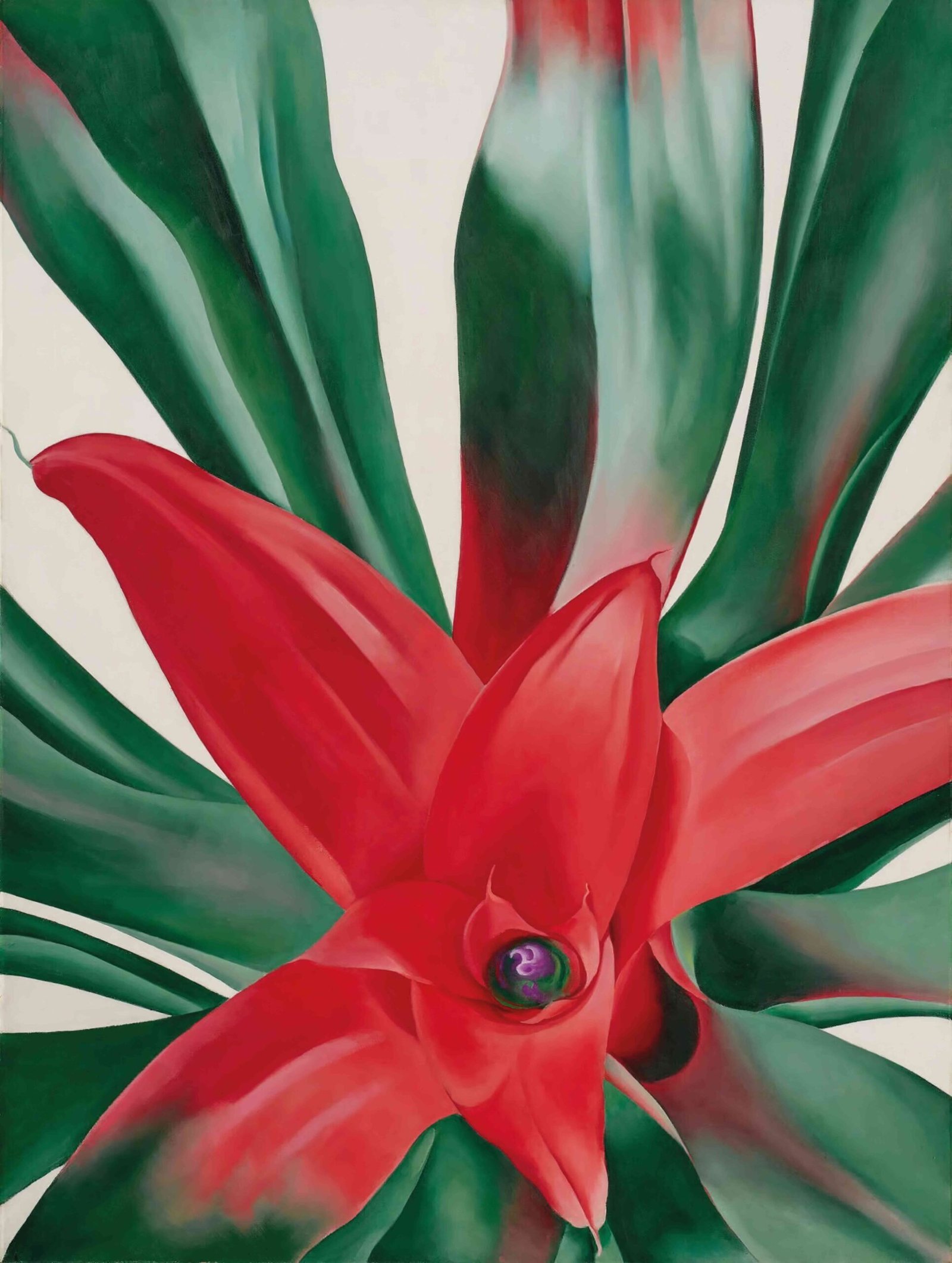
GEORGIA O’KEEFFE | Leaves of a Plant | 40 x 30 in | Oil on canvas | Sold for $13 million (₹114.4 crore)

Starting with international art does not have to feel intimidating. The best entry point is simple: begin small, stay curious, and let the market teach you as you go.

For a new collector, the first move is to keep an open mind toward emerging artists and support them as patrons. Buying their work at auction is a practical way to secure provenance and documentary transparency.

As your eye sharpens, you can move toward Masters whose works are expected to appreciate over time, along with artists who have already appeared in respected art publications and exhibitions. That next step comes from looking closely, learning steadily, and understanding what resonates with you.

Research matters just as much as instinct. Books, magazines, and industry leaders can help you understand art history, movements such as Impressionism, Surrealism, and Expressionism, and the paths international artists have taken. A professional art advisor can also help with international markets, logistics, and legalities.

Auction houses remain a strong starting point, especially when they offer works by established names and handle the practical details around sourcing international art. It is also important to keep the paperwork in order, including a Certificate of Authenticity, provenance, and an invoice.

Read the full story in the premiere issue of LuxeTrope, on stands now.

Read More

India's art market has grown nearly 200-fold in 25 years, fuelled by record-breaking auctions and rising collector confidence

From Mughal jewels to ancient sculptures, 'Animalia' explores humanity's enduring fascination with the animal kingdom through rare works from The Al Thani Collection​

While India's iconic Progressives continue to dominate the market, a new wave of artists is rewriting auction records

Art historian, curator, and director of The Al Thani Collection, Dr. Amin Jaffer believes great collections are built on stories that connect cultures across time

The auction brought together leading names in Modern Indian art, with several works achieving standout prices

Ornamentation in Indian art tells stories of power, identity and cultural memory

Suryakant Lokhande Drives Steady Growth with 31 Lot Sales

Suryakant Lokhande Drives Steady Growth with 31 Lot Sales

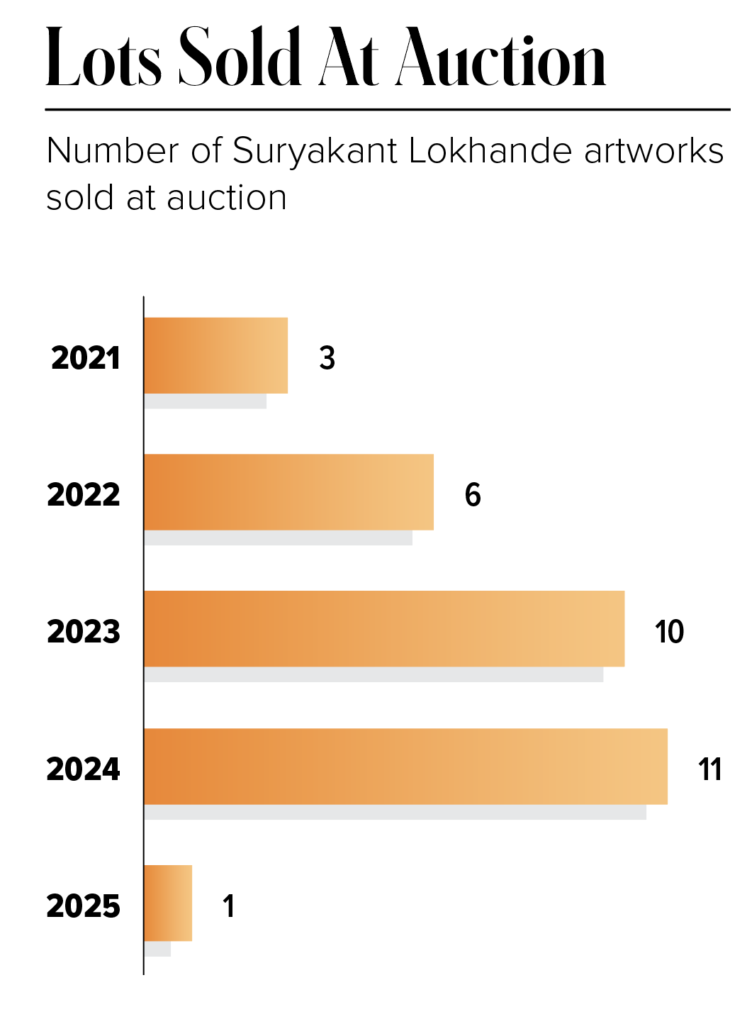
Lokhande’s auction trail from 2021 to 2025 shows a gradual build

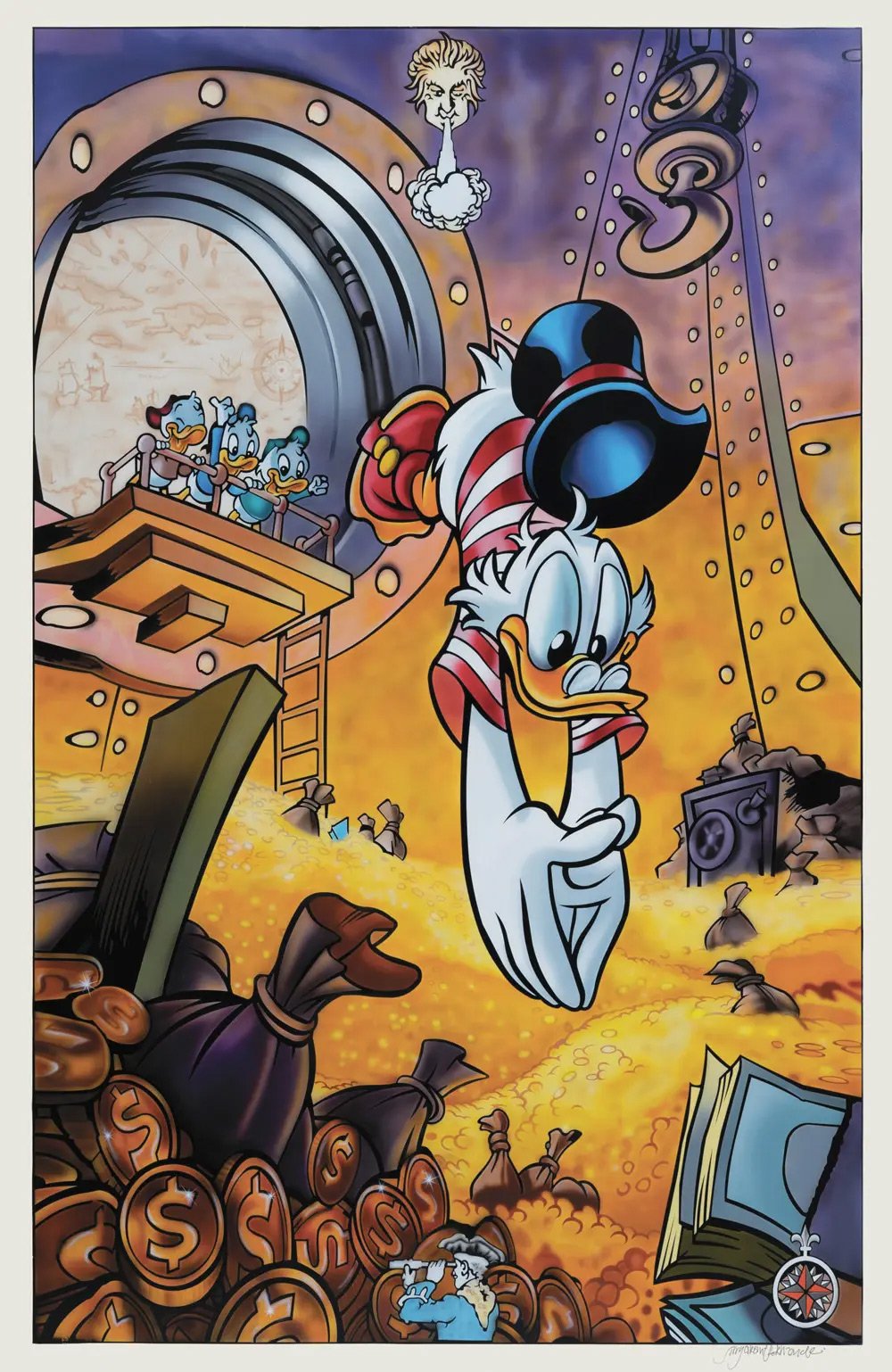
DUCK’S DIVE FOR TREASURE | 72 x 48 in | High gloss automobile paint on ACP board | Sold in 2024 by AstaGuru for ₹15,54,874 ($17,669)

Suryakant Lokhande’s auction story from 2021 to 2025 is defined by a steady rise in volume. Across the five-year span, he sold 31 lots at auction.

The yearly count moved from 3 lots in 2021 to 6 in 2022, then climbed to 10 in 2023 and 11 in 2024.

That shift makes the five-year pattern especially clear: Lokhande built momentum through 2024, with 2024 emerging as his strongest year for volume, before the pace slowed in 2025. Even so, the overall total still reflects a consistent auction presence over the period.

The lot count sits alongside a practice that has drawn attention for its bright, pop-inflected surfaces and layered narratives. In pure market terms, the numbers tell a simple story.

Read the full story in the premiere issue of LuxeTrope, on stands now.

Read More

India's art market has grown nearly 200-fold in 25 years, fuelled by record-breaking auctions and rising collector confidence

From Mughal jewels to ancient sculptures, 'Animalia' explores humanity's enduring fascination with the animal kingdom through rare works from The Al Thani Collection​

While India's iconic Progressives continue to dominate the market, a new wave of artists is rewriting auction records

Art historian, curator, and director of The Al Thani Collection, Dr. Amin Jaffer believes great collections are built on stories that connect cultures across time

The auction brought together leading names in Modern Indian art, with several works achieving standout prices

Ornamentation in Indian art tells stories of power, identity and cultural memory

S.H. Raza’s Top 5 Auction Lots Breach ₹150 Crore Mark

S.H. Raza’s Top 5 Auction Lots Breach ₹150 Crore Mark

Leading with Gestation at ₹45 crore, Raza’s elite sales showcase his powerhouse market from 2021 to 2025

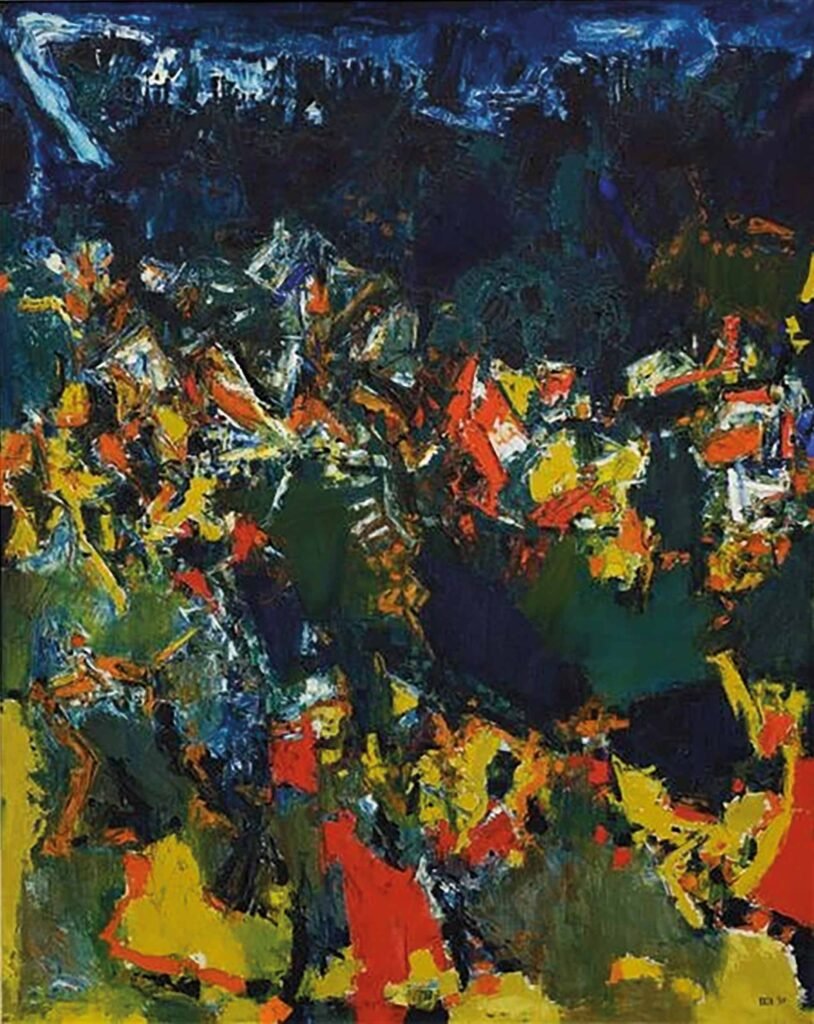
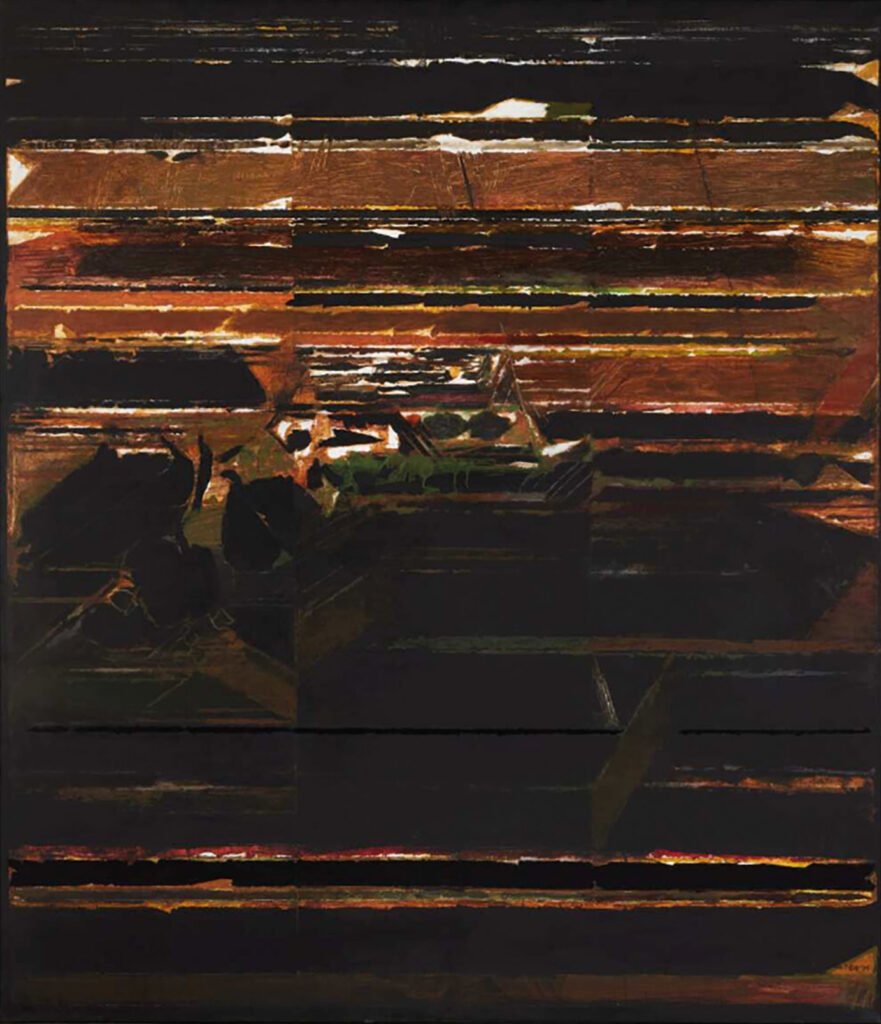
GESTATION | Sold for ₹44,99,20,027 ($5,112,727)

S.H. Raza’s top auction lots from 2021 to 2025 pack a serious punch, proving why he’s a cornerstone of the Indian art market. These five standouts racked up massive hammer prices, drawing collectors to his geometric masterpieces.

Gestation tops the list at ₹44,99,20,027 ($5,112,727), a blockbuster that highlights Raza’s commanding presence.

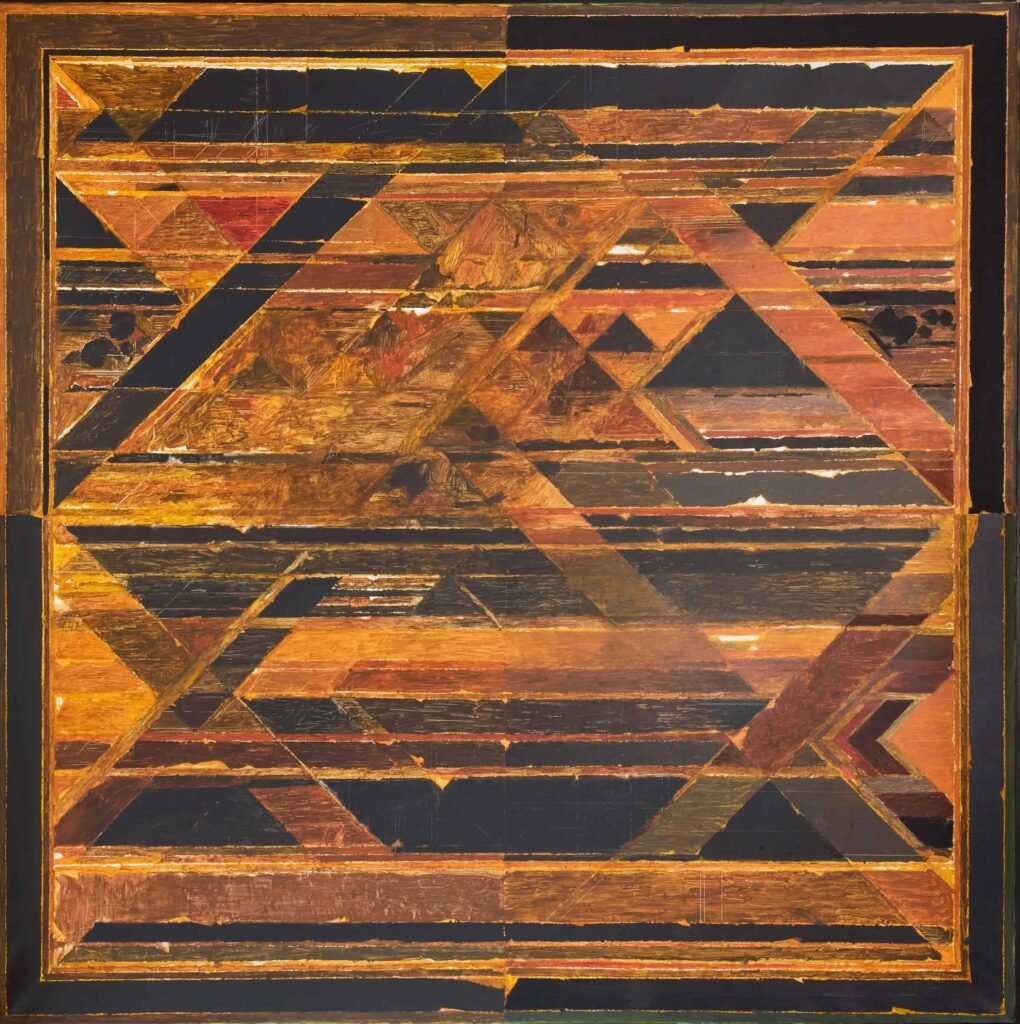
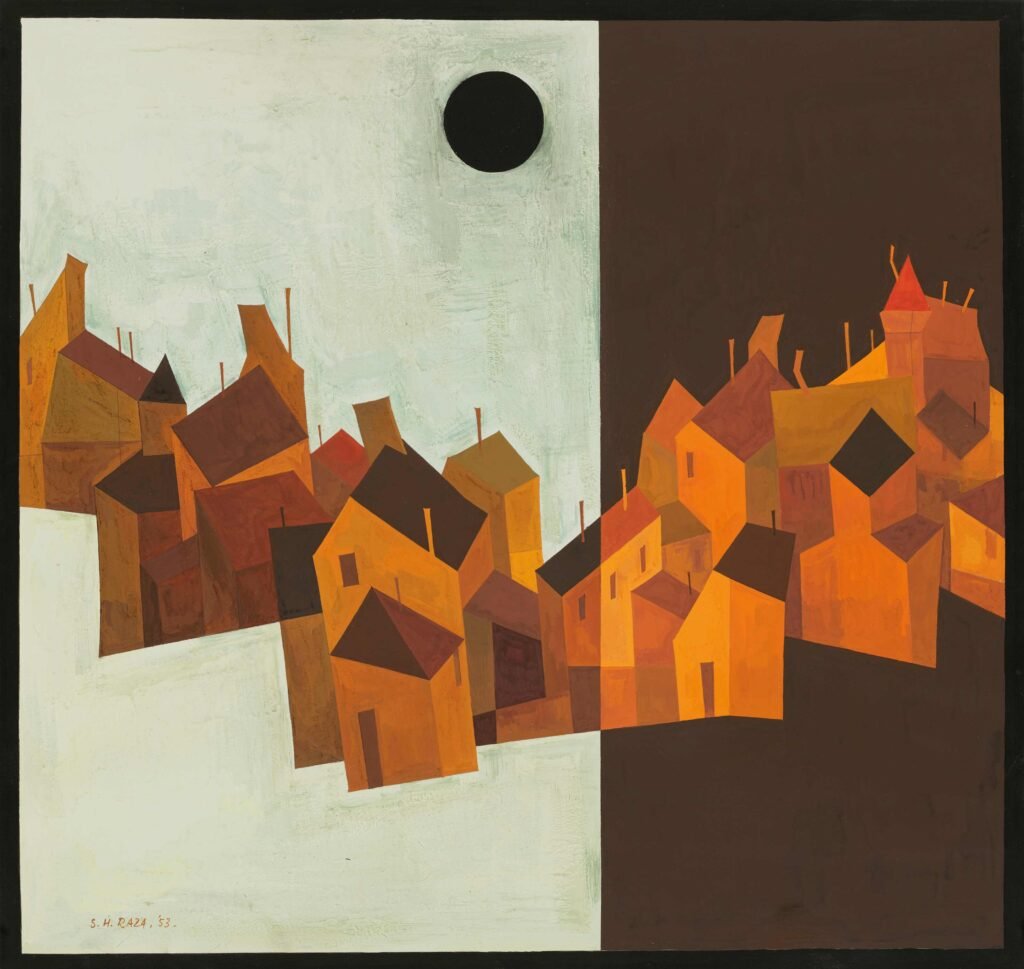
KALLISTÉ | Sold for ₹38,14,59,949 ($4,334,772)

Close behind is Kallisté with ₹38,14,59,949 ($4,334,772), followed by La Terre at ₹29,27,14,540 ($3,326,301). These works underscore the premium placed on his abstract explorations.

LA TERRE | Sold for ₹29,27,14,540 ($3,326,301)

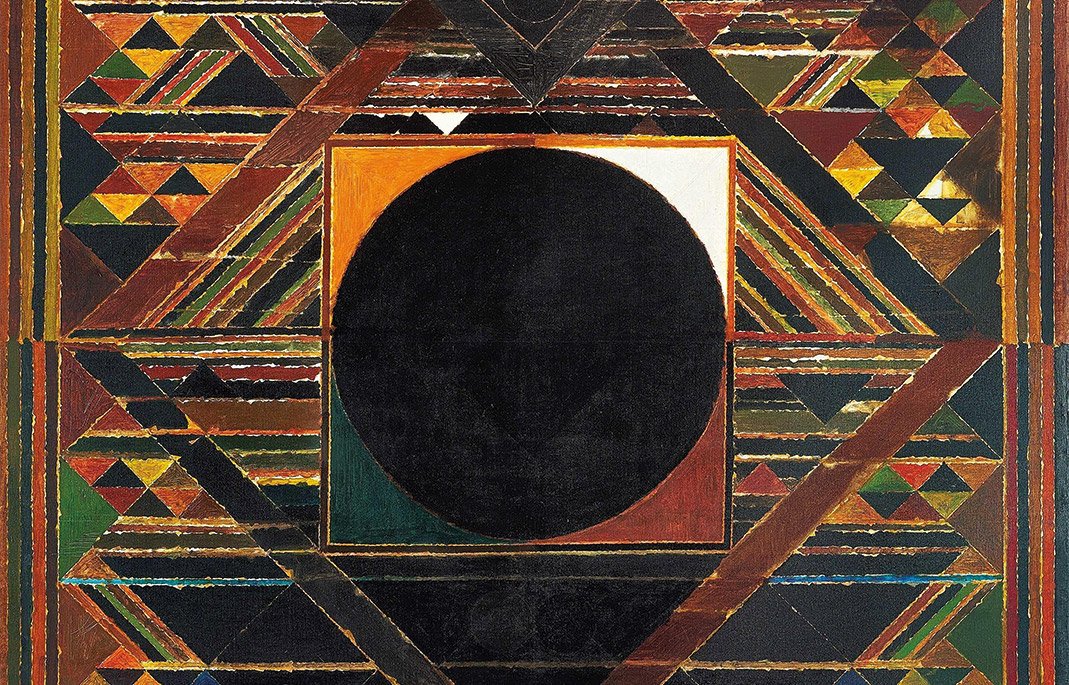
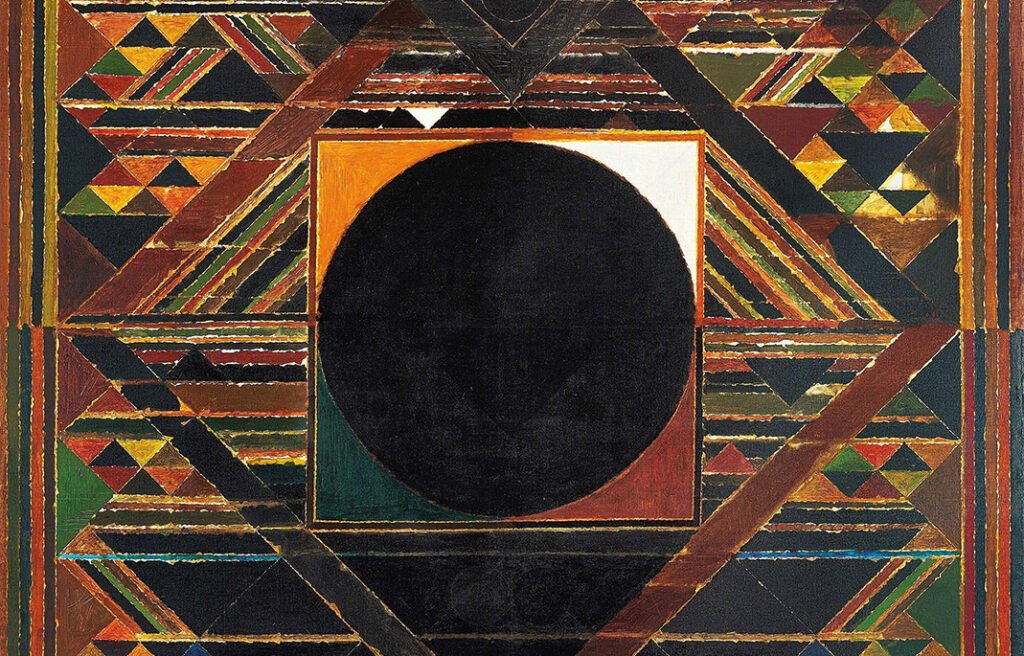
Rounding out the top tier, Terra Amata fetched ₹23,56,15,225 ($2,677,445), while Black Sun (Le Soleil Noir) brought in ₹16,47,79,686 ($1,872,496). Together, they represent the high end of Raza’s market, where major canvases routinely shatter expectations.

TERRA AMATA | Sold for ₹23,56,15,225 ($2,677,445)

These sales come amid 567 total lots sold over the period, with nine exceeding ₹10 crore. Raza’s diversity—from Bindu series to landscapes—keeps his appeal broad, but these elites show what happens when his best hits the block.

BLACK SUN (LE SOLEIL NOIR) | Sold for ₹16,47,79,686 ($1,872,496)

Read the full story in the premiere issue of LuxeTrope, on stands now.

Read More

India's art market has grown nearly 200-fold in 25 years, fuelled by record-breaking auctions and rising collector confidence

From Mughal jewels to ancient sculptures, 'Animalia' explores humanity's enduring fascination with the animal kingdom through rare works from The Al Thani Collection​

While India's iconic Progressives continue to dominate the market, a new wave of artists is rewriting auction records

Art historian, curator, and director of The Al Thani Collection, Dr. Amin Jaffer believes great collections are built on stories that connect cultures across time

The auction brought together leading names in Modern Indian art, with several works achieving standout prices

Ornamentation in Indian art tells stories of power, identity and cultural memory

GESTATION | Sold for ₹44,99,20,027 ($5,112,727)

The Fine Art Of Timing It Right

The Fine Art Of Timing It Right

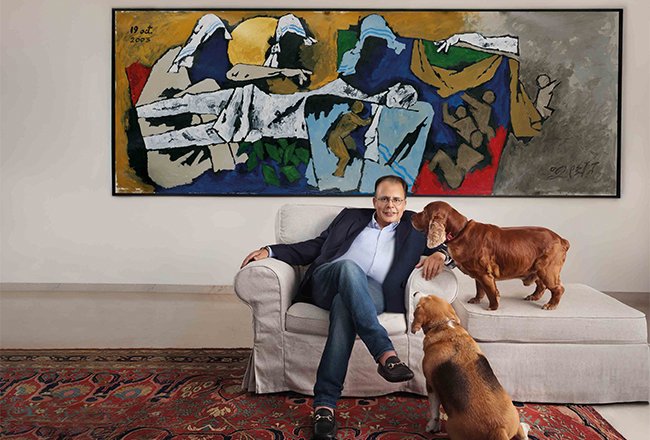
Collector, connoisseur, and patron, Manoj Israni has curated his extensive art collection with genuine passion

Manoj Israni

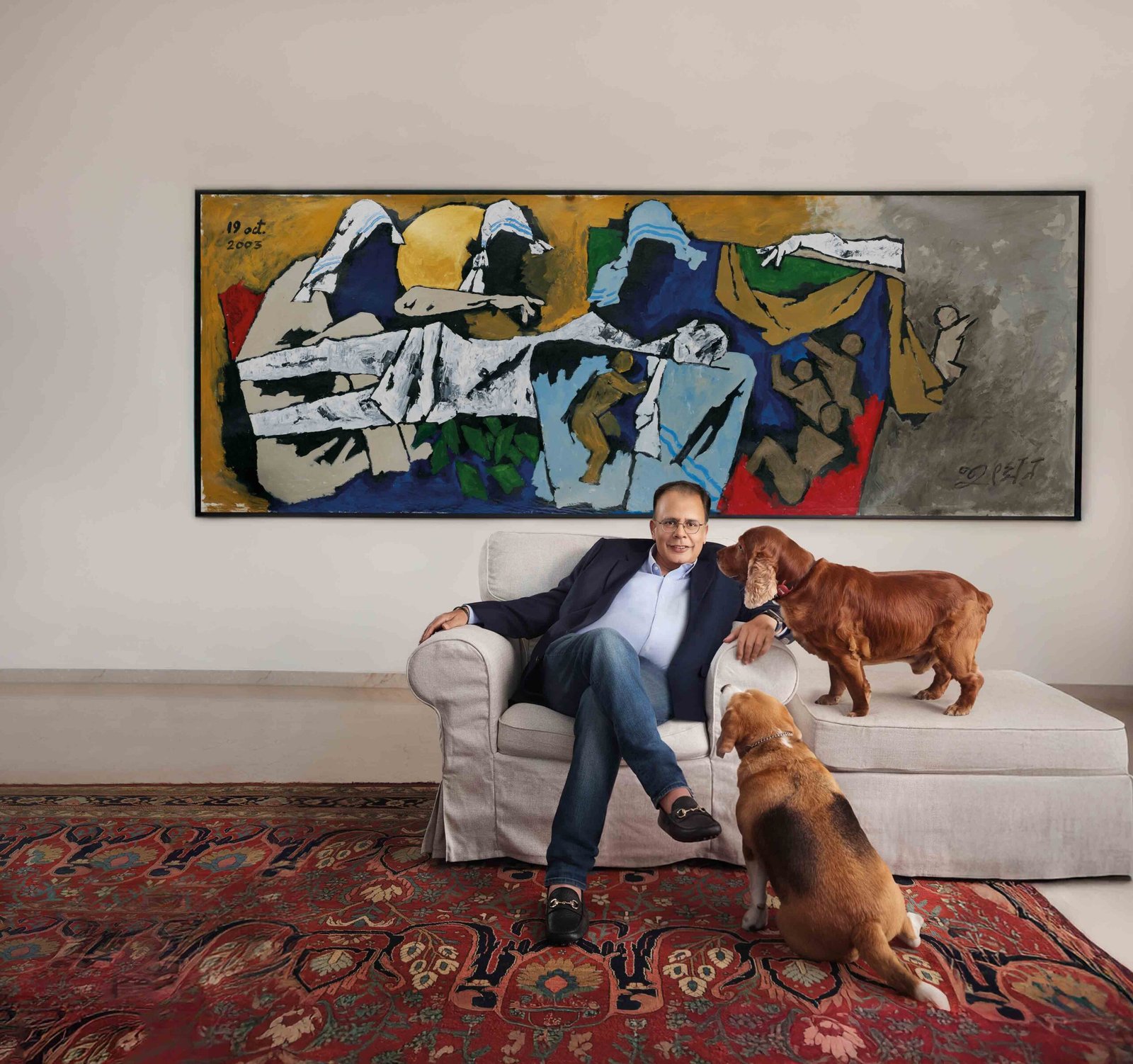
A man who willingly trades in a Mercedes for an artwork is, without question, a true connoisseur. For Manoj Israni, who’s intensely passionate about art and determined to line the walls of his home with masterpieces, a luxury car seemed like a small price to pay. Having redefined ‘luxury living’ as surrounding himself with art and beloved companions—specifically his dogs, Edward and Oliver— Israni seeks to highlight how a creative outlook to life can be the foundation of creating a priceless collection.

While Israni is a renowned collector today, his entry into the world of art was quite fortuitous. “Art is something that came out of the blue. I run a pharma company,” he says, adding that he was raised in an environment where art and creativity were valued. But his interest in collecting was sparked by a simple need: furnishing his new home. Driven by a desire to recreate the atmosphere of his childhood home—headlined by a massive M.F. Husain painting placed front and centre—he began a hunt for his own masterpieces. “I bought a smaller Husain painting because I didn’t have enough space for a big one. Three months later, the person I bought it from asked me if I wanted to sell it back. I agreed and she gave me nine times the price for it, which I thought was interesting,” he recalls.

Israni feels that you need a do-your-own-research approach to collecting. He says he’s read almost every book on Indian art and this knowledge makes the process of acquiring art exciting, not challenging. “Collecting art is something that grew on me. I was always clear about what I wanted to buy and when. I don’t buy art from dealers or artists, I prefer auctions,” he says.

With a rise in disposable income and an expanding collector base in India, there has been a surge in buying art mainly as a form of investment. And that, Israni says, is a dangerous road to take. “You must like art first. I wouldn’t take the route of buying art solely as an investment. I do consign works to auction but that’s only because I want to upgrade,” he says, adding that he also doesn’t know anyone who buys art merely for its financial potential. “It’s like buying a diamond set for investment purposes. You don’t have a clue about diamonds; you don’t know where you’re putting your money. I know people who want to keep their art for generations and those who buy it as an investment, but they also know about art.”

Read the full story in the premiere issue of LuxeTrope, on stands now.

Read More

India's art market has grown nearly 200-fold in 25 years, fuelled by record-breaking auctions and rising collector confidence

From Mughal jewels to ancient sculptures, 'Animalia' explores humanity's enduring fascination with the animal kingdom through rare works from The Al Thani Collection​

While India's iconic Progressives continue to dominate the market, a new wave of artists is rewriting auction records

Art historian, curator, and director of The Al Thani Collection, Dr. Amin Jaffer believes great collections are built on stories that connect cultures across time

The auction brought together leading names in Modern Indian art, with several works achieving standout prices

Ornamentation in Indian art tells stories of power, identity and cultural memory

An Ultimate Art Calendar

Artinerary: Your Ultimate Art Calendar

Here’s a guide to the most creative luxury events across the world in 2026

Diriyah Contemporary Art Biennale
When: January 30-May 2, 2026
Where: JAX District – Diriyah/Riyadh
The event features more than 70 artists from over 37 nations, including commissions spanning visual art, music, film, architecture, and writing.

Biennale of Sydney
When:
March 14-June 14, 2026
Where: Multiple locations including White Bay Power Station, Art Gallery of New South Wales, Penrith Regional Gallery
A global platform for contemporary visual arts, the Biennale of Sydney is known for presenting thought-provoking art from Australia and the world.

Art Basel Hong Kong
When: March 27-29, 2026
Where: Hong Kong Convention and Exhibition Centre, Wan Chai
Art Basel Hong Kong connects artists and galleries from Asia and beyond, creating an exciting fusion of East and West.

ShowKeen
When: March 14-15, 2026 | April 11-12, 2026
Where: Bikaner House, New Delhi | Nehru Centre, Mumbai
ShowKeen is an annual exhibition curated by AstaGuru for art and design enthusiasts, and seasoned collectors. Last year’s exhibition showcased rare works of Modern and Contemporary Indian artists, alongside international artists. This edition brings together some exceptional names.

Frieze New York
When: May 13-17, 2026
Where: The Shed, 545 W 30th St
Featuring approximately 70 galleries, this event collaborates with nonprofit organisations and showcases works from international artists, fostering creativity and dialogue within the global art community.

La Biennale di Venezia (Venice Biennale)
When: May 9-November 22, 2026
Where: Giardini Della Biennale and Arsenale Exhibition Spaces
A major event in the global art calendar, this is known for its diversity. The event’s theme this year is titled In Minor Keys, conceived by the late curator Koyo Kouoh, and also presents a special India pavilion curated by Amin Jaffer.

Art Basel
When: June 18-21, 2026
Where: Messe Basel, Switzerland
Art Basel is renowned for its cutting-edge art, from emerging talents to iconic figures across media. It features over 200 leading galleries and more than 4,000 artists from five continents.

Frieze Seoul
When: September 2-5, 2026
Where: COEX Convention & Exhibition Center, Gangnam
A dynamic addition to the Frieze art fair series, the Seoul edition will bring together international and local galleries and audiences. It aims to highlight the rich cultural scene of Seoul while fostering connections between artists, collectors, and curators.

Toronto Biennial of Art 2026
When: September 26-December 20, 2026
Where: Art Museum at the University of Toronto and the Art Gallery of Ontario
Curated by Allison Glenn, the biennial features free, accessible and inclusive city-wide exhibitions exploring Toronto’s diverse history and an understanding of contemporary art practices.

Frieze London
When: October 14-18, 2026
Where: The Regent’s Park
Frieze London champions younger galleries from across the globe, bringing contemporary art and a dynamic cultural atmosphere to the heart of the city, thus attracting a mix of iconic and emerging artists.

Art Basel Paris
When: October 23-25, 2026
Where: Grand Palais, Avenue Winston Churchill
Held in the heart of the French capital, Art Basel Paris showcases the world’s most influential artists in one of the most fashionable cities.

Artissima Turin
When: October 30-November 1, 2026
Where: Oval Lingotto Fiere, Torino, Italy
Established in 1994, Artissima is Italy’s most important contemporary art fair, which stands out for its focus on experimentation and research. Galleries from around the world participate in this event every year.

Art Cologne
When: November 5-8, 2026
Where: Koelnmesse GmbH, Messeplatz 1
The world’s oldest art fair, Art Cologne offers a mix of Modern and Contemporary art, drawing collectors and art lovers alike

ART X Lagos
When: November 5-8, 2026
Where: The Federal Palace, Victoria Island
West Africa’s premier
international art fair, ART X Lagos is a celebration of contemporary art from Africa and the diaspora.

Art Basel Miami Beach
When: December 4-6, 2026
Where: Miami Beach Convention Center
One of the biggest art shows in the Americas, this event blends high-end Contemporary art with a South Beach vibe.

Read More

India's art market has grown nearly 200-fold in 25 years, fuelled by record-breaking auctions and rising collector confidence

From Mughal jewels to ancient sculptures, 'Animalia' explores humanity's enduring fascination with the animal kingdom through rare works from The Al Thani Collection​

While India's iconic Progressives continue to dominate the market, a new wave of artists is rewriting auction records

Art historian, curator, and director of The Al Thani Collection, Dr. Amin Jaffer believes great collections are built on stories that connect cultures across time

The auction brought together leading names in Modern Indian art, with several works achieving standout prices

Ornamentation in Indian art tells stories of power, identity and cultural memory

The Global Art Market in 2025

The Global Art Market in 2025

The landscape continues to spotlight a mix of historic Masters and Contemporary icons. In 2025, the world saw a new approach and an upward trajectory that beat expectations. In 2026, will the buoyancy sustain?

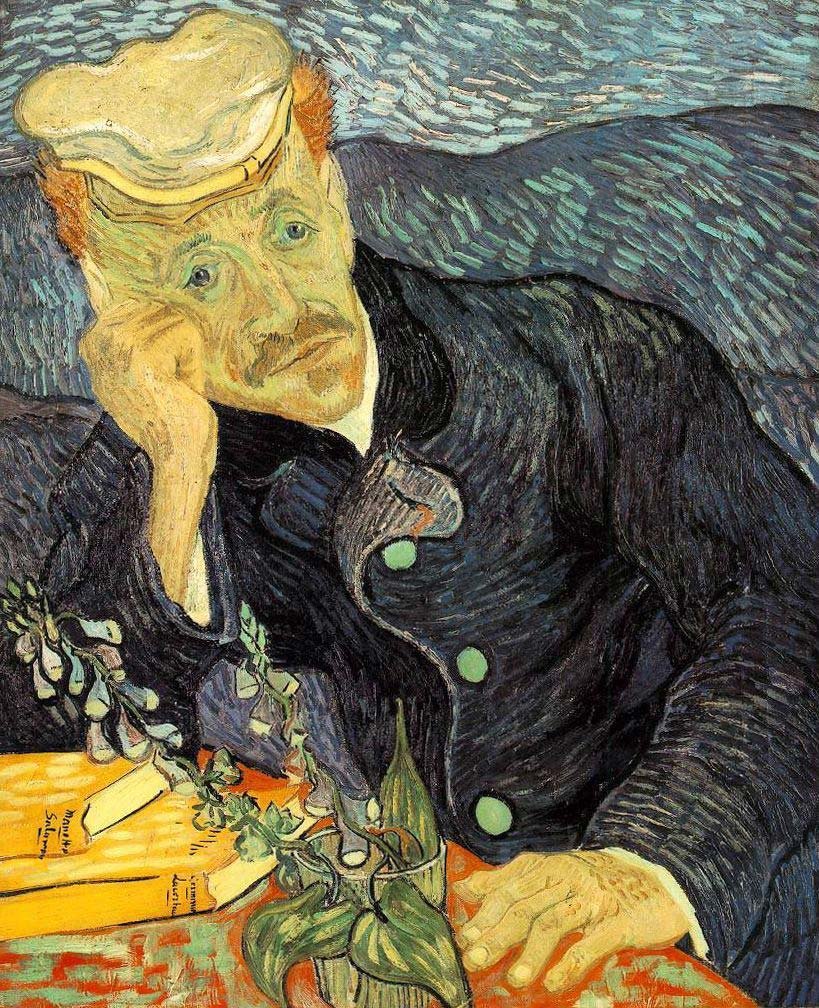
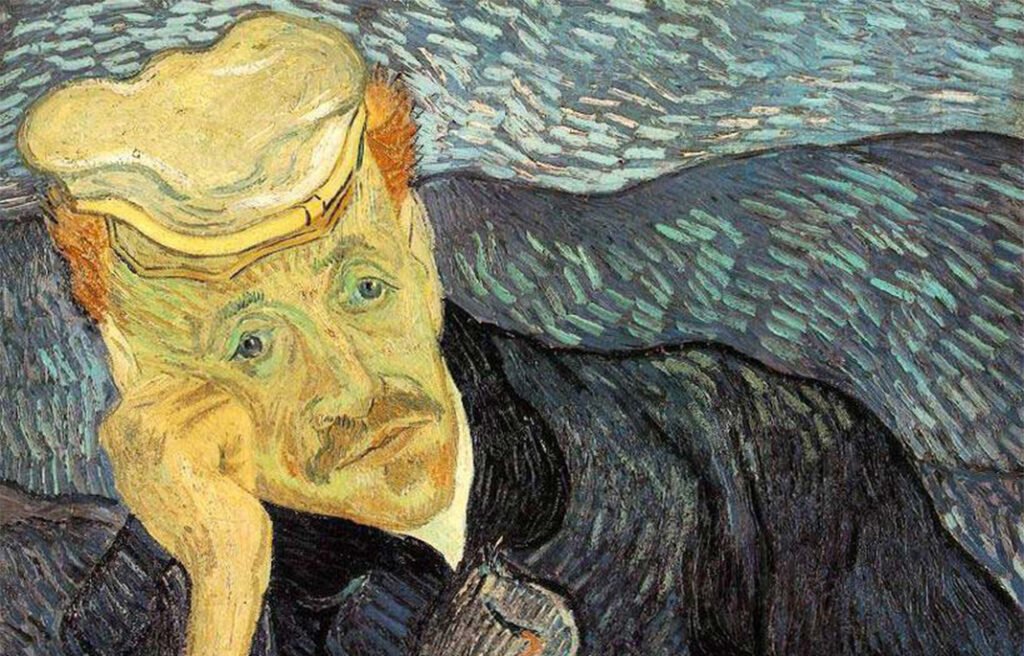
VINCENT VAN GOGH | Portrait of Dr. Gachet | 23.4 in x 22 in | Oil on canvas | 1890 Sold for $82.5 million (₹726 crore)

In November 2024, a crypto billionaire named Justin Sun paid $6.2 million (₹54.56 crore) for Maurizio Cattelan’s provocative work—a duct-taped banana—titled Comedian. A few days later, Sun famously ate the banana in front of the media. While the world debated the absurdity of it all, experts and specialists saw a much deeper narrative at play, the intersection of traditional art, internet memes, and the rising influence of digital native wealth. According to the Artprice Contemporary Art Market Report 2025, this is the new reality of a “transvertical” market where barriers between mediums, periods, and even asset classes are rapidly dissolving. In fact, many are calling it “a new reality.”

In 2025, the global art world navigated—and continues to—what is described as a “transforming market” rather than a “shrinking” one. The overarching data from the Art Basel & UBS Global Art Market 2026 report and the Deloitte-ArtTactic Art & Finance Report 2025 describes an ecosystem undergoing a profound structural recalibration. While aggregate global sales fell by 12 per cent in 2024 to an estimated $57.5 billion (₹5.06 lakh crore), the underlying frequency of transactions reached a historic peak of 146,000 lots. It seems the global art market is moving away from a top-heavy structure that’s reliant on a few blue-chip trophies to a broader, higher volume-based market where new collectors—loaded with rising wealth—will play a big role.

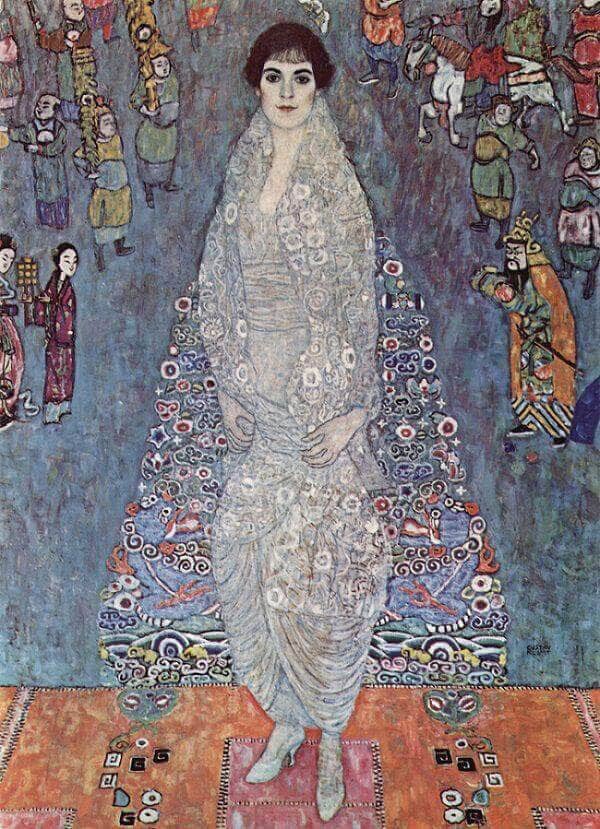
GUSTAV KLIMT | Portrait of Elisabeth Lederer | 71 in x 51.4 in | Oil on canvas | 1914–1916 Sold for $236.4 million (₹2,080.32 crore)

THE TOP SELLERS
A handful of legendary artists continued to dominate the auction market, with collectors still placing big bets on names such as Pablo Picasso, Claude Monet, and Vincent van Gogh, among others. The 2025 auction year was defined by historic sales, with Gustav Klimt emerging as the world’s most valuable artist. Klimt swept the Top Three global spots, led by the $236.4 million (₹2,080.32 crore) sale of Portrait of Elisabeth Lederer—now the most expensive Modern work ever sold. His dominance continued with Blumenwiese (Blooming Meadow) at $86 million (₹756.8 crore) and Waldabhang bei Unterach am Attersee at $68.3 million (₹601.04 crore). Vincent van Gogh followed closely, with his 1887 still life Piles de Romans Parisiens et Roses dans une Verre fetching $62.7 million (₹551.76 crore).

Read the full story in the premiere issue of LuxeTrope, on stands now.

Read More

India's art market has grown nearly 200-fold in 25 years, fuelled by record-breaking auctions and rising collector confidence

From Mughal jewels to ancient sculptures, 'Animalia' explores humanity's enduring fascination with the animal kingdom through rare works from The Al Thani Collection​

While India's iconic Progressives continue to dominate the market, a new wave of artists is rewriting auction records

Art historian, curator, and director of The Al Thani Collection, Dr. Amin Jaffer believes great collections are built on stories that connect cultures across time

The auction brought together leading names in Modern Indian art, with several works achieving standout prices

Ornamentation in Indian art tells stories of power, identity and cultural memory

Top 50 Artists Generate Over ₹2,226 Crore

Power Players: Top 50 Artists Generate Over ₹2,226 Crore

A total of 1,881 lots sold at auction mark a robust 2025 for Indian art’s elite

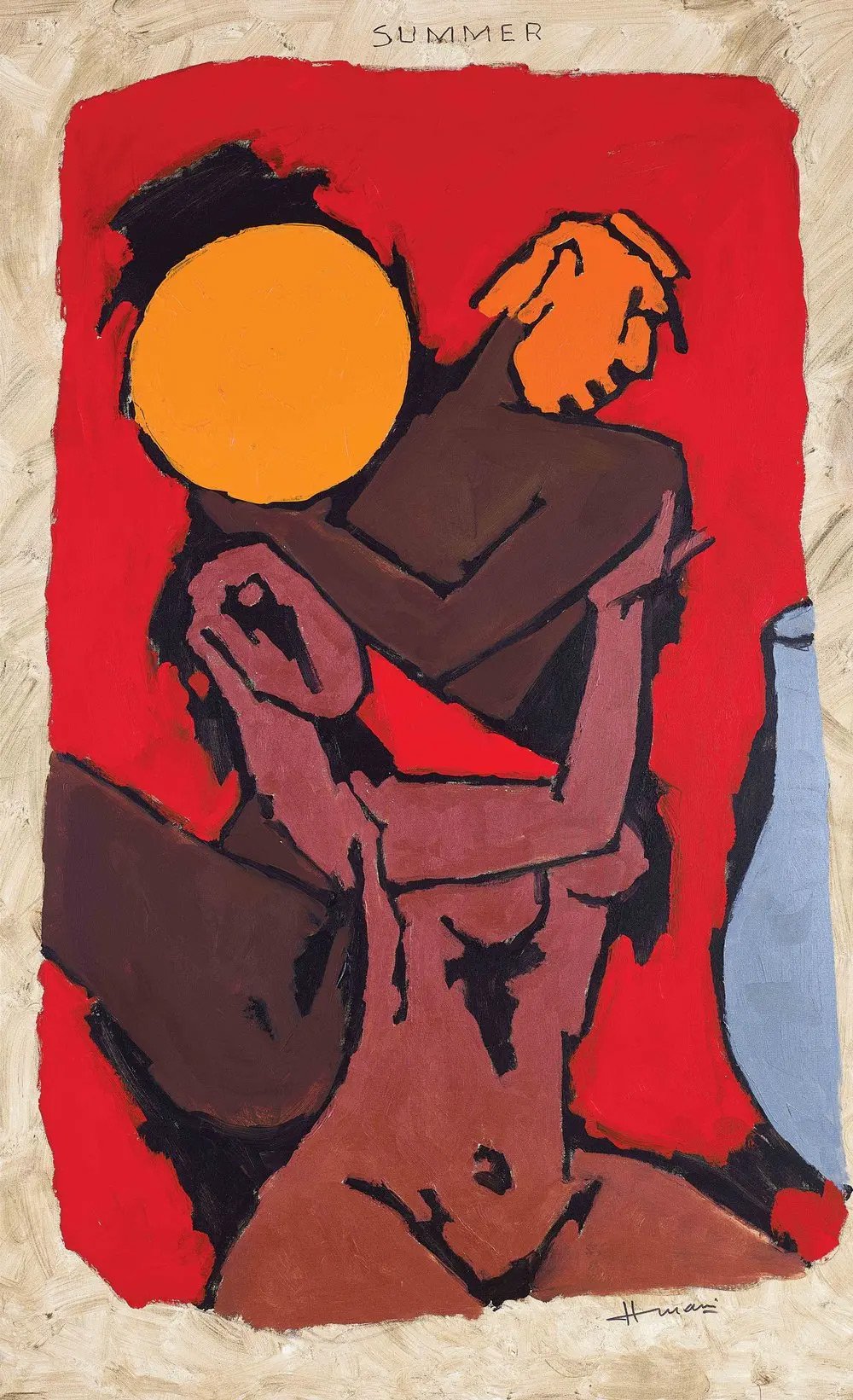
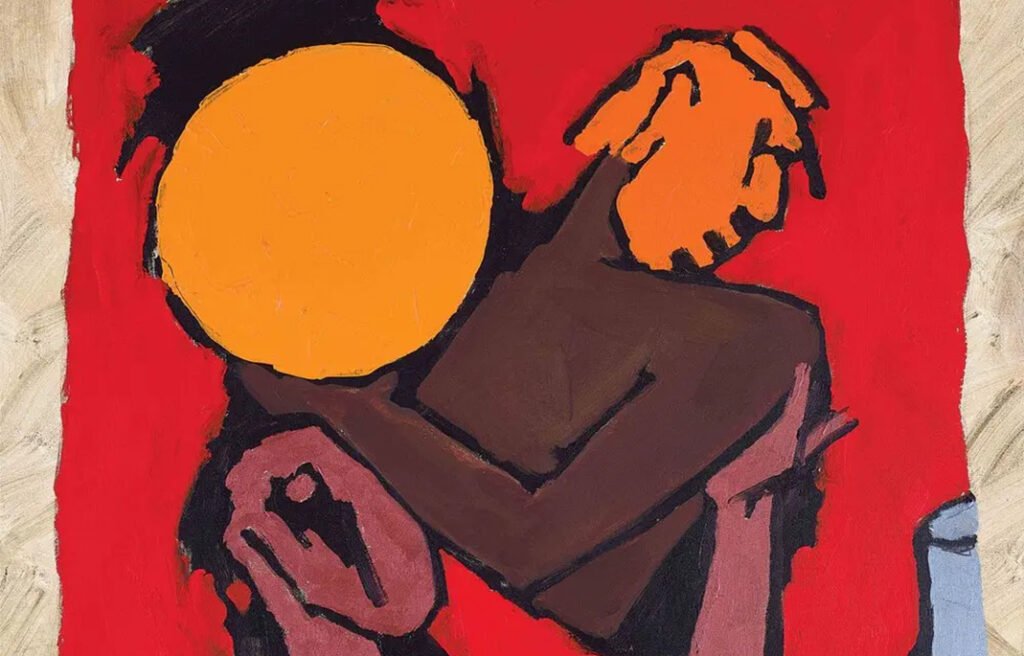
M.F. HUSAIN | Summer | 61 x 38 in | Acrylic on canvas | Sold in 2024 by AstaGuru for ₹2,33,23,113 ($265,035)

In a rising market, the Top 50 Indian artists generated a total turnover of ₹2,226.8 crore at auction in 2025, re-staking their claim toward the $1 billion mark. They sold 1,881 total lots, achieving an average price of ₹1.18 crore per work.

Topping the leaderboard was M.F. Husain at ₹465.8 crore, followed by Tyeb Mehta at ₹305.4 crore, F.N. Souza at ₹268.1 crore, S.H. Raza at ₹142.1 crore, and V.S. Gaitonde at ₹110.1 crore. The Top 3 alone accounted for ₹1,039.3 crore.

Further down, Jehangir Sabavala reached ₹92.3 crore, J. Swaminathan ₹85.2 crore, Krishen Khanna ₹59.6 crore, Ram Kumar ₹50.3 crore, and Manjit Bawa ₹49.7 crore. Amrita Sher-Gil hit ₹44.7 crore, Bhupen Khakhar ₹34.3 crore, Akbar Padamsee ₹33.8 crore, Anish Kapoor ₹31.1 crore, and N.S. Bendre ₹31.0 crore.

The list continued with Raja Ravi Varma at ₹23.1 crore, Rabindranath Tagore ₹22.6 crore, Ganesh Pyne ₹19.8 crore, and others like K.H. Ara, Arpita Singh, Thota Vaikuntam, Nalini Malani, Somnath Hore, Jamini Roy, and more down to Subodh Gupta.

This scale signals structural robustness, with Modern art leading despite Contemporary growth.

Read the full story in the premiere issue of LuxeTrope, on stands now.

Read More

India's art market has grown nearly 200-fold in 25 years, fuelled by record-breaking auctions and rising collector confidence

From Mughal jewels to ancient sculptures, 'Animalia' explores humanity's enduring fascination with the animal kingdom through rare works from The Al Thani Collection​

While India's iconic Progressives continue to dominate the market, a new wave of artists is rewriting auction records

Art historian, curator, and director of The Al Thani Collection, Dr. Amin Jaffer believes great collections are built on stories that connect cultures across time

The auction brought together leading names in Modern Indian art, with several works achieving standout prices

Ornamentation in Indian art tells stories of power, identity and cultural memory

How to Sell Art at Auction

How to Sell Art at Auction

A primer for beginners on the art of selling your collection at auction

M.F. HUSAIN | Untitled | 58 x 58 in | Oil on canvas | Sold in 2023 by AstaGuru for ₹5,64,41,933 ($641,385)

Consigning an artwork means giving it to an auction company like AstaGuru to sell on the collector’s behalf. For many collectors and enthusiasts, it is less about financial urgency and more about refining portfolios, collections, and legacies with care.

The process begins with valuation, which determines the right price for a work of art and is often offered as a complementary service by reputed auction houses. Rarity, provenance, and other unique details about the artist or artwork can shape that valuation. Preliminary photographs, along with size, medium, provenance, and dimensions, help assess the prospects of the work.

Auction houses can take two main routes with a consigned piece: they may place it in a public auction or sell it privately. Works valued at a certain threshold may also be exhibited before auction so interested viewers can see them in person. Private sales are handled through trusted advisors, without public auction or exhibition, allowing for bespoke negotiations and greater confidentiality.

The contract is another critical part of the process, covering the reserve price, duration of the deal, marketing responsibilities, and procedures for unforeseen events. It also sets out insurance responsibility, especially important when artworks are physically moved and handled.

Read the full story in the premiere issue of LuxeTrope, on stands now.

Read More

India's art market has grown nearly 200-fold in 25 years, fuelled by record-breaking auctions and rising collector confidence

From Mughal jewels to ancient sculptures, 'Animalia' explores humanity's enduring fascination with the animal kingdom through rare works from The Al Thani Collection​

While India's iconic Progressives continue to dominate the market, a new wave of artists is rewriting auction records

Art historian, curator, and director of The Al Thani Collection, Dr. Amin Jaffer believes great collections are built on stories that connect cultures across time

The auction brought together leading names in Modern Indian art, with several works achieving standout prices

Ornamentation in Indian art tells stories of power, identity and cultural memory