Long before François Paul Journe’s initials became shorthand for a sought-after name in independent horology, he was a young man in Paris with a workbench, a stack of 18th-century treatises, and an appetite for problems nobody had solved. Trained at the École d’Horlogerie, Journe spent his twenties restoring antique clocks and pocket watches, absorbing the logic of Breguet, Berthoud and the great constant-force thinkers rather than the fashions of the 1980s quartz era around him. By 1983, working alone in a small atelier on the Rue de Verneuil, he had completed his first watch entirely by hand: a tourbillon pocket watch with a spring-detent escapement. It would be two more decades, and a few one-off commissions for clients like Asprey, before he built anything resembling a company. That patience is the origin story the market keeps rewarding.
In 2025, the brand had a turnover of $72.80 million (₹691.6 crore) at auction, with 152 lots sold. This shows how much value is concentrated in a few pieces, illustrating F.P. Journe’s strong position in the market. Journe did not found his eponymous house until 1999, launching it with a 20-piece “souscription” series of resonance chronometers that collectors were asked to pay for in advance, sight unseen, to fund the workshop itself. It was an almost pre-modern act of faith, and has become the single most reliable predictor of value at auction since.
Of the five most expensive Journe watches to change hands under the hammer, two are souscription resonance pieces from that founding series, together accounting for nearly $19 million (₹180.5 crore). The watches that financed Journe’s independence are now underwriting his myth. The most expensive of the pair is the Chronomètre à Résonance Souscription No. 007, a pink gold and platinum dual-time piece built around Journe’s pioneering resonance escapement. It realised $13.92 million (₹132.2 crore), a figure that alone would rank it among the most valuable wristwatches sold at auction in the last five years. Its sibling from later in the same run, the Chronomètre à Résonance Souscription No. 18, made $6.27 million (₹59.57 crore).
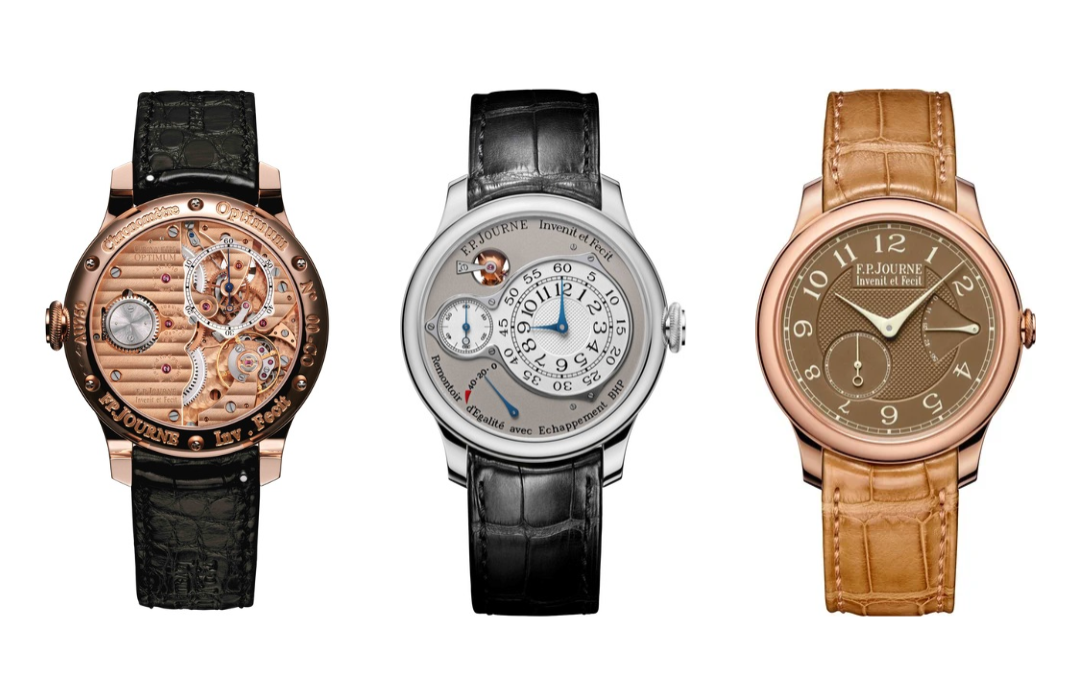
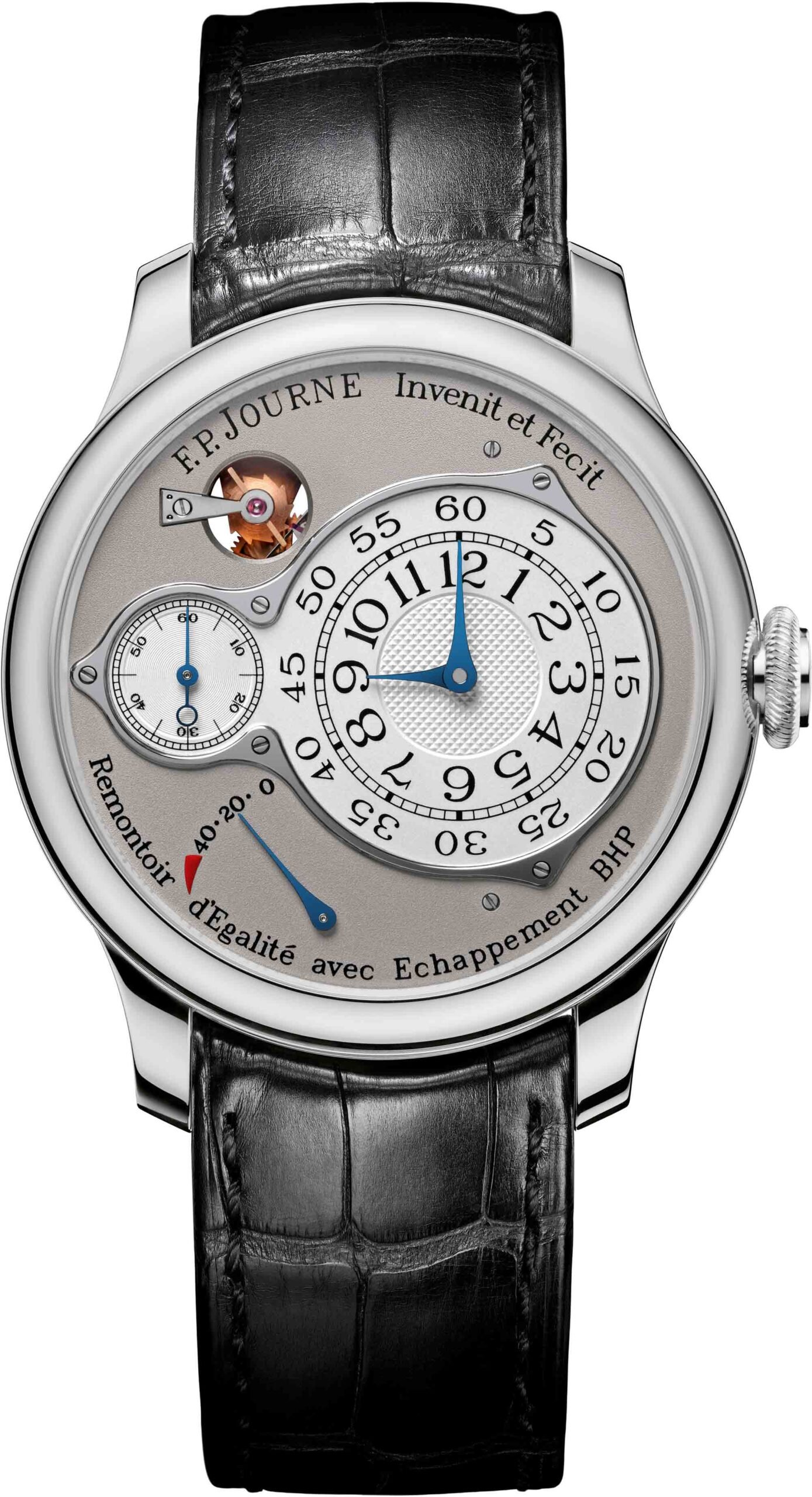
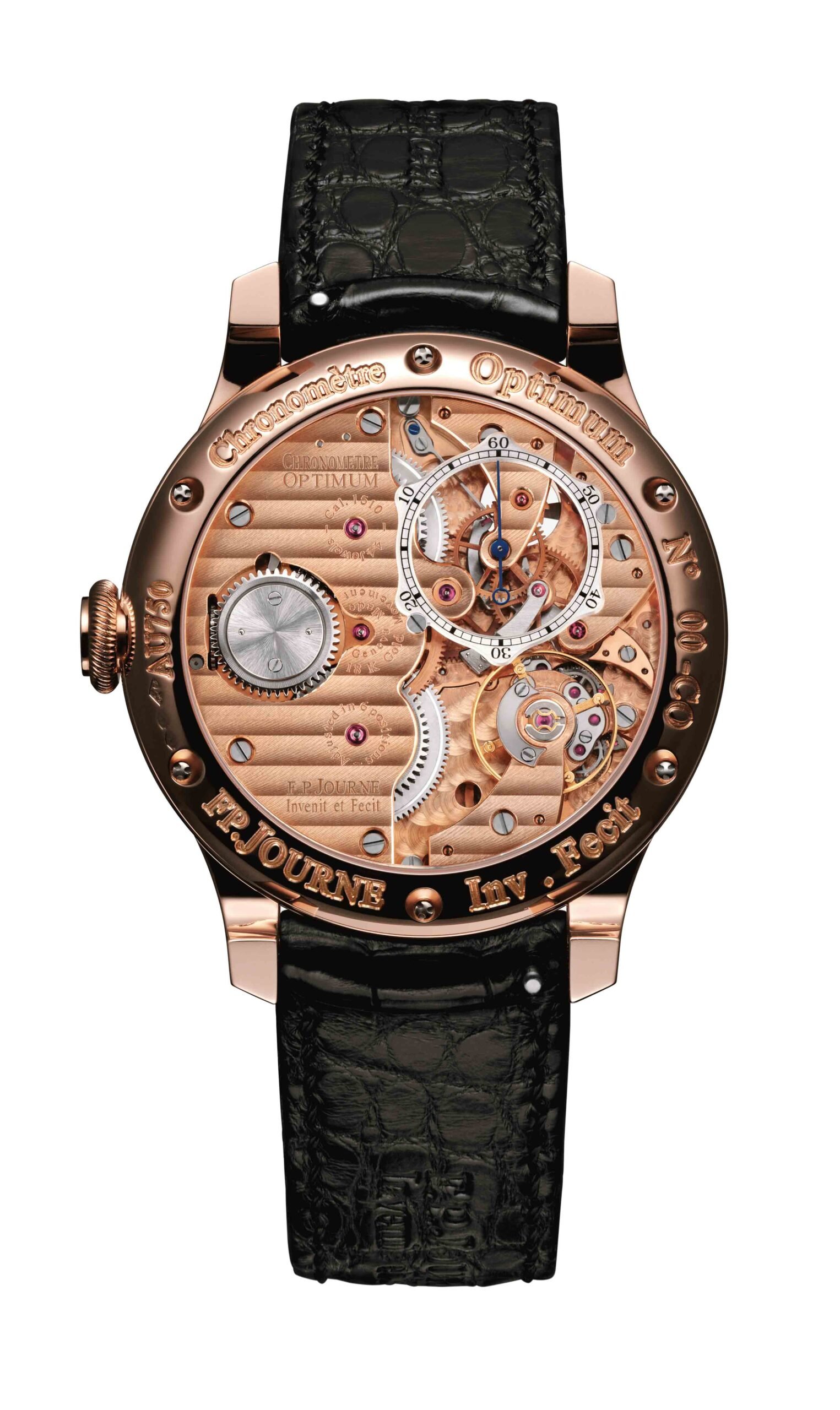
Between two watches from an identical 20-piece edition, made in the same year, that gap is itself a data point: in the Journe market, single-digit and low-double-digit numbers within a series can command a measurable premium over their higher-numbered stablemates, a phenomenon that is not lost on collectors. Older still, and arguably more historical, is the Tourbillon Souverain à Remontoire d’Egalité, a platinum wristwatch—the second wristwatch F.P. Journe built, and the first he sold, in 1993. Fully handmade by Journe himself, one of only three wristwatches to carry that distinction, it sold for $8.36 million (₹79.4 crore). It was sold with its original technical drawings, invoice, and even the sheet of raw metal from which its tourbillon cage had been cut. Journe himself serviced the watch in 2024, three decades after making it.
As one of the few living watchmakers to achieve such results, he has earned a stellar reputation in the industry. What makes Journe timepieces so desirable? The first is the rarity, of course. Second, even among independent watchmakers, the brand holds a storied place for its exceptional craftsmanship. Third, the market itself, which responds to collector signals. Take the other two top-selling watches; they belong to an entirely different chapter: Journe’s late-career collaboration with filmmaker Francis Ford Coppola and a dinnertable question in 2012 about whether a human hand could ever tell time. After seven years of development, the FFC—an automaton watch whose animated fingers indicate the hours—was born.
Coppola’s own prototype, engraved with his name in place of a serial number and built with an 18k pink gold rotor, sold for $10.76 million (₹102.22 crore). Its cousin, the tantalum-cased FFC Blue, brought roughly $4.5 million (₹42.75 crore). Coppola, for his part, treated the collaboration as an exchange—an “invenit” to Journe’s “fecit,” in Latin, meaning one that conceives and one that makes. For a maker who still, more than 40 years and fewer than 900 watches a year later, signs every movement he produces by hand, there could not have been a better homage. For collectors, these tales are not just stories. They are perhaps sequences in a series of tangible factors that accord value.
Read the full story in the special ‘Horology Issue’ of LuxeTrope, on stands now.