

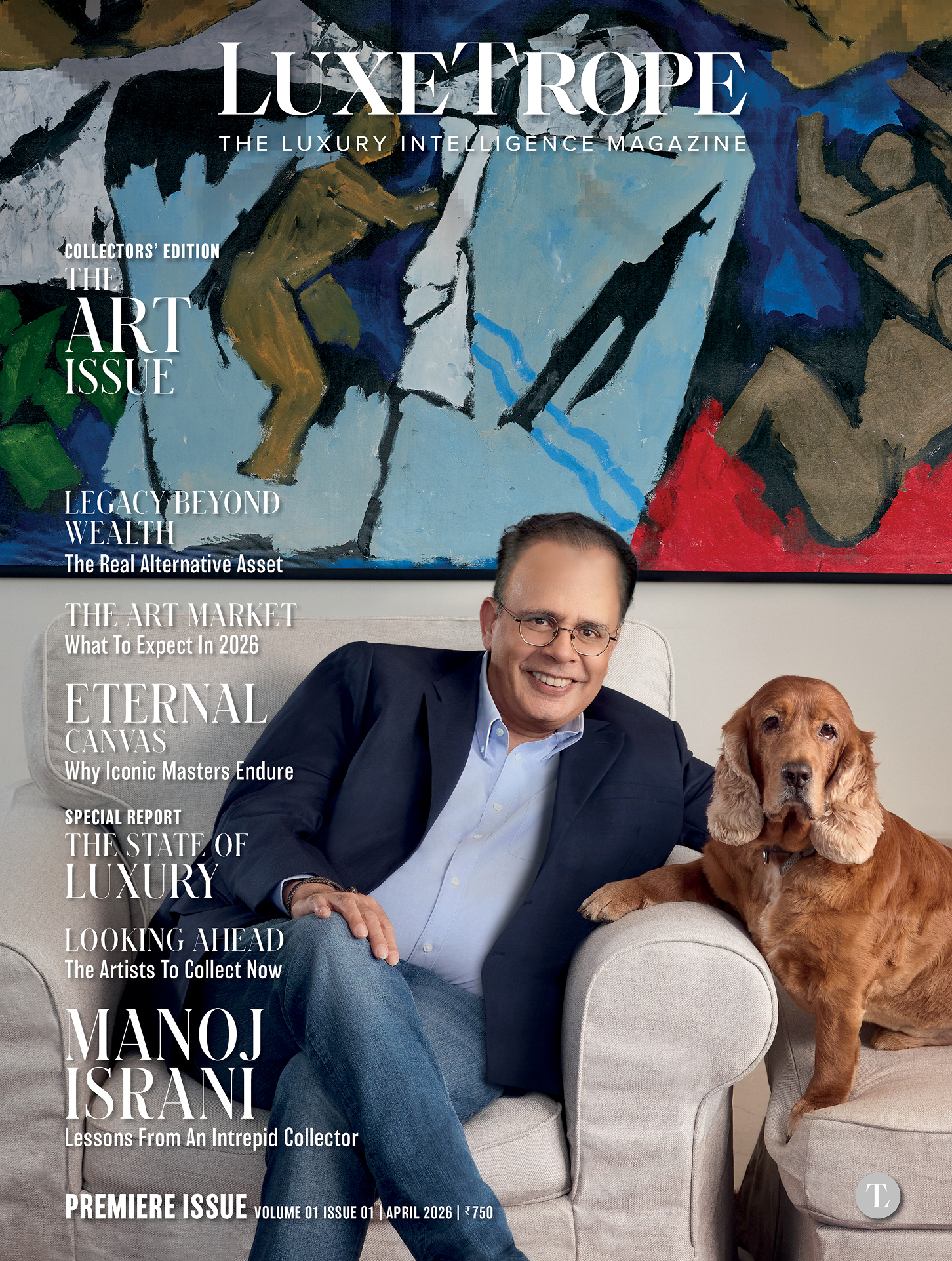
₹1,000.00
IN THIS ISSUE
The recent sale of a Gustav Klimt portrait made headlines across the world, and for good reason. It was his oil painting that depicted a young Elisabeth Lederer, the daughter of prominent Viennese art patrons, that was sold for $236.4 million after a 20-minute bidding war, becoming the second most expensive work ever sold at auction. While the Survey of Global Collecting by Art Basel and UBS reported a 12 per cent drop in global art sales, this proves that the art market is showing signs of a revival. Auction houses sold $2.2 billion worth of art in November auctions, recording a 77 per cent increase over last year’s sales.
Despite economic shifts and geopolitical events, the market has demonstrated a quiet resilience. A growing interest from new wealth demographics and a shift towards digital art forms are currently reshaping the art landscape. In many cases, millennial and Gen Z collectors are entering high price segments, supported by inheritances from their forebears. Experts also note that interest in Surrealism has risen significantly over the past few years, now appealing to both seasoned collectors and new buyers.
While the global art market gains ground, it also highlights a stark gender disparity, where works by women artists command significantly lower prices than those by their male counterparts. During the recent marquee auctions, works by women represented less than 15 per cent of the art on offer. Every one of these works could be purchased for $207 million—still $29 million less than the single Klimt portrait.
A handful of legendary artists continue to dominate the art ecosystem, with collectors still placing big bets on names with historical acclaim and legacy such as Pablo Picasso, Andy Warhol, Yayoi Kusama, Marc Chagall, Joan Miró, Jean-Michel Basquiat, and Damien Hirst future when collecting art may not remain the prerogative of just the ultra-wealthy.
Description
The recent sale of a Gustav Klimt portrait made headlines across the world, and for good reason. It was his oil painting that depicted a young Elisabeth Lederer, the daughter of prominent Viennese art patrons, that was sold for $236.4 million after a 20-minute bidding war, becoming the second most expensive work ever sold at auction. While the Survey of Global Collecting by Art Basel and UBS reported a 12 per cent drop in global art sales, this proves that the art market is showing signs of a revival. Auction houses sold $2.2 billion worth of art in November auctions, recording a 77 per cent increase over last year’s sales.
Despite economic shifts and geopolitical events, the market has demonstrated a quiet resilience. A growing interest from new wealth demographics and a shift towards digital art forms are currently reshaping the art landscape. In many cases, millennial and Gen Z collectors are entering high price segments, supported by inheritances from their forebears. Experts also note that interest in Surrealism has risen significantly over the past few years, now appealing to both seasoned collectors and new buyers.
Additional information
| Weight | 0.5 kg |
|---|---|
| Dimensions | 30 × 18 × 30 cm |