Before the invention of community clocks and wristwatches, people in India tracked time using water clocks, sundials, and observing celestial bodies—the sun, moon, and stars. A sinking bowl water clock measured short intervals of time using a perforated bowl that slowly filled and sank. In 18th century Jaipur, Jai Singh II’s Jantar Mantar served as a site for astronomical observations. These methods are not simple predecessors of the wristwatch, but they show that time has historically been both a practical measurement and a way of understanding the world.
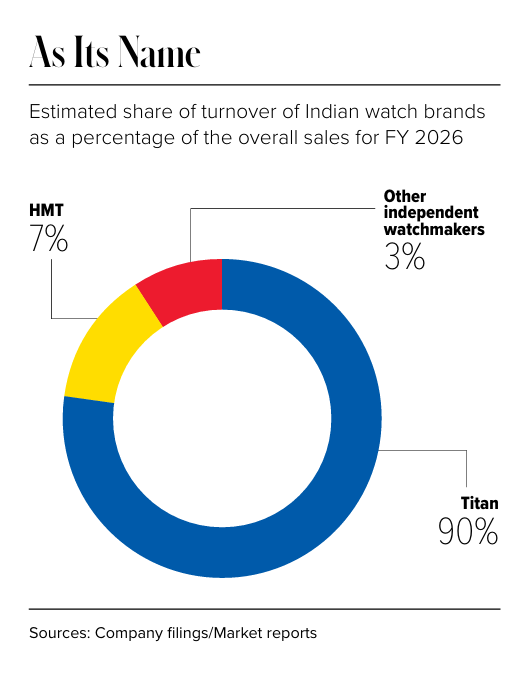
The railways standardised time for coordination, with India adopting a time zone five and a half hours ahead of Greenwich in 1905 for railways and telegraph offices. Wristwatch manufacturing took a different path: HMT launched India’s first wristwatch factory in Bengaluru in 1961, in partnership with Japan’s Citizen Watch Co. Titan, currently India’s largest watchmaker, was founded in 1984. Today, the industry includes a diverse range of makers, each exploring its own vision of what an Indian watch can be.
Titan’s Edge series exemplifies this capability, ranging from the ultra slim quartz watch launched in 2002 to mechanical models, including the 2026 Edge Ultraslim Mechanical. Kalpana Rangamani, Chief Sales & Marketing Officer of Premium & Luxury Watches at Titan, says, “The defining decision was to treat thinness as an architectural challenge rather than a styling exercise—the movement, display, case and every component had to be considered together from the beginning. With components operating at fractions of a millimetre, the challenge is not simply removing material, but preserving reliability, structural integrity, and wearability within those extremely tight tolerances.”
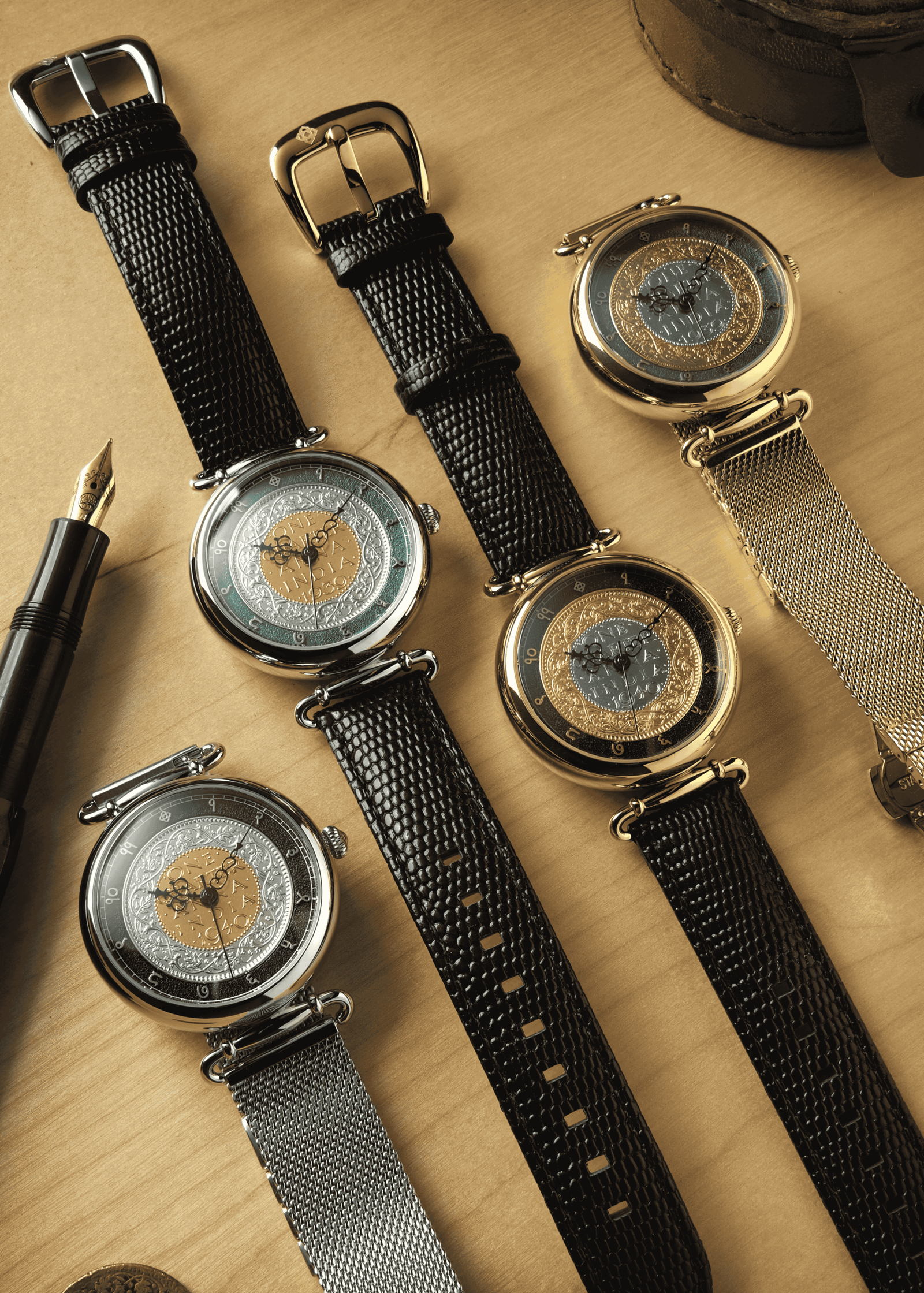
In 2026, Titan, Jaipur Watch Company, Bangalore Watch Company, and Delhi Watch Company showcased watches at the Grand Prix d’Horlogerie de Genève (GPHG). The question is whether a cultural reference truly transforms the watch or simply gives it a theme. Jaipur Watch Company’s One Collection offers a clear example. Gaurav Mehta, CEO and Founder, shares, “For us, the story always comes before the decoration. An object has to carry a genuine connection to India’s history, culture or craftsmanship, but equally importantly is that it has to belong on a watch.”
Read the full story in the special ‘Horology Issue’ of LuxeTrope, on stands now.