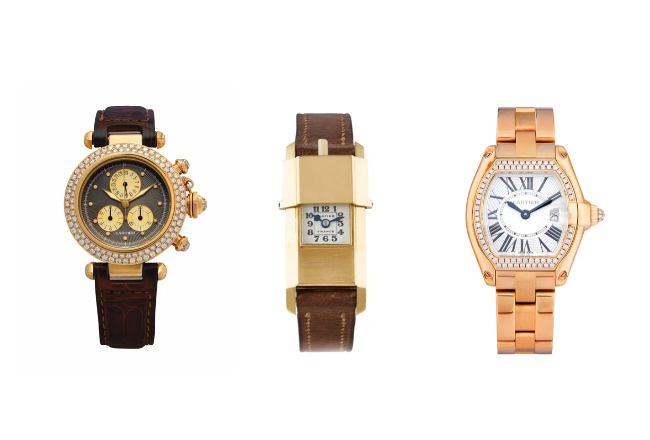
Cartier’s reputation in watchmaking rests on an exceptional ability to turn shapes into signatures. From the geometric elegance of the Tank to the unconventional curves of the Crash, the maison has created designs that transcend trends. At auction, these distinctive cases, combined with rarity and provenance, have made certain Cartier watches exceptionally desirable.
Founded in Paris in 1847 by Louis-François Cartier, the house gradually established its identity through bold design choices and technical innovation. Its early use of platinum helped reshape jewellery design, while its association with aviator Alberto Santos-Dumont contributed to the evolution of the wristwatch. By the 1960s, Cartier’s London branch, led by Jean-Jacques Cartier, was developing a creative identity of its own.
The Crash and its Auction Legacy
The result was the Crash. Introduced in 1967, approximately 20 examples were made in yellow gold for the London boutique. Its distorted case became one of the most recognisable designs in watchmaking. Today, vintage London Crash watches dominate Cartier’s auction record. A 1990 example sold for CHF 1.585 million in May, while a rare 1987 variant achieved $1.99 million in 2026. An early 1967 example had previously sold for $1.65 million in 2022.
Cartier continued to experiment with the design. Its Crash Squelette replaced the conventional dial with bridges shaped into Roman numerals. A diamond-set platinum example, accompanied by its original documentation, sold for $1.17 million.
Beyond the Crash: A Legacy of Design
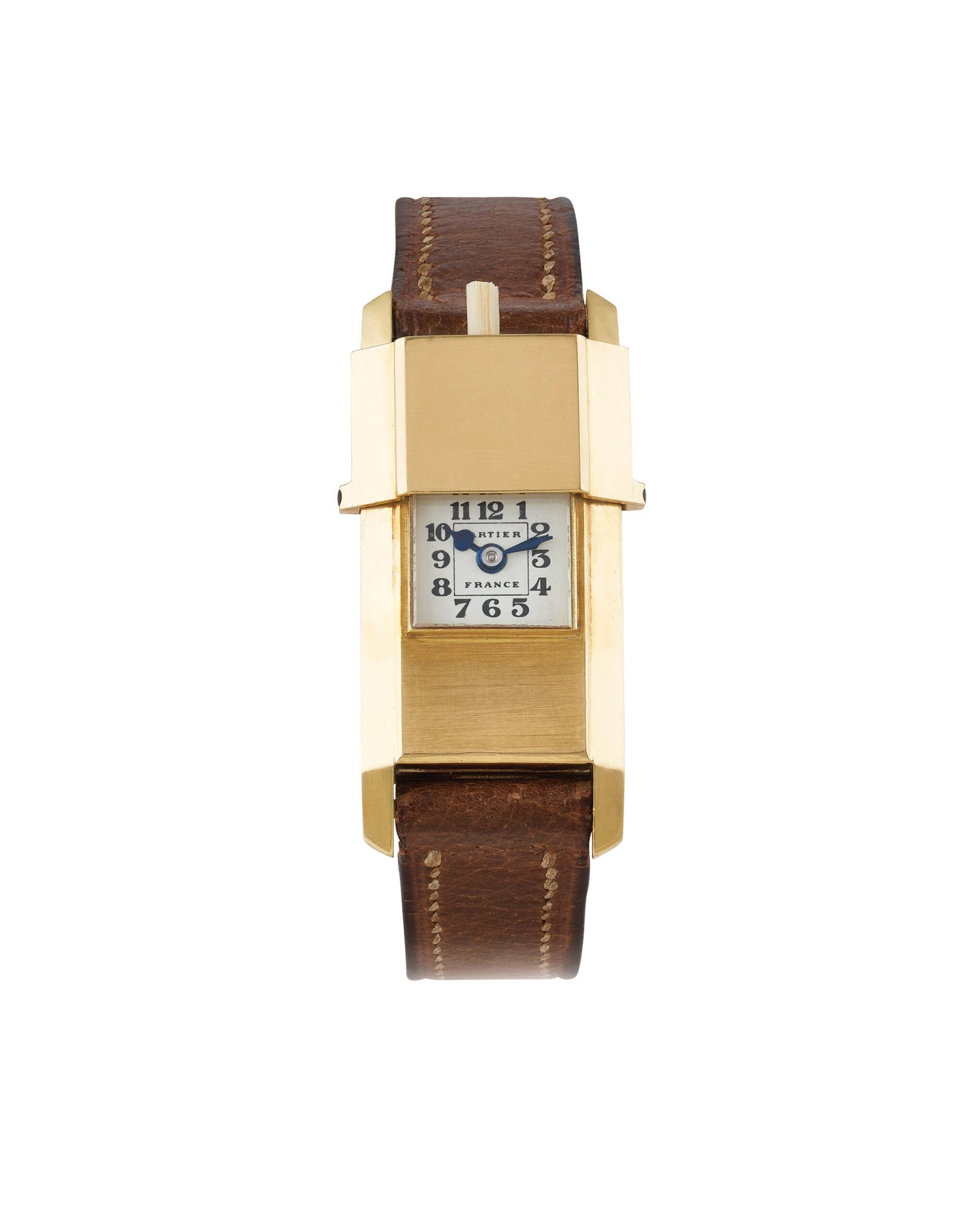
Yet the Crash represents only one part of Cartier’s design legacy. The Tank, Santos, Panthère, Ballon Bleu, Pasha, Tonneau and Tortue each demonstrate the maison’s ability to give familiar forms a distinctive identity. Its unusual creations have also attracted collectors, including the limited-edition Cheich. Made in just four examples for the Paris-Dakar rally, one awarded to rally champion Gaston Rahier sold for $1 million.
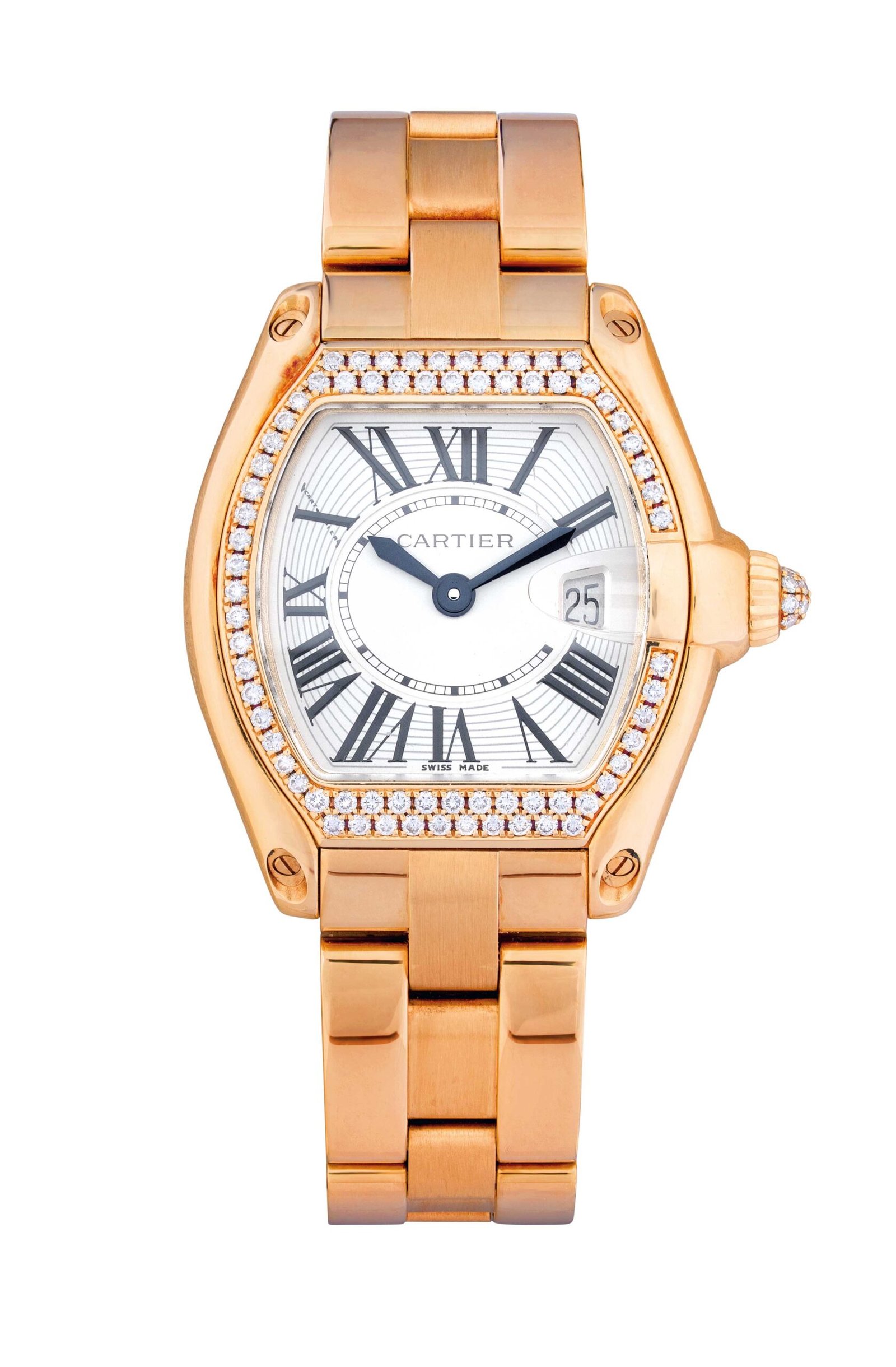
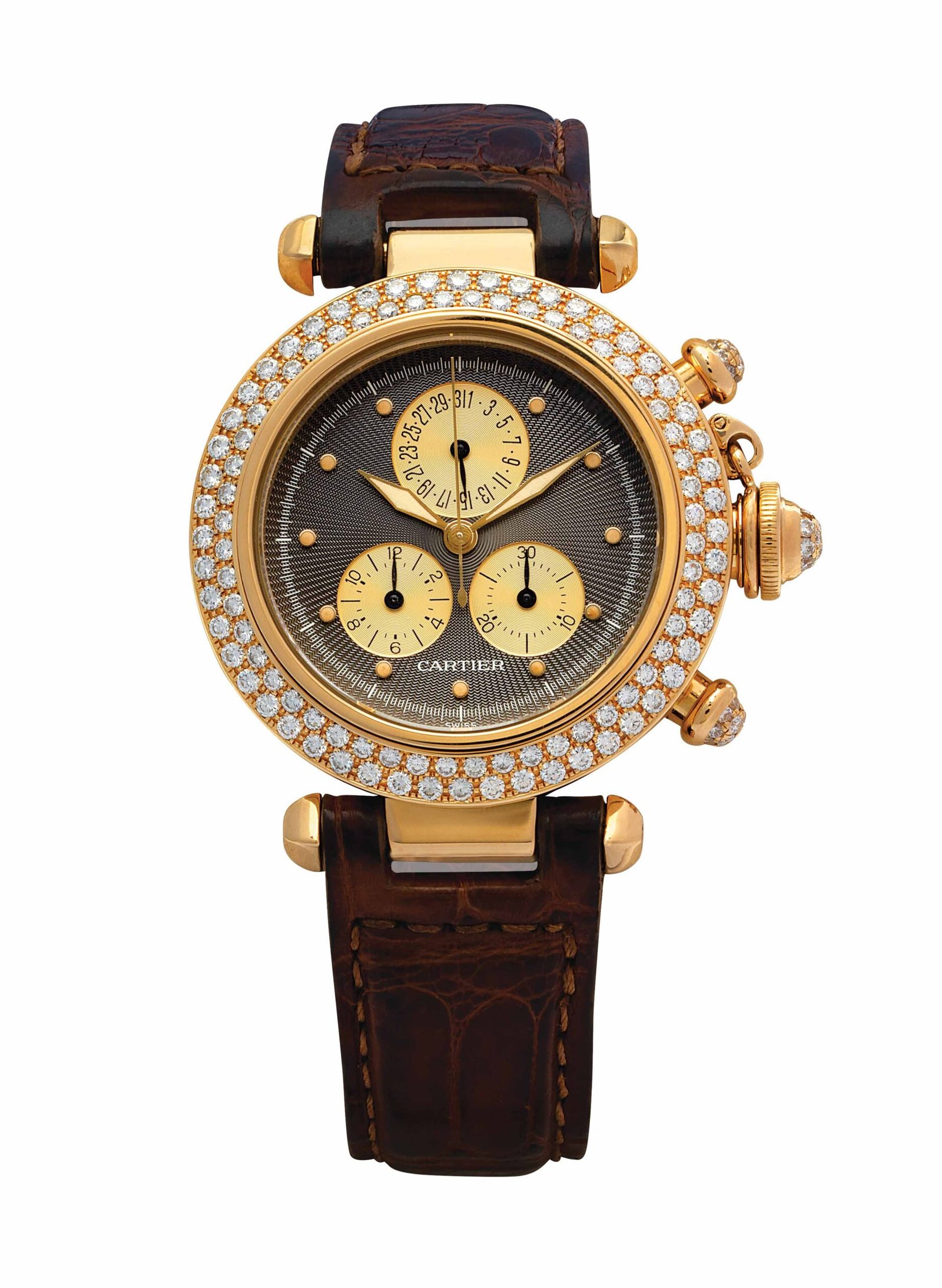
The Indian auction market reflects the same appetite for rarity. A limited-edition Cartier Tortue with a hand-painted cloisonné enamel dial sold through AstaGuru for ₹44.39 lakh in 2024. A gold Roadster achieved ₹17.36 lakh in 2026, while a 1990 Pasha in rose gold sold for ₹13.83 lakh.
Cartier’s appeal ultimately extends beyond precious metals and complications. Collectors value the design, the rarity and the history attached to each reference. With the right provenance and documentation, a distinctive case can become far more than a housing for a movement. It becomes the defining signature of a watch.
Read the full story in the special ‘Horology Issue’ of LuxeTrope, on stands now.