
In Conversation With GPHG President Raymond Loretan
Raymond Loretan pulls back the curtain on the GPHG’s vision, and explains how the Academy keeps its voting process independent and fair

Since 2001, the GPHG’s aim has been to recognise and reward the boundary-pushing creativity of modern timekeeping. Every November, the annual awards ceremony crowns the best in the field, but the excitement—and the work—begins much earlier. Each autumn, the GPHG takes the nominated masterpieces on a roadshow across major global cities, in a bid to showcase exceptional engineering and engage with international watch communities. Ahead of this year’s ceremony on November 7, we spoke with Raymond Loretan, who pulls back the curtain on the organisation’s vision, and explains exactly how the GPHG Academy keeps its voting process independent and fair.
You took over as President of the GPHG in 2018. Looking back over these eight years, what is the biggest change you’ve led at the foundation?
Without hesitation, the creation of the GPHG Academy in 2020. We moved from a system centred around a relatively small jury to a much broader international community of watchmaking professionals, experts, collectors, retailers, journalists, and artisans. Today, the Academy brings together around a thousand members from across the world and embodies the three principles that have guided the transformation of the GPHG: neutrality, universality and solidarity.
Neutrality, because no individual or small group should determine the outcome. Universality, because watchmaking today is a global culture and the GPHG must reflect that diversity. And solidarity, because participating in the GPHG is also a way for the industry to promote the art and culture of watchmaking. I believe the next major evolution could be to explore how the GPHG can become even more universal in its recognition of watchmaking excellence—including, for certain distinctions, beyond the circle of brands formally taking part in the competition.
How has the watch industry transformed in that time?
It has become simultaneously more global, more diverse and, I would say, more open. Independent watchmakers have gained extraordinary visibility, while collectors are becoming increasingly knowledgeable and connected. New markets and new watchmaking cultures are emerging. Digital communication has profoundly changed the relationship between brands and consumers, while younger generations are approaching watches with different expectations. But there is an interesting paradox: the more digital our lives become, the stronger the fascination seems to be with craftsmanship, authenticity and mechanical creativity. We no longer need a mechanical watch to know the time, and yet we continue to desire watches. That tells us something important: their value has moved far beyond their original function.
With decades of experience across politics, media, diplomacy, and business, where did your own interest in watchmaking begin?
I was never a watchmaker, nor did I come to the GPHG as a collector. My professional life took me through politics, diplomacy, media and business. But as a Swiss diplomat, I encountered watchmaking all over the world as one of the most powerful expressions of creativity and identity. Asia played an important role in this discovery. When I was Ambassador to Singapore from 1997 to 2002, I was struck by the passion and knowledge surrounding Swiss watches. I attended boutique openings and watchmaking events and met collectors whose knowledge sometimes seemed encyclopaedic. It made me realise that a watch is one of those rare objects where engineering, craftsmanship, art, history, and emotion come together. So, when Carlo Lamprecht asked me years later to succeed him as President of the GPHG, I did not approach the position as a watch expert; I approached it as a diplomat.
How has your experience in international relations helped you navigate the complex world of the global watch trade?
Diplomacy teaches you to listen before you speak, to understand interests that are not necessarily your own, and to build bridges without losing your independence. Those skills are surprisingly relevant to watchmaking. The watchmaking world is extraordinarily diverse. You have major historic groups, family-owned companies, independent creators, artisans, retailers, collectors, journalists and institutions. They don’t always have the same interests, and sometimes they are competitors. The GPHG must speak to all of them while belonging to none of them. You create trust by being predictable, impartial, and respectful of differences. And you learn something else in diplomacy: credibility takes years to build and very little time to lose. For the GPHG, independence and impartiality are, therefore, not theoretical principles; they are our capital.
It’s been noted in past interviews that you stopped wearing watches to stay true to GPHG’s principles of neutrality and credibility. Does that still hold true?
Yes, absolutely. When I became President, I decided not to wear a traditional watch because I did not want anyone to interpret what I had on my wrist as a preference for one brand over another. People sometimes find this paradoxical—the President of the GPHG who does not wear a watch! I rather like the paradox. I own watches, of course. But while I hold this position, my wrist remains neutral. It’s a small personal discipline, perhaps even a symbolic one. But symbols matter. I believe the President of the GPHG should have neither a favourite brand nor a favourite watch.
The GPHG is frequently celebrated as the “Oscars of Watchmaking.” Can you take us behind the scenes of the selection and voting process?
The comparison is flattering, but behind the glamour of the ceremony there is a very rigorous process. For the 2026 edition, 194 brands entered 320 timepieces across 14 categories. During the summer, the GPHG Academy voted electronically to select the 78 nominated timepieces. Those 78 watches then travel internationally, allowing the public, collectors and professionals to discover them, before being physically examined by the Jury. This year the Jury consists of 24 personalities and is chaired by Wei Koh.
The final stage combines two perspectives. The Academy votes again electronically, while the Jury meets behind closed doors in Geneva to physically examine the watches, debate, and cast its votes. The process is secret and independently supervised. Even as President of the Foundation, I do not know the winners in advance. That combination is essential: the broad international perspective of the Academy on the one hand, and the concentrated physical examination and deliberation of the Jury on the other.
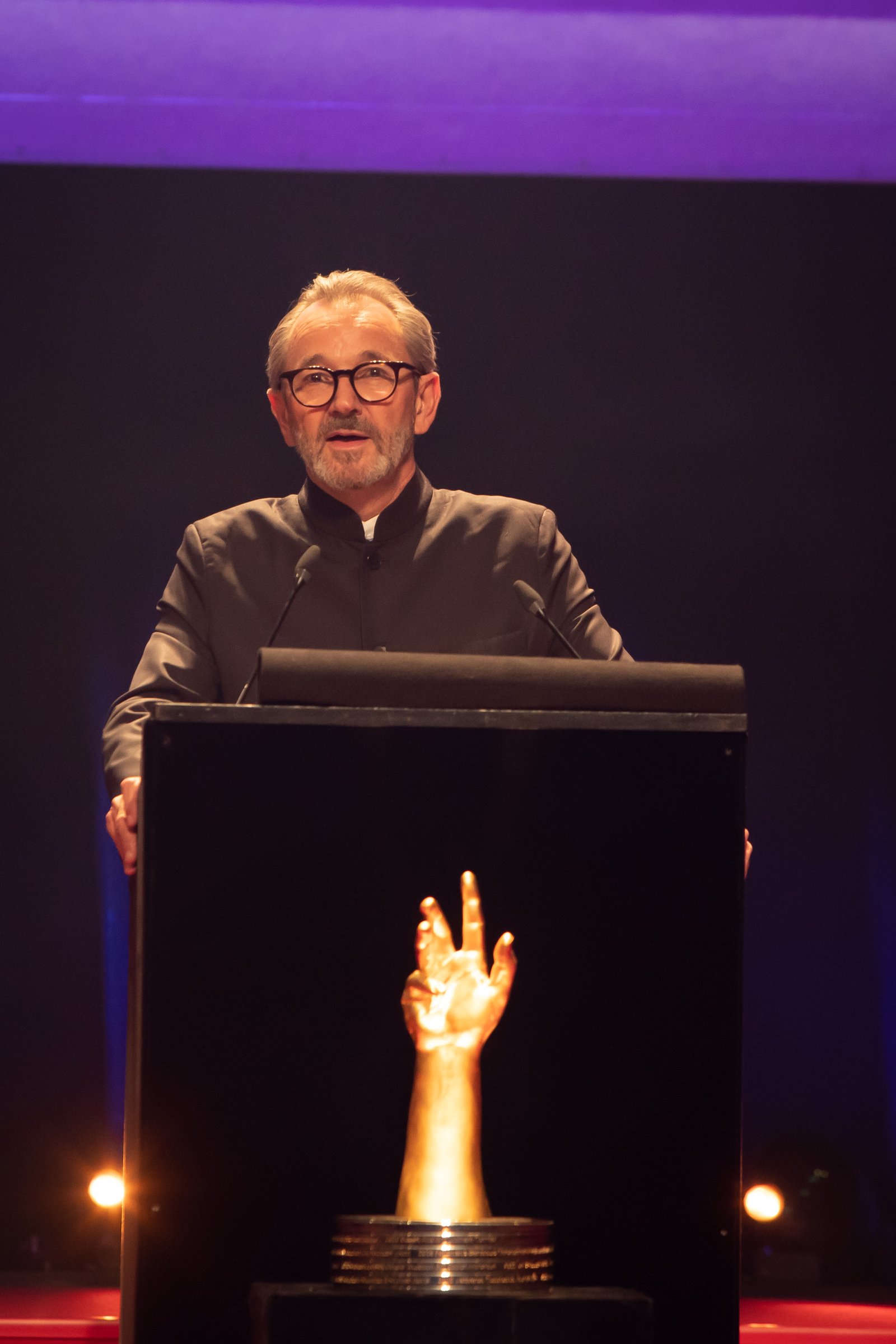
With the Academy expanding to over a thousand members globally, how do you ensure that voting results remain neutral and true to GPHG’s principles?
Paradoxically, size and diversity are part of the answer. The larger and more diverse the Academy becomes, the more difficult it becomes for any particular interest to dominate the collective result. You also need clear rules, confidentiality, secure voting procedures, independent supervision and strong safeguards against conflicts of interest. The Academy brings together different colleges representing different parts of the watchmaking ecosystem. We continuously review our procedures because credibility is never something you can take for granted. Neutrality does not mean that people have no preferences; it means creating a system in which individual preferences are balanced by the diversity and independence of the collective.
What is the single most important piece of advice you would offer to someone stepping into the luxury watch market for the first time?
Do not begin with the price, begin with curiosity. Try watches on your wrist and meet watchmakers if you have the opportunity. Understand what lies behind a movement, a complication, a design or a particular maison. And then choose the watch that speaks to you—not one that somebody tells you that you ought to buy. A fine watch can have technical, aesthetic, historical, emotional and sometimes financial value. But I would be cautious about entering watchmaking primarily as an investment. A watch is ultimately an intimate object. You wear it on your body, sometimes for decades. The most interesting collection is, therefore, not necessarily the most expensive one. It is the collection that tells you something about the person who assembled it.
The GPHG is making a debut stop in Mumbai this year. What is your favourite part about bringing the roadshow to India once again, and how do you select new destinations for the roadshow?
Bringing the 2026 selection to Mumbai is a particularly exciting new chapter. We are going to meet collectors, professionals, the media, and the wider watch community. India is undergoing an extraordinary economic and cultural transformation, but what interests me most is the emergence of a genuine watch culture. When selecting destinations, we look both at established as well as developing watchmaking communities. We also need strong local partners who share our ambition to promote watchmaking as a culture. In this respect, I would like to thank Yashovardhan Saboo and the entire Ethos team for hosting the GPHG in Mumbai.
What is your mindset ahead of this year’s award ceremony, and what makes the 2026 competition exciting for you?
Curiosity—and perhaps a little impatience! Collectively, the 2026 competition tells a fascinating story about contemporary watchmaking: tremendous technical creativity, the continuing strength of independent watchmaking, growing international participation, and a constant dialogue between tradition and innovation. We have introduced significant changes to our categories and reduced the Jury from 30 to 24 members. For the first time, we are opening certain distinctions beyond the formal perimeter of the competition. The ‘Iconic Watch Prize’ may be awarded to an eligible timepiece whether it has been entered in the competition or not. And the ‘Special Jury Prize’, which can recognise a personality, an institution or an initiative, may now also honour a brand for a significant development.
With an increase in Indian submissions to the GPHG, are we witnessing a shift in how the global watch community views Indian horology, or is this just the beginning of a long journey toward international recognition?
I would say both—a shift is beginning, and the journey is only starting. What matters first is that Indian watchmakers increasingly have the confidence and ambition to enter an international competition such as the GPHG. International recognition is built over time through creativity, quality, consistency and, above all, a distinctive identity. And this is where I think India has enormous potential. India possesses extraordinary traditions of craftsmanship, design, jewellery, decorative arts, and a rich visual culture.
The interesting question is not whether Indian watchmaking can imitate Swiss watchmaking—it should not. The opportunity is to develop something recognisably Indian and at the same time fully contemporary. So, my message to Indian watchmakers would be very simple: be ambitious, be distinctive, keep creating, and keep competing.
How do you see India’s watch market evolve in the coming years?
India is clearly one of the markets that deserves very close attention. It’s a combination of economic development, entrepreneurial energy, increasing purchasing power and a young and increasingly knowledgeable consumer base. Recent Swiss export figures have also shown strong momentum in India, even while the global watch industry has been navigating a much more uncertain environment. But I would not reduce India’s potential to sales figures. What interests me more is the development of an entire ecosystem of sophisticated collectors, strong retailers, specialised media, watch communities, events, and watchmakers. There is a difference between a country buying more watches and a country developing a culture of watchmaking. My impression is that India is increasingly doing both.
What are your predictions for the haute horlogerie segment over the next three years?
I’m always cautious with predictions. The watch industry currently operates in a demanding environment. Geopolitical uncertainty, trade tensions and changes in important Asian markets all require caution. But several deeper trends seem quite robust. At the very high end, clients increasingly value authenticity, rarity, craftsmanship and a distinctive creative identity. That helps explain the remarkable vitality of independent watchmaking. Heritage remains extremely powerful too, provided it is combined with creativity and genuine innovation rather than simply nostalgia.
Geographically, the United States remains a major market, Asia remains fundamental despite the adjustments taking place in China, and the Middle East has developed a highly sophisticated collecting culture. India is clearly a market with considerable long-term potential. From the perspective of the GPHG, we are interested not only in where watches are being sold, but where watch culture is being created.
Purely as a global citizen, how do you think the concept of how we view a watch has evolved?
There is a wonderful paradox at the heart of contemporary watchmaking. For centuries, we needed watches to know the time. Today, we are surrounded by devices that give us the time more accurately than any mechanical watch ever needs to. And yet the mechanical watch continues to fascinate us. Why? Because perhaps we no longer wear a watch simply to know the time; we wear it to express our relationship with time.
A mechanical watch brings together human ingenuity, craftsmanship, patience, beauty and transmission. And in a world increasingly dominated by speed, algorithms, virtual experiences and rapid obsolescence, there is something almost reassuring about an object designed to endure. Perhaps this is also why younger generations are discovering mechanical watchmaking with such enthusiasm. The more immaterial our lives become, the more value we may attach to objects that carry human skill, history and permanence. So, for me, the evolution is quite profound. Watches no longer simply tell us what time it is; they remind us that time has value.