Where are India’s Wealthy Investing?
India's UHNIs are looking beyond traditional investments, bringing private equity, real estate and luxury collectibles into portfolios

Diversification is no longer limited to equities and bonds. India’s ultra-high-net-worth individuals (UHNIs) are increasingly exploring alternative investments, from private equity and real estate to fine art, jewellery and luxury collectibles. As wealth creation accelerates, portfolios are expanding to include assets that offer both financial opportunities and personal appeal.
Over the past decade, allocations to alternative assets among Indian UHNIs and family offices have risen from 11 per cent to an estimated 25–30 per cent in 2026. Alternative Investment Funds (AIFs), private equity, private credit, structured debt and real estate remain important drivers. Luxury property investments across Dubai, London, Singapore, Greece and Portugal have also attracted interest.
A Younger Generation of Wealth Creators
India’s changing wealth landscape is being shaped by a younger generation of entrepreneurs. Start-up growth, increased liquidity and IPOs have helped create new fortunes. According to the 360 ONE Wealth Creators List 2026, produced with Crisil Intelligence, the median age of UHNIs has fallen to 57, from 60–63 a decade ago.
The study mapped 3,040 individuals with a minimum wealth of ₹425 crore ($44.7 million). Around 58–60 per cent were below 60, while approximately nine per cent were under 40. This generation is exploring diversification earlier, looking beyond traditional financial instruments.
The Rise of Passion Assets
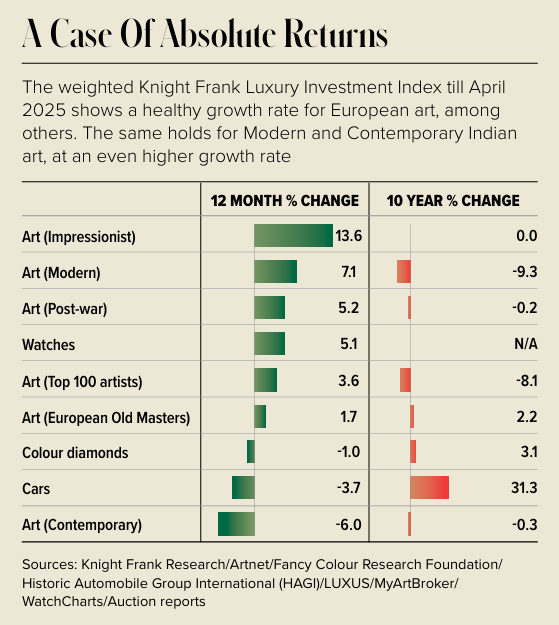
Luxury collectibles are also finding a place in wealth portfolios. Watches, jewellery, antiques, fine art, vintage cars and other prized objects were traditionally viewed as expressions of personal taste or status. Today, they are increasingly considered alongside other alternative assets.
According to Knight Frank’s Wealth Report 2026, Indian UHNIs allocate approximately 17 per cent of their investable wealth to luxury assets. This reflects growing interest in tangible objects with artistic, cultural and historical significance.
As investment strategies evolve, the distinction between financial diversification and personal passion is becoming less pronounced. For India’s wealthy, collecting is increasingly part of a broader approach to managing and expressing wealth.
Read the full story in the special ‘Horology Issue’ of LuxeTrope, on stands now.