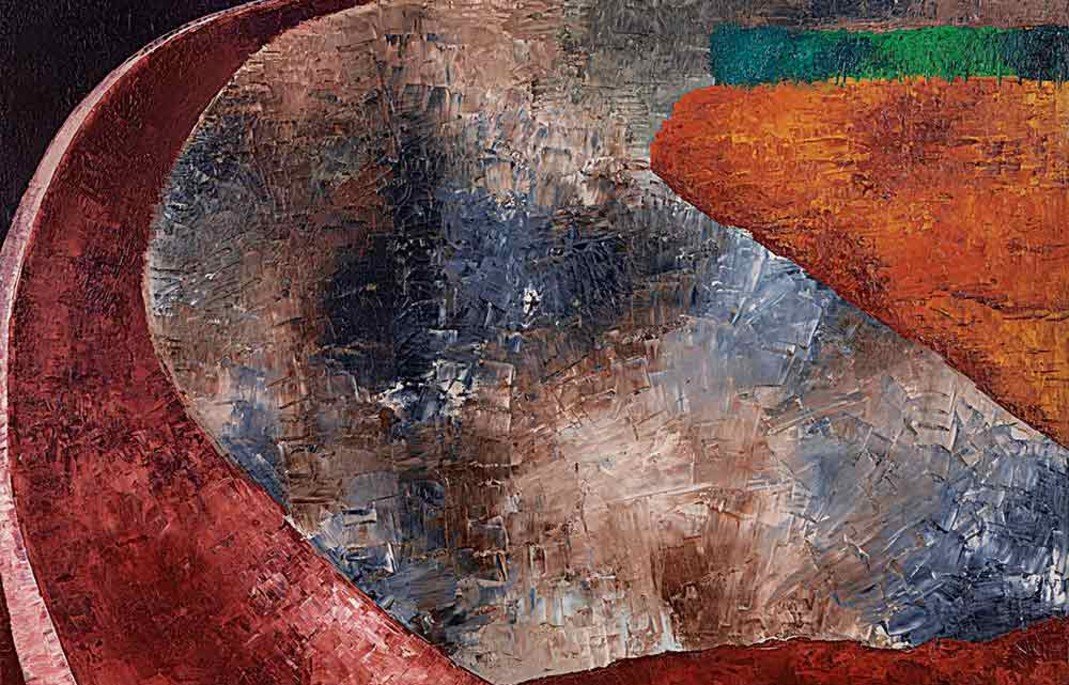
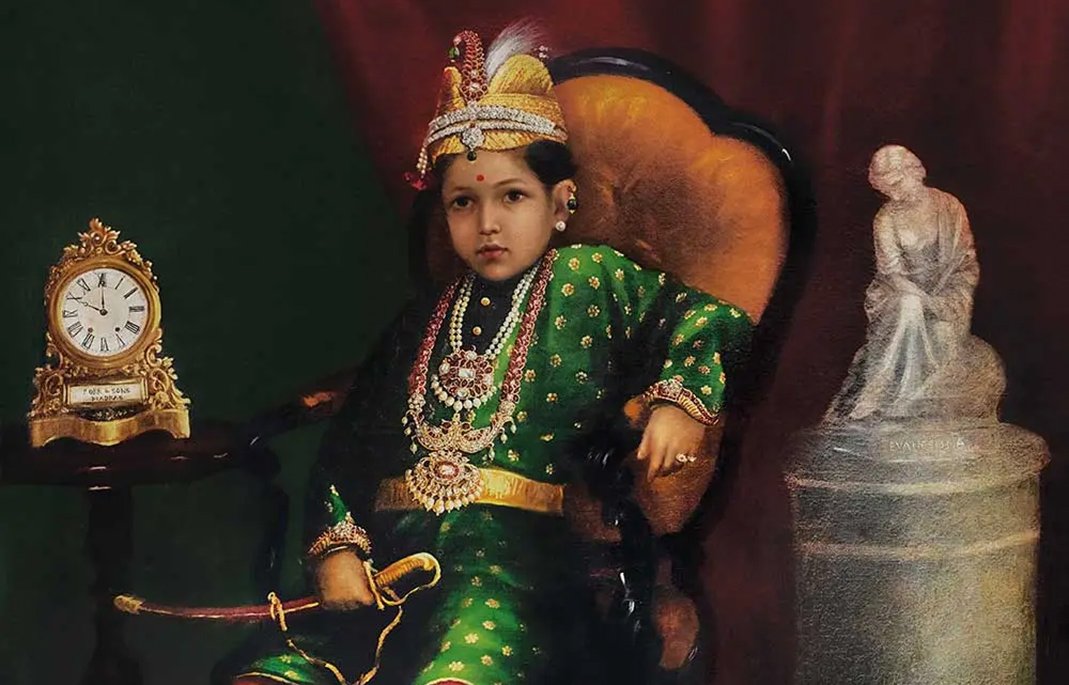
In the Indian art market, the Navratna artists remain icons, making them an essential part of our living history and an unquestioned draw at auctions. They are nine towering figures—Raja Ravi Varma, Amrita Sher-Gil, Jamini Roy, Rabindranath Tagore, Nandalal Bose, Abanindranath Tagore, Gaganendranath Tagore, Sailoz Mookherjea, and Nicholas Roerich—who influenced the development of Indian art from the late 19th to the early 20th century.
Raja Ravi Varma is described as arguably the first Indian artist to operate within a recognisable national art economy. His mastery of European academic Realism and his adoption of oil painting marked a decisive shift in Indian visual culture, amplified by the wide circulation of his chromolithographic prints. As a result, important original oils are rare, and the appearance of a significant Ravi Varma canvas at auction becomes a notable event capable of shifting the price index for these pioneers of Modern art.
The transition from academic realism to cultural nationalism was articulated most powerfully through the Bengal School, led by Abanindranath Tagore. He and contemporaries such as Nandalal Bose, Rabindranath Tagore, Gaganendranath Tagore, and Sailoz Mookherjea rejected colonial aesthetics to construct an indigenous visual language rooted in Indian tradition, spirituality, and identity. Their works were produced in small quantities and are intrinsically fragile, concentrating demand around rare, historically significant, and well-preserved pieces.
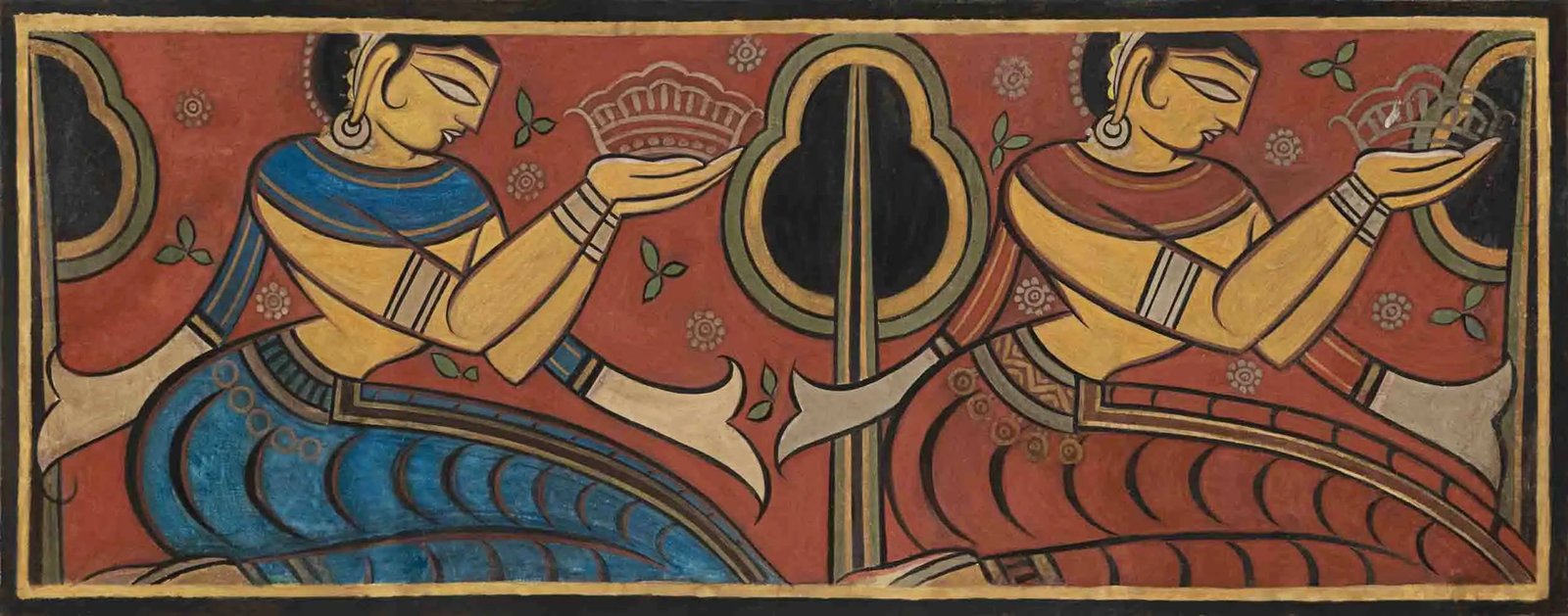
Jamini Roy occupies a particularly important market position among the Navratnas. His rejection of Western naturalism in favour of folk-inspired forms produced a visual language that remains immediately recognisable and widely accessible, translating directly into liquidity and consistent transaction volume. Nicholas Roerich, with his exceptional depictions of the Himalayas, has found resonance among collectors in India and has also stood out in the global market.
Amrita Sher-Gil forms the commercial and symbolic apex of early Indian Modernism. Her tragically brief career and the institutional absorption of much of her oeuvre have rendered her works very scarce, with each auction appearance treated as a landmark event that reshapes price benchmarks.
Read the full story in the premiere issue of LuxeTrope, on stands now.